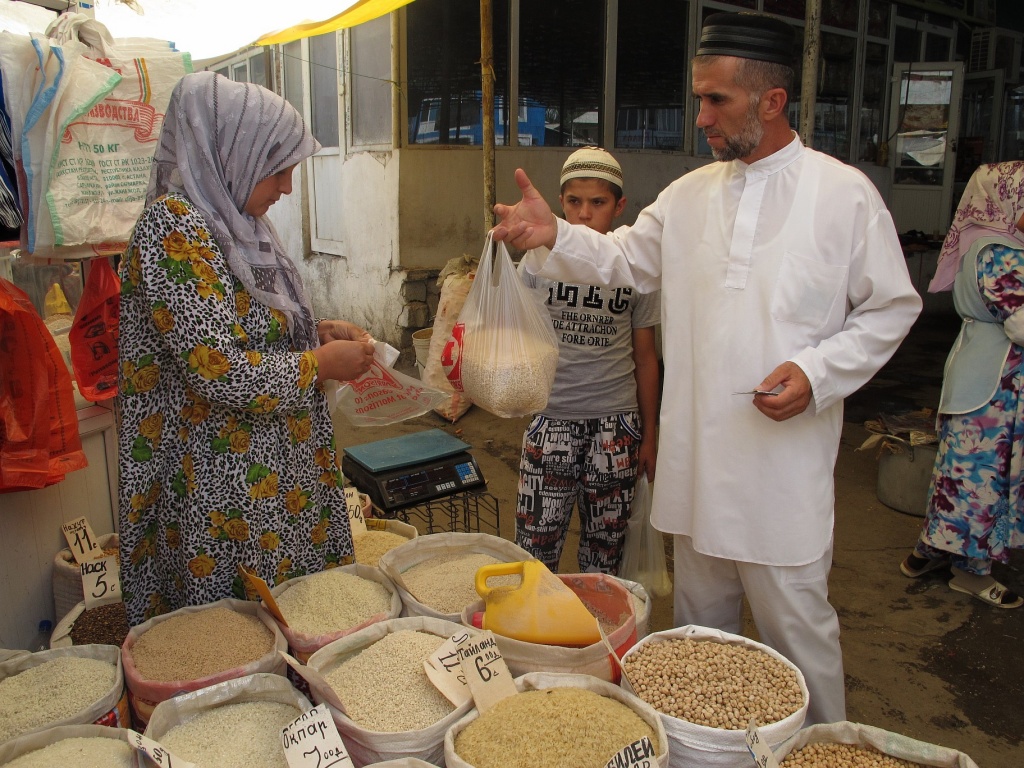
The Government of Tajikistan has issued a decree on the list of socially significant goods, price for which are liable to the government regulation.
The control over the execution of the decree is imposed on the Antimonopoly Agency under the Government of Tajikistan.
In all, sixteen socially significant goods are put on this list:
1. Wheat flour (grade 1 and 2);
2. Bakery products (from wheat flou3 grade 1 and 2);
3. Macaroni products;
4. Wheat
5. Rice;
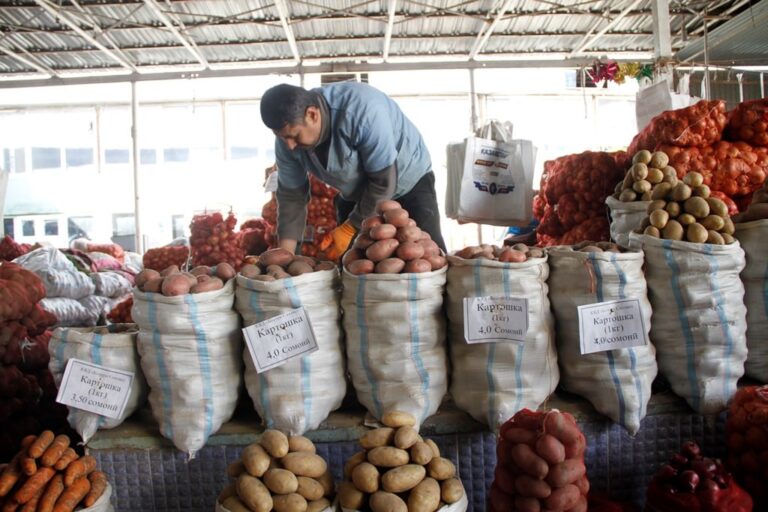
6. Potatoes;
7. Vegetables (carrots, onions, cabbages);
8. Sugar, granulated sugar;
9. Cooking oils (cotton oil and sunflower-seed oil) and butter;
10. Dairy products (milk, yoghurt, curds);
11. Lentils, peas, beans, barleys;
12. Meat (beef, lamb, poultry);
13. Hen’s eggs;
14. Salt;
15. Tea (black and green);
16. Children’s goods.
It is not clear yet how prices for these goods will be regulated as practically all these goods are imported into Tajikistan from other countries.
An expert on the Tajik economy, who wanted to remain unnamed, notes that all these goods are delivered to the country by private entrepreneurs, who set prices for them proceeding from their expenses.
“But if the government commits them to set fixed prices, this will inevitably affect quality and availability of products,” the expert added.
Recall, the Government of Tajikistan has got the right to influence the prices for socially significant goods in February last year. The Majlisi Namoyandagon (Tajikistan’s lower house of parliament) on February 1, 2017 endorsed the bill on protection of competition, under which a producer or a supplier of one or another commodity meeting more than 15 percent of requirements of the country’s market would be put on the register of monopolists.
Before than only producers and suppliers meeting 25 percent of requirements of the country’s market had been put on the register of monopolists.
This measure was reportedly aimed at protecting rights and interests of consumers, developing small and medium-sized enterprises in the country, regulating pricing, preventing groundless rise in prices, and protecting robust competition.
The bill provides for measures to regulate prices for basic food products on threshold of Eid al-Fitr (the holiday marking the end of Ramadan, the Islamic holy month of fasting) and Eid al-Adha (the Festival of the Sacrifice).