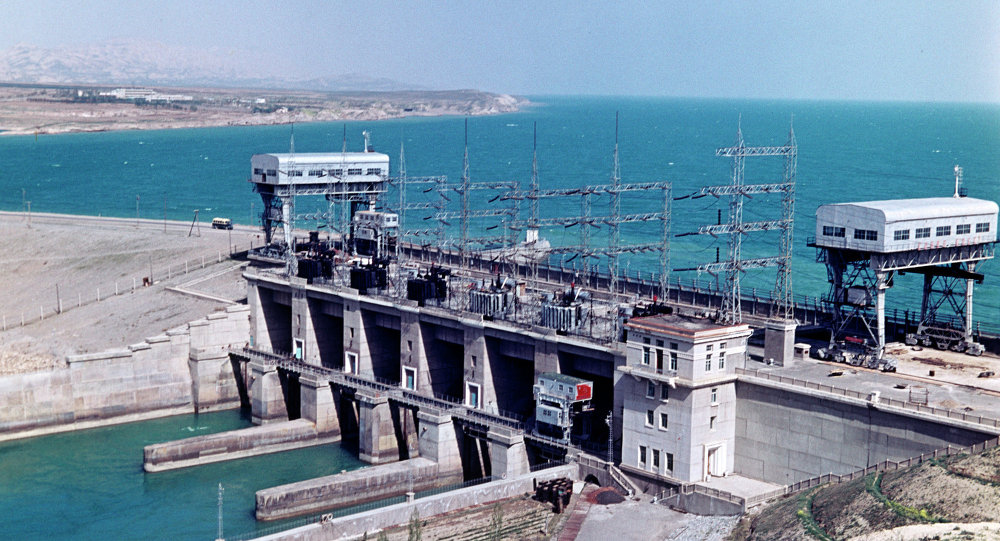
A consortium consisting of three companies from France, Switzerland and Spain will participate in completing the rehabilitation of the Qairoqqum hydroelectric power plant (HPP) in the northern Sughd province
“Barqi Tojik (a national integrated power company of Tajikistan) intends to sign an agreement on the second phase of rehabilitation of the Qairoqgum HPP with a consortium consisting of General Electric Hydro (France), GE Renewable (Switzerland) and Cobra Instalaciones y Servicios SA (Spain) by the end of this year,” an official source at Tajikistan’s lower house (Majlisi Namoyandagon) of parliament (Majlisi Oli) told Asia-Plus in an interview.
The second phase of project reportedly provides for replacement of four units of the Qairoqqum hydropower plant.
Recall, the European Bank for Reconstruction and Development (EBRD) and the Green Climate Fund (GCF) are providing a US$88 million financing package to Tajikistan to complete the rehabilitation of the Qairoqqum HPP to help Tajikistan improve its electricity supply.
The loan will allow completing an ambitious program of investment that was commenced in 2014 with financing from the EBRD, Austria and the United Kingdom and the Climate Investment Funds’ Pilot Program for Climate Resilience. The government of Austria is again funding technical cooperation support.
Speaking to lawmakers, Tajik Minister of Finance Faiziddin Qahhorzoda noted on November 23 that the financing package includes US$ 38 million EBRD loan, US$ 27 million GCF loan and US$ 23 million GCF grant.
The new financing will fund the second and final phase of the rehabilitation and modernization of the 60-year old Qairoqqum HPP, which provides electricity to 500,000 people. Measures include concrete dam works and the installation of hydraulic steel components, turbines and electromechanical equipment for the four hydropower units.
The full rehabilitation is expected to increase the plants installed capacity from the current 126 MW to 174 MW. The upgrade will introduce innovative climate resilience measures enabling the plant to cope with the expected impact of climate change on the hydrology of the country.