A new Strategy of the European Union (EU) for Central Asia will be presented on May 15, according to Kazinform.
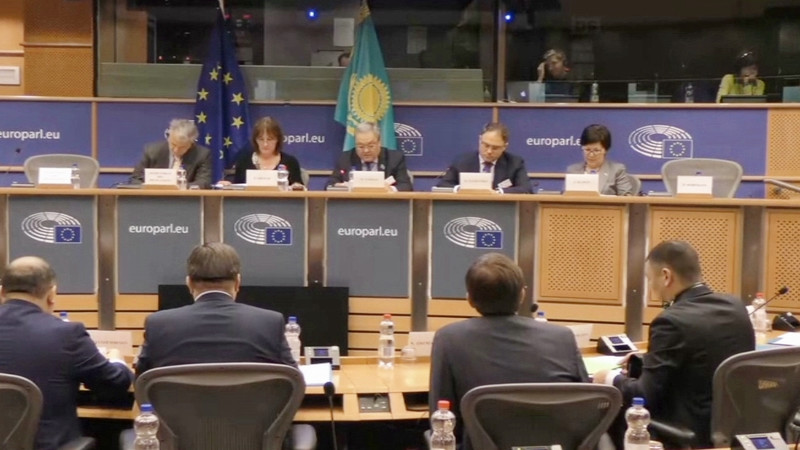
The head of the Central Asia Department under the EU External Action Service, Boris Yaroshevich, reportedly said this at the 16th session of the EU-Kazakhstan Parliamentary Cooperation Committee that took place in Brussels on January 21.
“The Strategy will have two main parts. The first one will concern the sustainability issues (supremacy of law, security, environmental protection, climate change, education and youth) and the second part will concern issues of prosperity and well-being in Central Asia,” Yaroshevich was quoted as saying.
According to him, the document will cover a ten-year period and will help define programs of cooperation in the region.
“We are going to publish this Strategy on May 15,” Boris Yaroshevich said.
The European Parliament Think Tank notes that Central Asia is an often overlooked region, but one that is gradually becoming more important for the European Union. Although the Central Asian countries are less of a priority than those of the Eastern Neighborhood, the EU has reportedly steadily intensified diplomatic relations with the region, at the same time as ramping up development aid. European trade and investment, above all in Kazakhstan, have made the EU the main economic player in Central Asia, ahead of Russia and China. However, former overlord Russia does not seem to resent European influence in Central Asia as much as in Eastern Europe, and the region has avoided becoming a zone of geopolitical confrontation. The EU's 2007 Central Asia strategy defines the priorities for EU development aid and diplomatic activity in the region. These include responding to security threats, protecting human rights, promoting economic development, developing transport and energy links, and ensuring environmental protection. Since then, progress in these areas has been uneven. Nevertheless, the issues identified in 2007 are still highly relevant today, and will probably remain at the heart of future EU policy in Central Asia. However, there have also been several major developments since the strategy was adopted: China's Belt and Road Initiative is reviving overland trade routes connecting Europe and Asia via the region; in Uzbekistan, a more conciliatory foreign policy under the country's new president has eased regional tensions and opened the door to cooperation between formerly hostile neighbors. At the same time, Central Asian countries are becoming more interested in engaging with Afghanistan. A new strategy, expected for mid-2019, will therefore need to spell out how the EU responds to these new dynamics.