

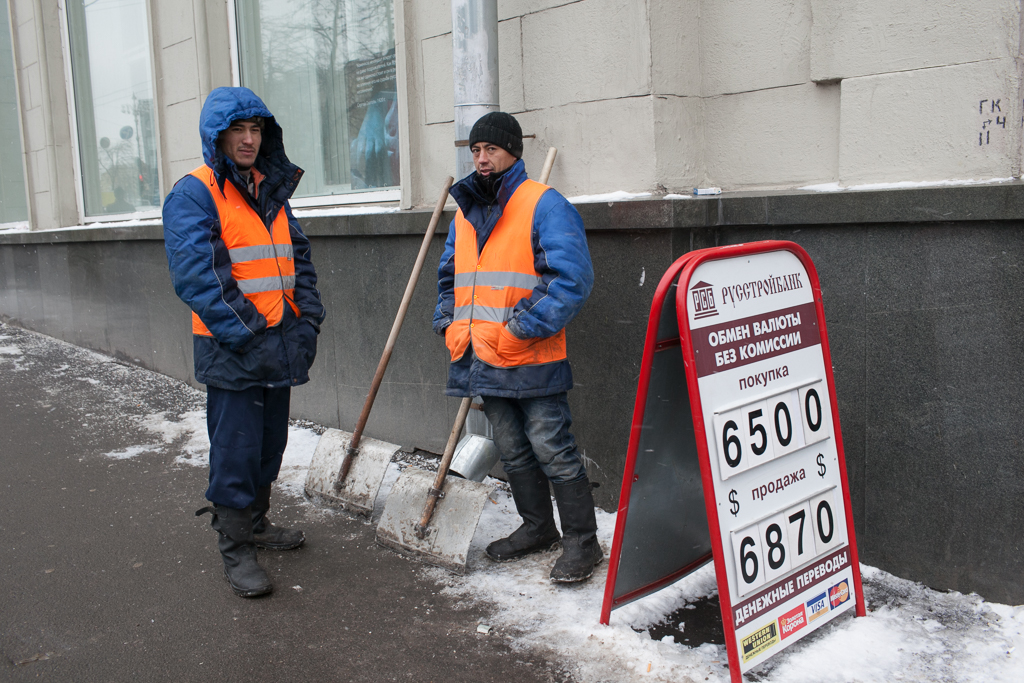
Russian remittances to Central Asia’s nations rise again

Uzbekistan, Tajikistan and Kyrgyzstan are among the largest recipients of remittances from Russia, which makes them especially vulnerable to the Russian economy. Eurasianet reports that when remittances plunged during Russia’s 2014-2016 downturns, these countries hurt.  New data reportedly show that after a strong resurgence in 2017, remittances continued to rise in 2018. According to data […]

Asia-Plus

Uzbekistan, Tajikistan and Kyrgyzstan are among the largest recipients of remittances from Russia, which makes them especially vulnerable to the Russian economy.

Eurasianet reports that when remittances plunged during Russia’s 2014-2016 downturns, these countries hurt.  New data reportedly show that after a strong resurgence in 2017, remittances continued to rise in 2018.

According to data from the Central Bank of Russia, of the US$13.99 billion in personal remittances sent from Russia to other members of the Commonwealth of Independent States (CIS) in 2018, about 68.1 percent went to these three countries (by comparison, in 2016 the figures were US$10.1 billion and 63.3 percent; in 2017, US$12.9 billion and 67 percent).

Eurasianet notes that Kyrgyzstan and Tajikistan are particularly dependent since the moribund economies offer few domestic jobs, forcing hundreds of thousands to seek work abroad. Russia offers these workers seasonal employment, usually in the construction sector.

The scale of Kyrgyzstan and Tajikistan’s dependence on Russian remittances is clear when the sums are compared to the overall economy – 31.3 percent of GDP for Tajikistan and 32.9 percent for Kyrgyzstan, according to World Bank data.  The figure was reportedly higher before Russia’s recent crisis, reaching the equivalent of almost half of GDP in Tajikistan in 2013.

This makes these countries some of the most remittance-dependent nations in the world: any economic downturn in the source country translates into an economic slump in the recipient country as well.

Though remittances do not factor directly into GDP calculations, remittances are a key source of household income in Kyrgyzstan and Tajikistan, especially in rural areas. Remittances help reduce poverty and ease credit constraints for poor households and local businesses. However, remittances can also foster a culture of dependence and reduce labor supply by encouraging local workers to head abroad.

   

Article translations:

Related Articles

Оби зулол

Most Read

Join us on social media!

Recent Articles

Nexign and TelecomDaily: the telecommunications market in Tajikistan grew by 13.7% in 2025

A study showed that the country's communications market has grown to 4.9 billion somoni, and the dynamics are influenced by an increase in the subscriber base, growth in internet traffic, and expansion of mobile and fixed network coverage.

Tajikistan’s Parliament approves organized recruitment of migrants to Russia

The paperwork will be transferred to the home country, and employers will select employees in advance.

Creativity as an asset: why marketing in Central Asia is reaching a new level

Business expert in international projects for the support and development of media companies, Svetlana Lebedeva, on marketing and the media market.

European Immunization Week starts in Tajikistan

Information and awareness-raising activities are being conducted across the country to increase trust in vaccination and combat misinformation.

The plan to launch the CASA-1000 project in 2027 discussed in Dushanbe

The Ministry of Energy of Tajikistan, Afghan DABS, and other project participants held a series of meetings.

Axios: Iran agrees to continue talks with the US, but the date remains uncertain

At the same time, the truce between the countries is set to expire within the next 24 hours.

Asian champions were welcomed as heroes: Tajik judokas received 100,000 somoni each

The Tajikistan national team returned from the Asian championship with five medals, securing second place in the overall team standings.

Karakalpakstan in Uzbekistan declared special mining zone with tax holidays

Its residents are exempt from taxes and duties until January 1, 2035.