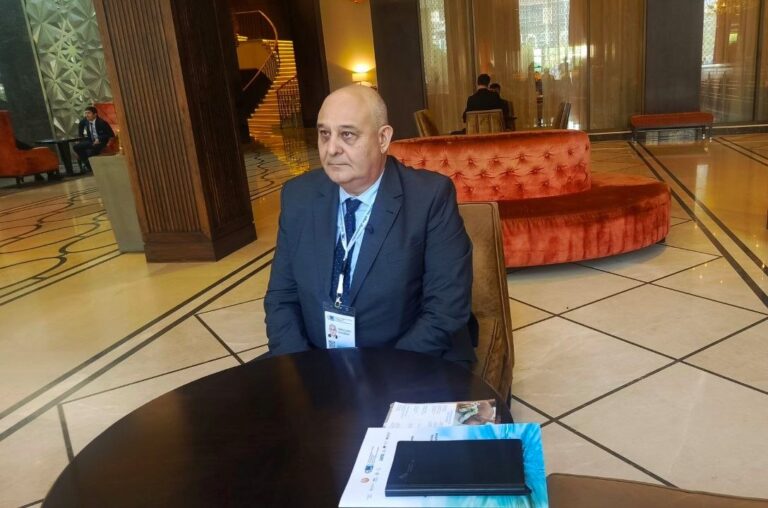
DUSHANBE, June 8, Asia-Plus — Arguments of Uzbek specialists that construction of cascade of power plants on the Zarafshon River could cause damage to irrigation system in some regions of Uzbekistan are absolutely unfounded, Georgy Petrov, an official with the Institute for Water Affairs, Energy and Ecology, told Asia-Plus Friday.
On Friday June 8, Petrov gave a news conference on state and perspectives of hydropower in
Tajikistan
.
The news conference organized by
Republican
Press
Center
focused on energy resources of
Tajikistan
, contribution of hydropower to the country’s economy, development of energy sector in the country, energy problems and ways of seeking solution to them, etc.
Speaking to Asia Plus’ correspondent after the briefing, Petrov said that construction of hydropower plants in
Tajikistan
, especially on the
Zarafshon
River
, which is not the trans-border river, does pose any threat to the neighboring country.
“Firstly, Zarafshon is not the trans-border river, and reservoir that will power the future Zarafshon station will be intended for daily regulation of water and will not affect the water level in the river,” the researcher said.
Asked about Uzbekistan’s allegations that the construction of the cascade of power plants on the Vakhsh River could cause environmental damage and lead to water shortage in the region, Petrov said that such statements used by countries of the lower reaches of the Amudarya and Syrdarya rivers are connected with a desire to prevent countries of the upper reaches of those rivers (Tajikistan and Kyrgyzstan) from constructing planned hydroelectric power stations (HPS) that would impede development of these two countries.
“Uzbek specialists should realize that reservoirs of the being constructed HPSs will regulate water outflow and therefore water resources will be used rationally.”
According to him, numerous documents, including a 1995 declaration signed by Central Asian president, have been adopted to resolve the water-using problems.
“Besides, a concept of efficient use of regional water and energy resources has been adopted by Central Asian heads of state; however, no serious solution have been made to this problem so far,” Petrov noted.
He suggested that hydroelectricity projects should be submitted for consideration to Uzbek investors in order that they could participate in them.
“Joint cooperation in implementation of the projects could probably make solution to this problem,” Petrov said.