Homidjon Arifov, an expert in energy matters, has shared his opinion on where electricity goes in Tajikistan.
According to him, electricity losses amount to 25 percent in Tajikistan.
“Losses in public grids are one of three types of electricity losses incurred by Barqi Tojik (Tajikistan national power utility company),” said Arifov. “Technical losses are undoubtedly high. In his address to a joint meeting of both chambers of parliament, President Emomali Rahmon noted that technical losses last year amounted to 14 percent, but this figure should be checked carefully.”
“In the 1980s, technical losses in Tajikistan amounted to 7.0 percent, which corresponds to the level of developed countries of the world (6.0-8.0 percent),” the expert said.
The technical losses are due to energy dissipated in the conductors, equipment used for transmission line, transformer, subtransmission line and distribution line and magnetic losses in transformers.
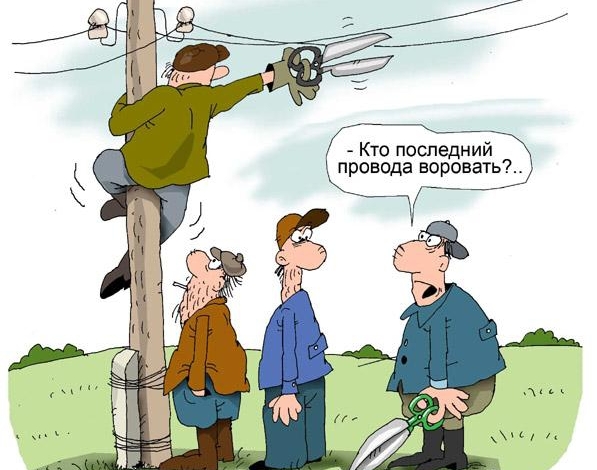
“The second type of energy losses are commercial losses, most of which are popularly called theft,” Arifov said.
Electricity theft is the criminal practice of stealing electrical power. It is a crime and is punishable by fines and/or incarceration. It belongs to the non-technical losses.
“According to estimates of Russian specialists, in some companies the energy losses amounted up to 50 percent and at the municipal level they reportedly amounted 20-25 percent,” the expert noted. .
According to him, the authorities should prohibit their relatives, friends and all "untouchables" from stealing electricity.
“There have been cases when controllers have not taken readings of electricity meters in houses of high-ranking officials,” said Arifov. “Besides, director of one of hydropower plants has complained that he is constantly attacked by a parliamentarian, who demands that the costs of the electricity used by him be attributed to the own needs of the hydropower plant.”
The third type of electricity losses are losses of energy companies arising during collection of funds for electricity from the public and enterprises. Barqi Tojik reportedly started to combat this type of losses seriously in 200 and the rate of collection of funds for electricity has risen from 30-30 percent in 2000 to 70-80 percent in 2014.
“The most incorrigible nonpayers were pumping irrigation stations of the Ministry of Water Resources and the aluminum smelter. Now authorities say the rate of collection of funds for electricity has increased to 90 percent,” the expert added.