
The European Bank for Reconstruction and Development (EBRD) is teaming up with the Green Climate Fund (GCF) to support small private-sector companies in Tajikistan, which invest in green technology solutions, and to create new opportunities for women-led small businesses, according to the EBR Dushanbe Resident Office.
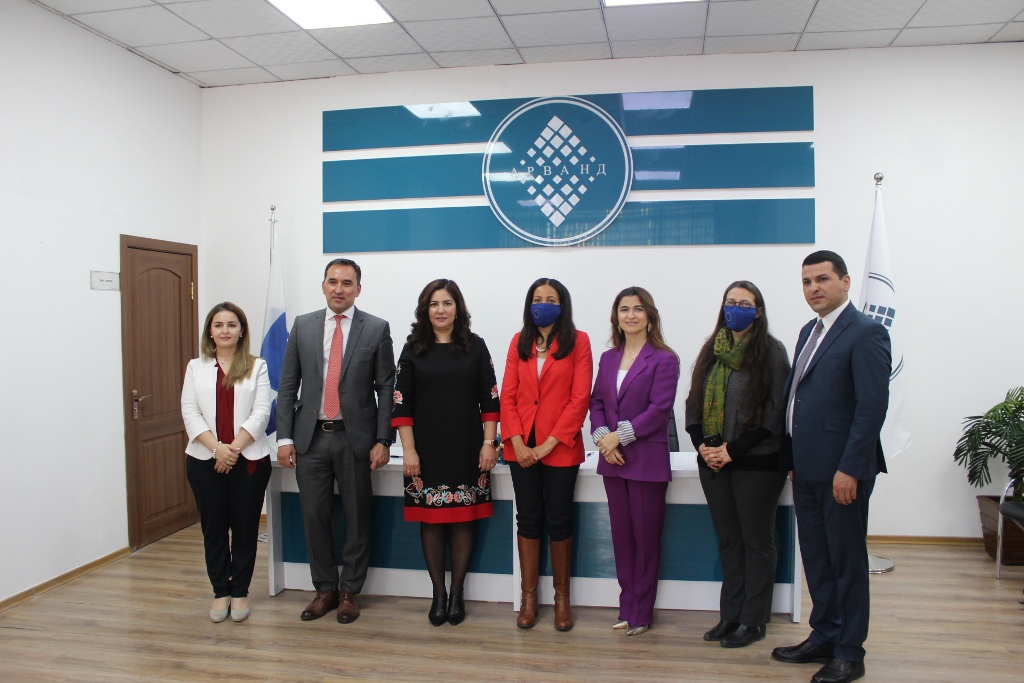
A financial package of US$4 million organized by the EBRD will be provided to Arvand Bank, which is serving almost 100,000 clients through 72 branches and customer service outlets across Tajikistan including in the Gorno-Badakhshan Autonomous Region (GBAO), a high altitude area, which occupies almost half of the country’s territory and where the presence of financial institutions is limited.
The package reportedly consists of a US$2 million loan co-financed by the EBRD and the GCF under the Bank’s Green Economy Financing Facility (GEFF) and a US$2 million loan under the EBRD’s Women of the Steppe Program in Central Asia.
The GEFF will help increase access to green technologies for local households and small and medium-sized enterprises (SMEs). It is part of the EBRD’s recently announced plan to scale up its climate and environmental finance and make more than 50 per cent of its annual investment green by 2025.
The GEFF, supported in Tajikistan by GCF and the Republic of Korea, will also use funds from the European Union’s Enhanced Competitiveness of Tajik Agribusiness Program (ECTAP), which promotes competitiveness in the agribusiness sector.
The WiB component of the package will help promote women’s entrepreneurship and business activity by assisting with access to finance, know-how and technical advice. The initiative also provides technical support to financial institutions to enhance the services they offer to women-led businesses. The Women of the Steppe Program is supported by the Women Entrepreneurs Finance Initiative (We-Fi), and Switzerland through the Small Business Impact Fund (SBIF).
The GEFF program is part of the Bank’s Green Economy Transition (GET) approach. It operates through a network of more than 145 local financial institutions across 27 countries, supported by more than €4.6 billion of EBRD finance for 190,000 clients to date. These projects have led to annual CO2 emission reductions of more than 8.6 million tons so far.
To date, the Bank has supported more than 90,000 women across 24 economies with financing and business advisory projects, training and mentoring as part of its Women in Business initiative.
To date, the EBRD has invested €731 million through 139 projects in Tajikistan’s economy.
