Russia bans entry to almost 800,000 foreign nationals

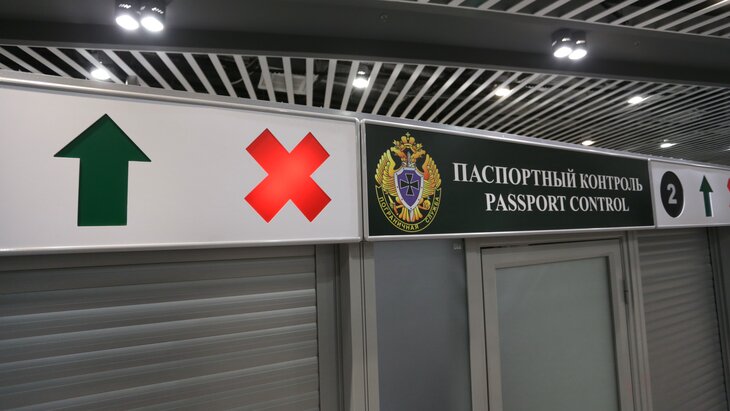
The Russian Interior Ministry says almost 800,000 foreign nationals have been banned from entering the Russian Federation. Kommersant on May 12 cited Mrs. Valentina Kazakova, the chief of the Interior Ministry Main Directorate for Migration Issues, as saying that 797,800 foreign nationals have restrictions on entry into the Russian Federation. According to her, decisions on […]

Asia-Plus

The Russian Interior Ministry says almost 800,000 foreign nationals have been banned from entering the Russian Federation.

Kommersant on May 12 cited Mrs. Valentina Kazakova, the chief of the Interior Ministry Main Directorate for Migration Issues, as saying that 797,800 foreign nationals have restrictions on entry into the Russian Federation.

According to her, decisions on refusal of entry are made mainly by the Interior Ministry, but the Ministry of Justice and the Federal Penitentiary Service (they have 97,800 people from entering Russia), the Federal Security Service (88,800 people), Rospotrebnadzor and the Federal Medical-Biological Agency (34,900 people), the Federal Customs Service and Rosfinmonitoring (11,700 people) also participate in this process.    

“The Interior Ministry accordingly plays a leading role.  We ban entry to almost 70 percent, or 548,000 foreign nationals,” Mrs. Kazakova was cited as saying at the 11th St. Petersburg International Legal Forum.   

The Russian Interior Minister Vladimir Kolokoltsev said in March that the number of migrants deported from Russia last year increased more than 2.5 times compared to 2021.  

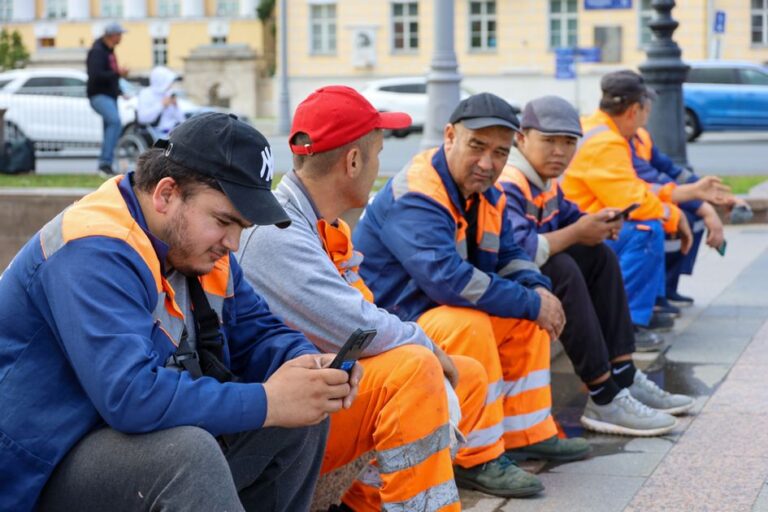
Russia’s consulting company FinExpertiza noted in February this year that inflow of labor migrants into Russia increased last year by a third. 

The inflow of labor migrants from Uzbekistan reportedly grew the most last year – by 377,700 people, or 35.1 percent.  The number of labor migrants coming from Tajikistan reportedly also increased by a comparable amount – by 336,700 people, or 51.8 percent.  

Outgoing labor migration from Tajikistan has started on a large scale soon after the fall of the Soviet Union.  An absolute majority of the Tajik labor migrants have lived and worked in the Russian Federation. As a social phenomenon this migration has a profound impact not only on the lives of the individual migrants or the families who are being supported by a family member working abroad, but also on the Tajik society as a whole and the country’s economy.
 

Join us on social media!

Article translations:

Related Article

Оби зулол
Оби зулол

Most Read

Recent Articles

The only GPW veteran in Dushanbe allocated more than 80,000 somoni

The mayor's office of Dushanbe allocated him 25,000 somoni.

GITEX AI Kazakhstan 2026: how Almaty became the main AI hub of Central Asia

More than 300 companies and startups, over 200 speakers and 100 investors from 50 countries — the region is entering the global stage.

A trade and economic park to be built at the border junction of Tajikistan, Kyrgyzstan, and Uzbekistan

President of the Kyrgyz Republic Sadyr Japarov familiarized himself with the project.

A project to protect soil from degradation to be developed in Central Asia

The initiative is of great significance for the mountainous countries of the region, including Tajikistan.

Mudslide, death, and destroyed homes: hundreds of families in Tajikistan left homeless

A correspondent from "Asia-Plus" visited Kulob and spoke with the families of those who died and were affected by the disaster.

Spring 2026 bright event: new issue of VIPzone now on sale

This issue is about people and ideas that change everything: from business and investments to fashion, food, and urban environment.

Godfrey Sullivan: “Tajikistan is a promising market for Visa to develop digital payments”

The Vice President of Visa explained why Tajikistan is becoming a promising market for digital payments and how artificial intelligence is influencing the future of finance.

Seven students in Dushanbe were threatened with expulsion for arriving at universities in personal cars

The materials for each case have been sent to the Ministry of Education and Science for appropriate actions.

India’s blockchain push and lessons for the global south

The Indian Government has started pushing aggressively its agenda...

India’s blockchain push and lessons for the global south

The Indian Government has started pushing aggressively its agenda...