

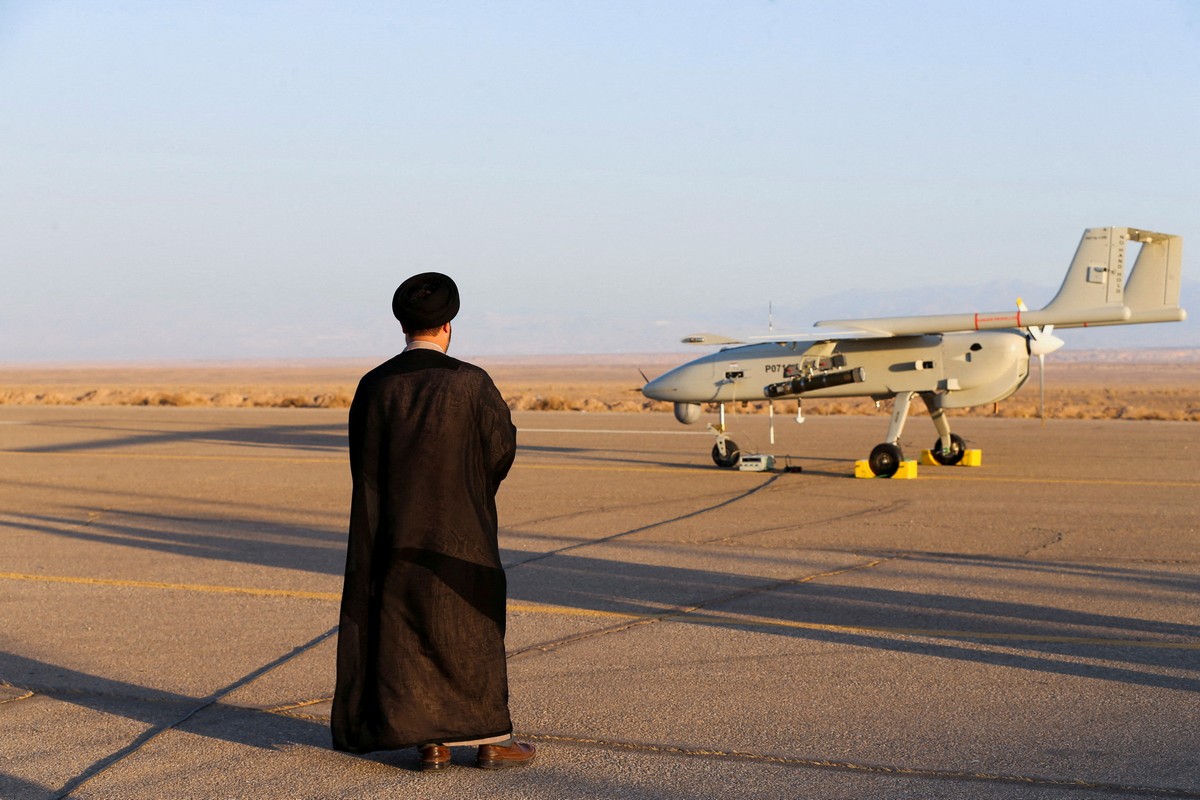
A statement released by the US Department of States’ Bureau of International Security and Nonproliferation on June 9, in particular, says that Iran’s procurement, development, and proliferation of unmanned aerial vehicles (UAVs) is an increasing threat to international peace and security.
The Department of Commerce, the Department of Justice, the Department of State, and the Department of the Treasury have reportedly issued this advisory to alert persons and businesses globally to the threat of Iran’s UAV-related activities and the need to take appropriate steps to avoid or prevent any activities that would support the further development of Iran’s UAV program.
The statement notes that the United States is committed to countering Iran’s UAV programs, including through preventing abuse of the U.S financial system and disrupting the procurement of foreign-sourced components. It is reportedly critical that private industry be aware of its legal obligations vis-à-vis entities and items involved in such procurement efforts, given the potential applicability of U.S. export controls and sanctions. This advisory is also designed to help prevent companies from contributing to Iran’s UAV programs, including via direct and indirect transfers to third-country suppliers, which may threaten broader national and international security interests of the United States and its allies and partners.
According to the statement, Iran’s development, procurement, and proliferation of UAVs destabilizes the Middle East region and beyond. Over the past ten years, Iran has reportedly increased its inventory of both armed and unarmed UAVs, whose low cost, simplicity of production, and ease of use make them appealing to entities and countries of concern to which Iran may transfer them, including but not limited to:
The statement says that since at least late August 2022, Iran has transferred hundreds of Shahed- and Mohajer-series UAVs to Russia. Moscow has used these UAVs extensively to strike critical infrastructure during its brutal war of aggression against Ukraine. In October 2022, the United States joined the United Kingdom and France in raising our grave concerns about these transfers from Iran in violation of United Nations (UN) Security Council Resolution 2231.
Overseas Production Facilities: Reports indicate Iran has offered to provide UAV production technology and facilities to Tajikistan and Russia. With these efforts, Tehran may be seeking to strengthen bilateral relationships, boost the profits of its export sector, and complicate efforts to constrain its UAV activities through export controls and other measures.
Iran relies on foreign procurement to obtain items it cannot produce domestically, often preferring U.S.-origin technologies. Recovered Iranian-origin UAVs used by Russian forces in Ukraine reveal that Iran’s UAV program has used many components produced by third-country suppliers. Industry should be aware of its compliance obligations due to the threat posed by the extensive overseas network of procurement agents, front companies, suppliers, and intermediaries Iran uses to obtain UAV components, all of which employ a variety of methods to evade export controls and sanctions. Industry should exercise extra vigilance due to the ubiquitous nature of many of the items, as Iran utilizes commercial-grade components in its weapons.
The United States has long regulated the export of UAVs and related items via a range of controls, including license requirements for items listed on the United States Munitions List, as set forth in the International Traffic in Arms Regulations (ITAR) and for items listed on the Commerce Control List (CCL). The United States also imposes catch-all controls on items that could contribute to certain UAV systems, even if they are not described on the CCL.
Building on these pre-existing controls, the Bureau of Industry and Security (BIS) has issued several rules that target Iran’s supply of UAVs to Russia to enhance Russia’s defense industrial base and its military efforts against Ukraine.
BIS has also added numerous entities to the Entity List for their involvement in the production of Iranian UAVs, or in the transfer of UAVs from Iran to Russia. As a result of these actions, a BIS license is required to export, re-export, or transfer (in-country) any item subject to the EAR when the listed entity is a party to the transaction. BIS has adopted a policy of denial for all such license applications. Further, BIS and the Department of the Treasury’s Financial Crimes Enforcement Network (FinCen) have issued guidance for financial institutions on the typologies regarding the use of the financial system to evade export controls.
