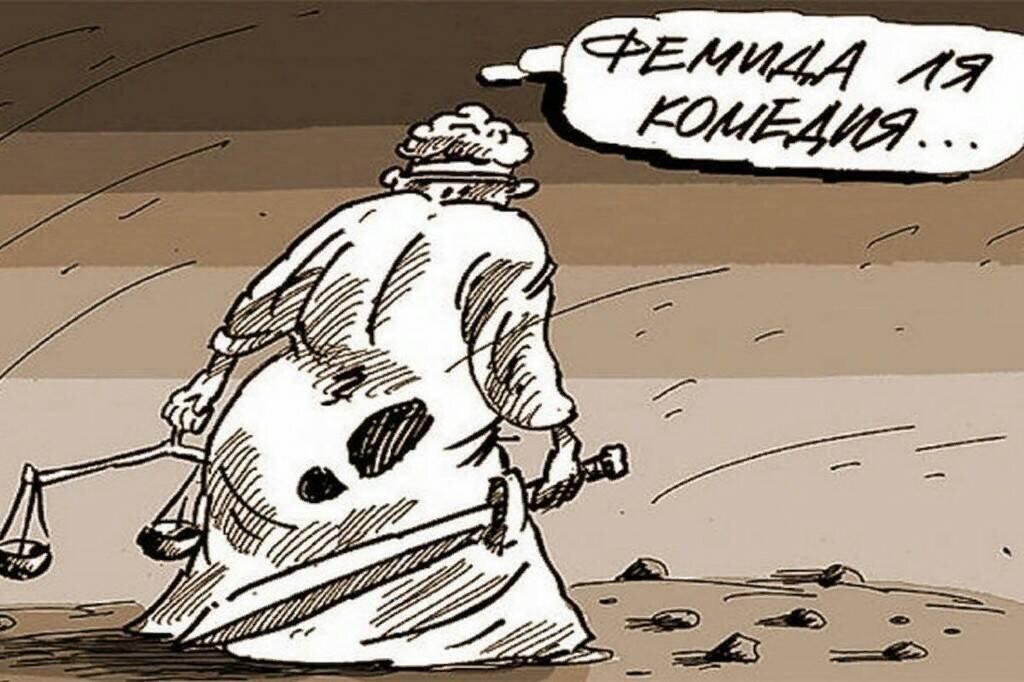
Only twenty-eight acquittals passed in Tajikistan over the past five years
DUSHANBE, April 29, 224, Asia-Plus – Over the past five years (2019-2023), courts in Tajikistan have delivered only 28 acquittals; twenty-four verdicts were completely acquittal and four others were partially acquittal.
|
Year |
total |
Completely acquittal |
Partially acquittal |
|
2019 |
10 |
9 |
1 |
|
2020 |
2 |
2 |
0 |
|
2021 |
10 |
8 |
2 |
|
2022 |
3 |
3 |
1 |
|
2023 |
3 |
2 |
0 |
Meanwhile, in 2014 alone, Tajik courts delivered twenty-one acquittals. The then head of the Council of Justice (Shuroi Adliya) Zafar Azizzoda stating this while releasing a report at a news conference in Dushanbe on January5, 2015.
A small number of acquittals in criminal cases in the practice of judicial authorities is one of the common topics for discussion in expert circles of the most post-Soviet countries.
In an interview with Asia-Plus, Tajik lawyer Navrouz Odinayev commented on why there are so few acquittals in the country.
He, in particular, pointed out that in judicial practice in Tajikistan a detailed analysis of evidence is not always enough.
“Sometimes courts limit themselves to transferring the wording set out in the text of the indictment or to referring to witness testimony without conducting adequate analysis,” Odinyaev noted.
“Also, courts sometimes refer in their verdict only to the testimony of witnesses and other persons, who, in their opinion, confirm the accusation. It turns out that the courts generally agree with the accusatory component of the case and in fact, during the trial they only decide the issue of the term of punishment,” the lawyer said.
He further emphasized that “it would be fundamentally wrong to consider that in our country all cases come to a court after a comprehensive investigation and the accusations are one hundred percent proven.”
Odinayev noted that in Tajikistan, defense lawyers do not have much influence on the investigation into cases and do not enjoy high authority in the judicial system. “While in many countries, it is during the confrontation in court that the judge decides on the guilt of the accused,” the lawyer said.
“The criteria for assessing judicial activity should be the legality and validity of court decisions as well as their accessibility and openness,” Odinayev added.