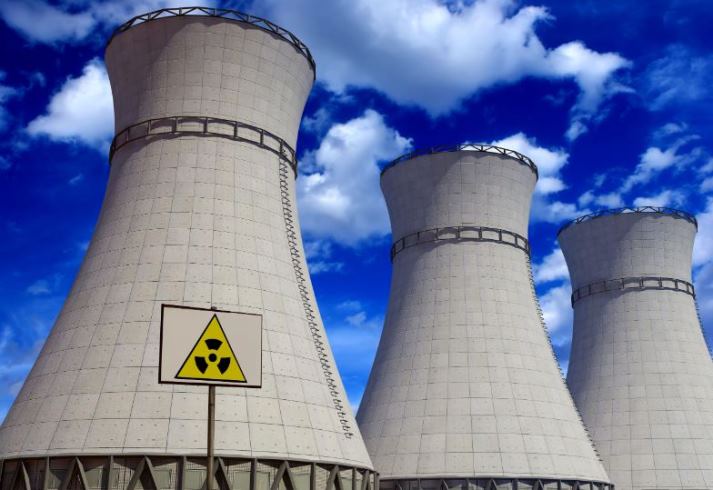
Exit poll shows that Kazakhstan votes in favor of nuclear power plant construction

Kazakhstan yesterday voted in a referendum on whether to build its first nuclear power plant, and an exit poll showed voters backed the idea promoted by President Kassym-Jomart Tokayev's cabinet as a way to phase out polluting coal plants. The plan has reportedly faced public criticism due to concerns about related hazards, the Soviet nuclear […]

Asia-Plus

Kazakhstan yesterday voted in a referendum on whether to build its first nuclear power plant, and an exit poll showed voters backed the idea promoted by President Kassym-Jomart Tokayev's cabinet as a way to phase out polluting coal plants.

The plan has reportedly faced public criticism due to concerns about related hazards, the Soviet nuclear testing legacy, and fears that Russia will be involved in the project.

The Kazakhstan’s Central Election Commission said almost 64% of registered voters cast their ballots by 8 pm local time when the polling stations closed, the Central Election Commission said, making the vote valid.

Kazakh media reports say that according to the exit poll results announced at midnight, 284,000 voters showed 69.8% of them voted in favor of the nuclear power plant construction.   

The Astana Times says around 30.2 percent of people voted against the construction.  

The voter turnout was reportedly declared at 67.3 percent. 

It is reported that 283,519 citizens were surveyed at 189 polling stations, with a margin of error of ± 1.5%. 

On October 6, polls were reportedly conducted at 10,323 polling stations, including 74 abroad in 59 countries.  Polling stations were open from 7 am until 8 pm without breaks.

Approximately 230 public associations in Kazakhstan reportedly served as observers, with international observers also monitoring the transparency of the voting process.

In the village of Ulken on the shores of Lake Balkhash, in the southeast of the country, which the country’s government has designated as the site to build the plant, some locals hoped the project would bring jobs.  Others expressed concern about the impact on the quality of the lake water.

It is to be noted that despite its sizeable natural gas reserves, Kazakhstan relies mostly on coal-powered plants for its electricity, supplemented by some hydroelectric plants and the growing renewable energy sector.

According to some sources, Kazakhstan already imports electricity, mostly from Russia, as its facilities, many of which are old, struggle to meet domestic demand. And coal is regarded as the most polluting energy source.

Join us on social media!

Article translations:

Related Article

Оби зулол
Оби зулол

Most Read

Recent Articles

The only GPW veteran in Dushanbe allocated more than 80,000 somoni

The mayor's office of Dushanbe allocated him 25,000 somoni.

GITEX AI Kazakhstan 2026: how Almaty became the main AI hub of Central Asia

More than 300 companies and startups, over 200 speakers and 100 investors from 50 countries — the region is entering the global stage.

A trade and economic park to be built at the border junction of Tajikistan, Kyrgyzstan, and Uzbekistan

President of the Kyrgyz Republic Sadyr Japarov familiarized himself with the project.

A project to protect soil from degradation to be developed in Central Asia

The initiative is of great significance for the mountainous countries of the region, including Tajikistan.

Mudslide, death, and destroyed homes: hundreds of families in Tajikistan left homeless

A correspondent from "Asia-Plus" visited Kulob and spoke with the families of those who died and were affected by the disaster.

Spring 2026 bright event: new issue of VIPzone now on sale

This issue is about people and ideas that change everything: from business and investments to fashion, food, and urban environment.

Godfrey Sullivan: “Tajikistan is a promising market for Visa to develop digital payments”

The Vice President of Visa explained why Tajikistan is becoming a promising market for digital payments and how artificial intelligence is influencing the future of finance.

Seven students in Dushanbe were threatened with expulsion for arriving at universities in personal cars

The materials for each case have been sent to the Ministry of Education and Science for appropriate actions.

India’s blockchain push and lessons for the global south

The Indian Government has started pushing aggressively its agenda...

India’s blockchain push and lessons for the global south

The Indian Government has started pushing aggressively its agenda...