Tajikistan: a peach paradise with great potential

Tajikistan has a long-standing tradition of growing peaches — fragrant and juicy fruits cultivated for centuries in the fertile valleys of the Khatlon and Sughd provinces.  While there are no large-scale industrial plantations, smallholder farms consistently produce reliable harvests each year. According to Nourmahmad Kamolov of the Institute of Horticulture, the country’s peach cultivation was […]

Asia-Plus

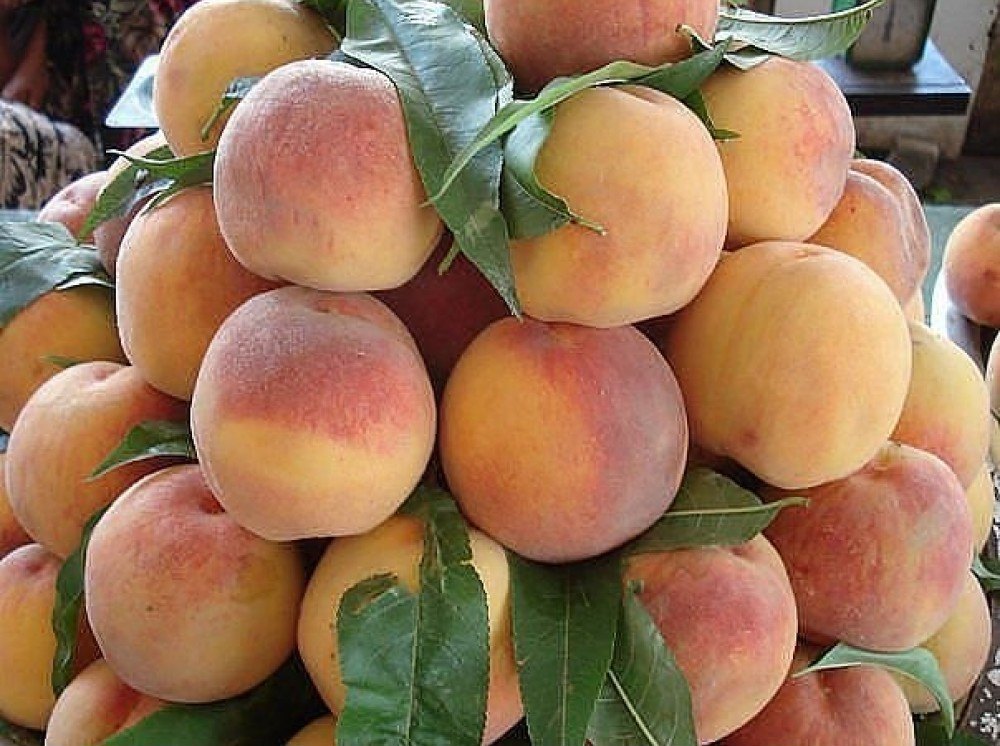
Tajikistan has a long-standing tradition of growing peaches — fragrant and juicy fruits cultivated for centuries in the fertile valleys of the Khatlon and Sughd provinces.  While there are no large-scale industrial plantations, smallholder farms consistently produce reliable harvests each year.

According to Nourmahmad Kamolov of the Institute of Horticulture, the country’s peach cultivation was previously limited due to the Soviet-era focus on cotton monoculture.  Today, however, interest in peaches is growing thanks to their profitability.


How peaches grow

Peach trees begin bearing fruit in their third year and can remain productive for up to 20 years with proper care.  Since peaches are cross-pollinated, experts recommend planting multiple varieties to ensure pollination and extend the harvest season from early summer to late autumn.

Peach trees tolerate cold well but are sensitive to spring frosts, especially during flowering.


A diversity of varieties

About 15 varieties are cultivated in Tajikistan, including the popular “Alexander” and “Cumberland,” the nectarines “Lola” and “Obilny,” and the local flat variety “Anchiri Surkh.”  The “Ravgani Gov” line is notable for its late-season, yellow-fleshed fruits ideal for drying and fresh consumption.


Global context

Worldwide, 23–25 million tons of peaches and nectarines are grown annually, with China accounting for around 70% of global output.  Tajikistan produces 30,000–32,000 tons annually — just 3 kg per capita — far below the global average.


Fun facts about peaches

  • The scientific name Prunus persica for the peach translates to "Persian plum", the name "Persian apple" was also used in the past to refer to peaches.  The Romans called the fruit malum persicum, which literally translates to "Persian apple". This historical naming reflects the early European belief that peaches originated in Persia, though they are actually native to China.
  • Nectarines are a fuzzless mutation of peaches.
  • The first basketball hoops were made from peach baskets in 1891.  Peaches don’t grow wild and were developed through selective breeding.  The first fruit eaten on the Moon was a peach, by Apollo 11 astronauts in 1969.

Join us on social media!

Article translations:

Related Article

Оби зулол
Оби зулол

Most Read

Recent Articles

The only GPW veteran in Dushanbe allocated more than 80,000 somoni

The mayor's office of Dushanbe allocated him 25,000 somoni.

GITEX AI Kazakhstan 2026: how Almaty became the main AI hub of Central Asia

More than 300 companies and startups, over 200 speakers and 100 investors from 50 countries — the region is entering the global stage.

A trade and economic park to be built at the border junction of Tajikistan, Kyrgyzstan, and Uzbekistan

President of the Kyrgyz Republic Sadyr Japarov familiarized himself with the project.

A project to protect soil from degradation to be developed in Central Asia

The initiative is of great significance for the mountainous countries of the region, including Tajikistan.

Mudslide, death, and destroyed homes: hundreds of families in Tajikistan left homeless

A correspondent from "Asia-Plus" visited Kulob and spoke with the families of those who died and were affected by the disaster.

Spring 2026 bright event: new issue of VIPzone now on sale

This issue is about people and ideas that change everything: from business and investments to fashion, food, and urban environment.

Godfrey Sullivan: “Tajikistan is a promising market for Visa to develop digital payments”

The Vice President of Visa explained why Tajikistan is becoming a promising market for digital payments and how artificial intelligence is influencing the future of finance.

Seven students in Dushanbe were threatened with expulsion for arriving at universities in personal cars

The materials for each case have been sent to the Ministry of Education and Science for appropriate actions.

India’s blockchain push and lessons for the global south

The Indian Government has started pushing aggressively its agenda...

India’s blockchain push and lessons for the global south

The Indian Government has started pushing aggressively its agenda...