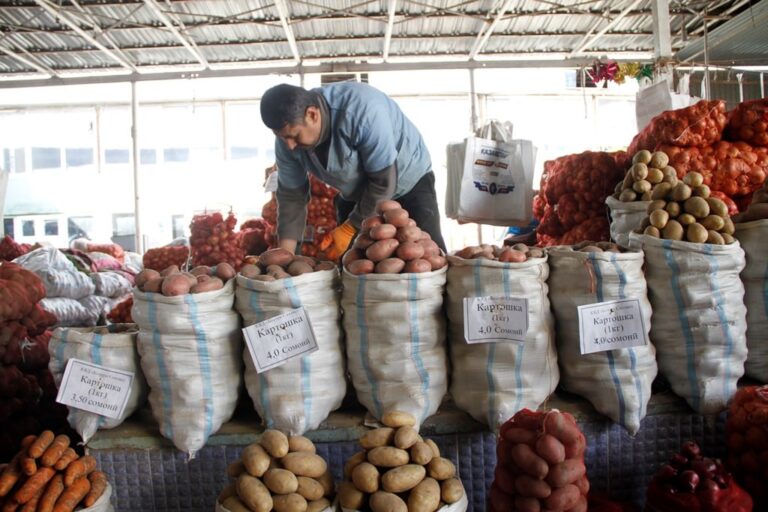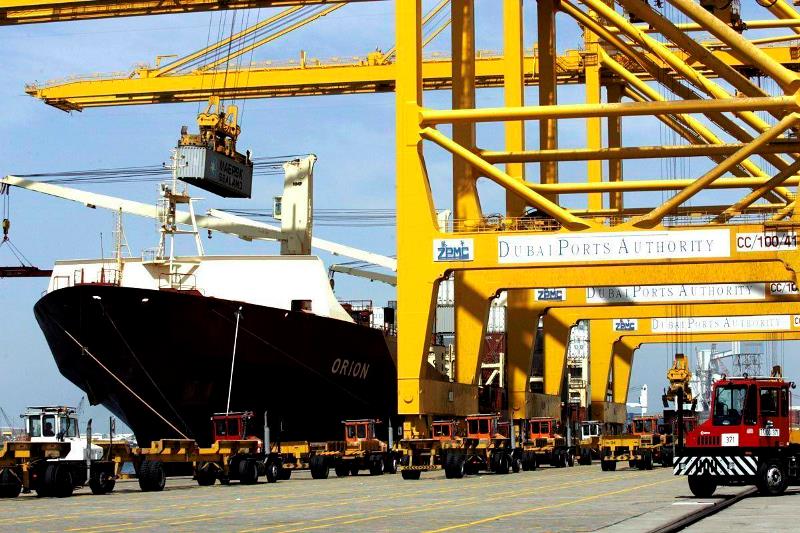
The volume of mutual trade in goods between the countries of the Persian Gulf and Central Asia in 2024 reached $3.3 billion, an increase of more than four times compared to 2020, according to the Eurasian Development Bank.
EDB analysts note that about 80% of the trade turnover is accounted for by imports of Central Asian goods from the Gulf states.
Turkmenistan became the largest partner in the region, accounting for $2 billion, or 61% of the total trade volume. This is followed by Uzbekistan ($740 million, 23%) and Kazakhstan ($302 million, 9%).
The highest growth rates were recorded in Turkmenistan (9.9 times), Kyrgyzstan (9.5 times) and Uzbekistan (8.1 times).
The UAE remains the absolute leader among the Gulf countries, providing 97% of trade with Central Asia.
The greatest importance of trade with the Gulf States is noted in Turkmenistan, where it accounts for about 10% of foreign trade turnover.
For Kyrgyzstan, this figure reaches 1%, for the rest of the region — less than 1%.
EDB experts predict further trade growth. The unrealized potential is estimated at $4.9 billion, which is 150% higher than the current volume. Of these, $4.4 billion is accounted for by potential exports from the Gulf countries (cars, electronics, jewelry), and $500 million is for exports from Central Asia (precious and non-ferrous metals, agricultural products).
Meanwhile, according to the statistical agency of Tajikistan, the republic's trade turnover with the Gulf countries in 2024 increased 4.7 times compared to 2020, from $19.6 million to almost $93 million.
The UAE remains Tajikistan's main trading partner among the countries of this region (93% share in 2020 and 99% in 2024).
It should be noted that three of the five Central Asian countries (Kazakhstan, Kyrgyzstan and Tajikistan) are members of the EDB.
Information from "Asia-Plus"
The Persian Gulf region traditionally includes six Arab States that form the Cooperation Council for the Arab States of the Persian Gulf (GCC):
– Bahrain;
– Qatar;
– Kuwait;
– United Arab Emirates (UAE);
– Oman;
– Saudi Arabia.
Iraq is sometimes referred to as the "Gulf countries" in a broad sense, but official statistics and analytics most often refer specifically to the six GCC member countries.
Geographically, Iran is also a Persian Gulf country, but it is usually not included in the "Gulf region" for the following main reasons:
– this is not an Arab country;
– political relations between Iran and the GCC countries have remained tense for decades (competition for regional influence, conflicts in Yemen, Syria, Iraq);
– the GCC was created in 1981 as a bloc of Arab monarchies that wanted to coordinate their policies in opposition to Iran after the 1979 Islamic Revolution.