Tajikistan ranks lowest among post-Soviet nations in Global Innovation Index 2025

Tajikistan has been ranked 108th out of 139 countries in the 2025 Global Innovation Index (GII), making it the least innovative country among former Soviet republics.  The ranking, released by the World Intellectual Property Organization (WIPO), highlights growing concerns about the country’s lagging innovation capabilities. Compared to last year, Tajikistan has slipped one position, reflecting […]

Asia-Plus

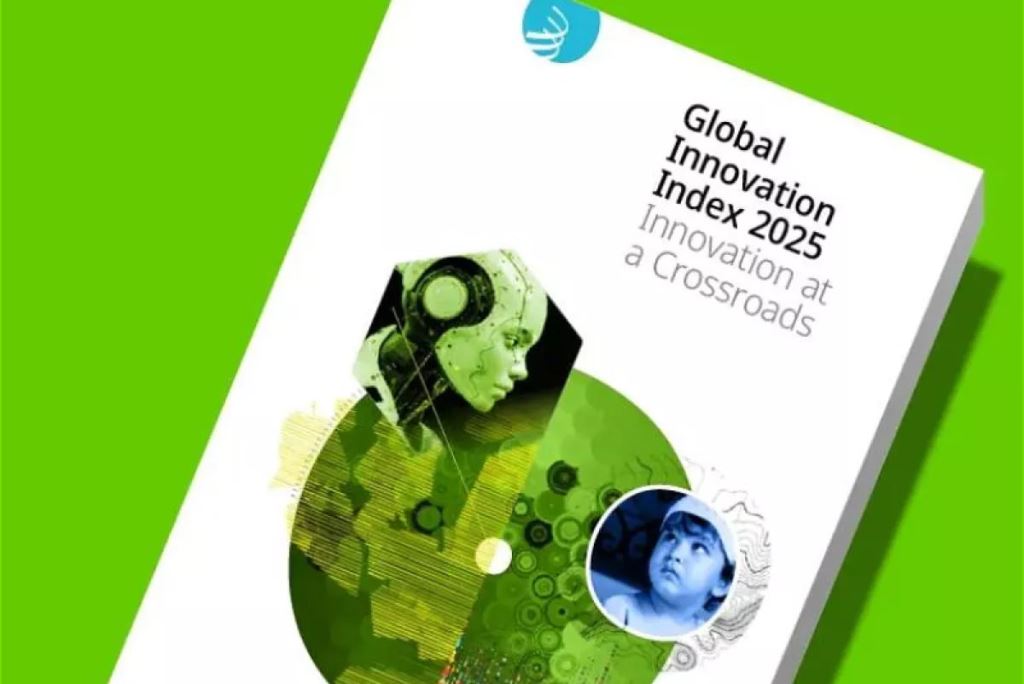
Tajikistan has been ranked 108th out of 139 countries in the 2025 Global Innovation Index (GII), making it the least innovative country among former Soviet republics.  The ranking, released by the World Intellectual Property Organization (WIPO), highlights growing concerns about the country’s lagging innovation capabilities.

Compared to last year, Tajikistan has slipped one position, reflecting a continued downward trend in innovation-related performance.

Innovation refers to new ideas, methods, or technologies that improve existing processes, solve persistent problems, or enhance efficiency and convenience.  From developing new devices to streamlining workflows and creating modern communication tools, innovation plays a critical role in economic growth and quality of life.

In stark contrast to Tajikistan’s position, Estonia leads the post-Soviet bloc at 16th place, followed by Lithuania (33rd), Latvia (41st), and Georgia (56th).  Other regional rankings include Armenia (59th), Russia (60th), Ukraine (66th), Moldova (74th), Uzbekistan (79th), Kazakhstan (81st), Belarus (85th), Azerbaijan (94th), and Kyrgyzstan (96th).

Turkmenistan was not included in the index.

Globally, Switzerland, Sweden, the United States, South Korea, and Singapore top the list. Notably, the United Kingdom, Finland, the Netherlands, Denmark, and China entered the top 10 for the first time.

The bottom three spots went to the Democratic Republic of the Congo, Angola, and Niger.

The report notes that global innovation progress is being hampered by slowing investment flows into research and development.

The GII uses around 80 indicators to assess innovation performance, including R&D spending, venture capital activity, high-tech exports, and intellectual property filings.

Published annually since 2007, the Global Innovation Index has become a benchmark tool for policymakers, business leaders, and institutions to foster innovation and develop sustainable innovation ecosystems. It is recognized by the United Nations General Assembly as an authoritative source for science, technology, and innovation policy.

The 2025 edition was jointly prepared by WIPO and the Portulans Institute.

 

Join us on social media!

Article translations:

Related Article

Оби зулол
Оби зулол

Most Read

Recent Articles

The only GPW veteran in Dushanbe allocated more than 80,000 somoni

The mayor's office of Dushanbe allocated him 25,000 somoni.

GITEX AI Kazakhstan 2026: how Almaty became the main AI hub of Central Asia

More than 300 companies and startups, over 200 speakers and 100 investors from 50 countries — the region is entering the global stage.

A trade and economic park to be built at the border junction of Tajikistan, Kyrgyzstan, and Uzbekistan

President of the Kyrgyz Republic Sadyr Japarov familiarized himself with the project.

A project to protect soil from degradation to be developed in Central Asia

The initiative is of great significance for the mountainous countries of the region, including Tajikistan.

Mudslide, death, and destroyed homes: hundreds of families in Tajikistan left homeless

A correspondent from "Asia-Plus" visited Kulob and spoke with the families of those who died and were affected by the disaster.

Spring 2026 bright event: new issue of VIPzone now on sale

This issue is about people and ideas that change everything: from business and investments to fashion, food, and urban environment.

Godfrey Sullivan: “Tajikistan is a promising market for Visa to develop digital payments”

The Vice President of Visa explained why Tajikistan is becoming a promising market for digital payments and how artificial intelligence is influencing the future of finance.

Seven students in Dushanbe were threatened with expulsion for arriving at universities in personal cars

The materials for each case have been sent to the Ministry of Education and Science for appropriate actions.

India’s blockchain push and lessons for the global south

The Indian Government has started pushing aggressively its agenda...

India’s blockchain push and lessons for the global south

The Indian Government has started pushing aggressively its agenda...