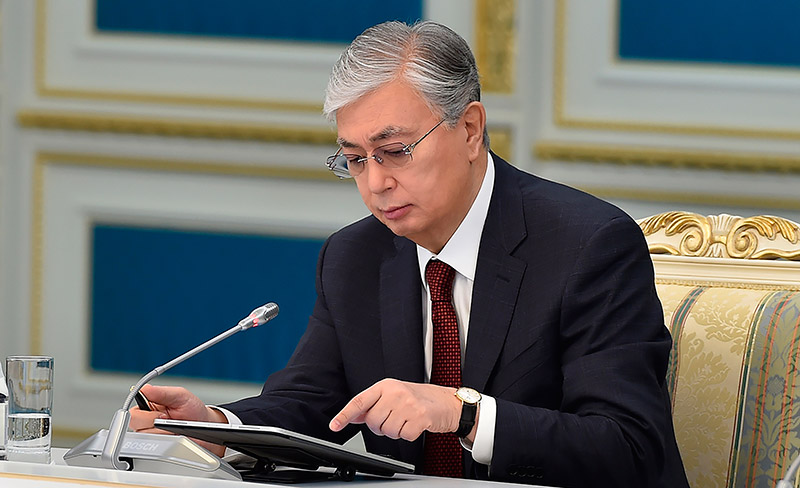
Kazakh leader signs landmark AI law and expands digital asset regulations in Kazakhstan

Kazakh President Kassym-Jomart Tokayev has signed two significant laws aimed at regulating artificial intelligence (AI) and advancing digital processes in the country, the Akorda press service reported. The first law, “On Artificial Intelligence,” is Kazakhstan’s inaugural legislation dedicated to AI. It defines AI systems as objects of informatization and lays out fundamental principles for their […]

Asia-Plus

Kazakh President Kassym-Jomart Tokayev has signed two significant laws aimed at regulating artificial intelligence (AI) and advancing digital processes in the country, the Akorda press service reported.

The first law, “On Artificial Intelligence,” is Kazakhstan’s inaugural legislation dedicated to AI. It defines AI systems as objects of informatization and lays out fundamental principles for their operation. Under the law, AI is strictly viewed as a tool to serve human objectives, and thus must be subject to oversight and clear accountability between developers, owners, and users.

Stakeholders are required to ensure system safety, reliability, user support, and risk management. Key guiding principles of the law include fairness, transparency, prioritization of human safety, data protection, and decision explainability.

The legislation bans AI systems designed to manipulate human sub-consciousness, violate data privacy laws, or present other serious risks.

To ensure transparency, all AI-powered products and services must be clearly labeled. The law also creates a legal foundation for a national AI platform—a controlled environment for developing, training, and testing AI models.

In parallel, Tokayev signed a second law amending various regulatory acts related to digitalization. The first set of amendments aligns existing laws with the new AI legislation, while the second expands regulations on digital assets.

Previously, transactions involving unbacked digital assets were restricted to the Astana International Financial Centre (AIFC). The new law allows such operations nationwide.

The data protection framework has also been strengthened: the duration of consent for data processing is now limited to the time needed to achieve its stated purpose. Citizens retain the right to revoke their consent at any time by notifying the data holder or operator.

Additionally, Kazakhstan is improving its product labeling system, requiring retailers to track transactions through certified point-of-sale systems with identification features. Cybersecurity requirements for trade operations have also been tightened.


Join us on social media!

Article translations:

Related Article

Оби зулол
Оби зулол

Most Read

Recent Articles

The only GPW veteran in Dushanbe allocated more than 80,000 somoni

The mayor's office of Dushanbe allocated him 25,000 somoni.

GITEX AI Kazakhstan 2026: how Almaty became the main AI hub of Central Asia

More than 300 companies and startups, over 200 speakers and 100 investors from 50 countries — the region is entering the global stage.

A trade and economic park to be built at the border junction of Tajikistan, Kyrgyzstan, and Uzbekistan

President of the Kyrgyz Republic Sadyr Japarov familiarized himself with the project.

A project to protect soil from degradation to be developed in Central Asia

The initiative is of great significance for the mountainous countries of the region, including Tajikistan.

Mudslide, death, and destroyed homes: hundreds of families in Tajikistan left homeless

A correspondent from "Asia-Plus" visited Kulob and spoke with the families of those who died and were affected by the disaster.

Spring 2026 bright event: new issue of VIPzone now on sale

This issue is about people and ideas that change everything: from business and investments to fashion, food, and urban environment.

Godfrey Sullivan: “Tajikistan is a promising market for Visa to develop digital payments”

The Vice President of Visa explained why Tajikistan is becoming a promising market for digital payments and how artificial intelligence is influencing the future of finance.

Seven students in Dushanbe were threatened with expulsion for arriving at universities in personal cars

The materials for each case have been sent to the Ministry of Education and Science for appropriate actions.

India’s blockchain push and lessons for the global south

The Indian Government has started pushing aggressively its agenda...

India’s blockchain push and lessons for the global south

The Indian Government has started pushing aggressively its agenda...