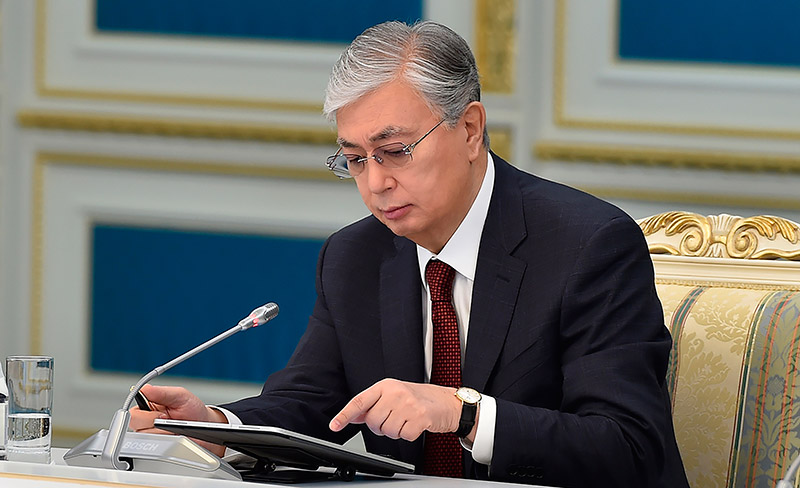
Kazakh President Kassym-Jomart Tokayev has signed two significant laws aimed at regulating artificial intelligence (AI) and advancing digital processes in the country, the Akorda press service reported.
The first law, “On Artificial Intelligence,” is Kazakhstan’s inaugural legislation dedicated to AI. It defines AI systems as objects of informatization and lays out fundamental principles for their operation. Under the law, AI is strictly viewed as a tool to serve human objectives, and thus must be subject to oversight and clear accountability between developers, owners, and users.
Stakeholders are required to ensure system safety, reliability, user support, and risk management. Key guiding principles of the law include fairness, transparency, prioritization of human safety, data protection, and decision explainability.
The legislation bans AI systems designed to manipulate human sub-consciousness, violate data privacy laws, or present other serious risks.
To ensure transparency, all AI-powered products and services must be clearly labeled. The law also creates a legal foundation for a national AI platform—a controlled environment for developing, training, and testing AI models.
In parallel, Tokayev signed a second law amending various regulatory acts related to digitalization. The first set of amendments aligns existing laws with the new AI legislation, while the second expands regulations on digital assets.
Previously, transactions involving unbacked digital assets were restricted to the Astana International Financial Centre (AIFC). The new law allows such operations nationwide.
The data protection framework has also been strengthened: the duration of consent for data processing is now limited to the time needed to achieve its stated purpose. Citizens retain the right to revoke their consent at any time by notifying the data holder or operator.
Additionally, Kazakhstan is improving its product labeling system, requiring retailers to track transactions through certified point-of-sale systems with identification features. Cybersecurity requirements for trade operations have also been tightened.