
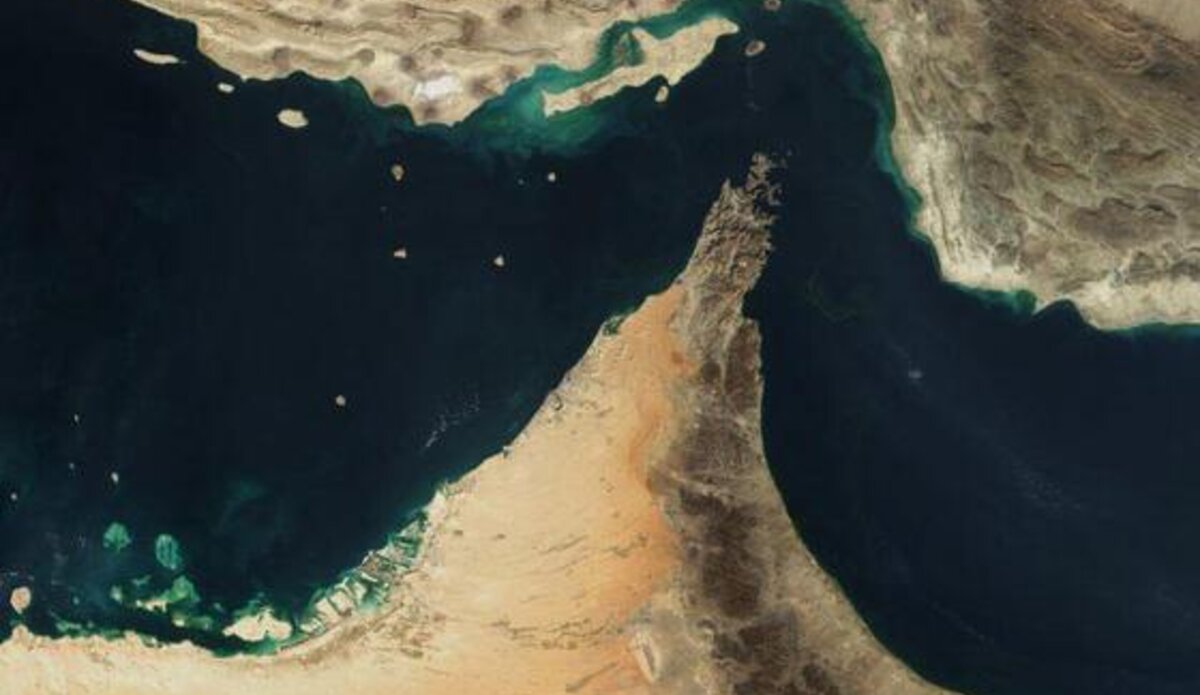
Iran has announced the possibility of free navigation through the Strait of Hormuz for countries that decide to expel American and Israeli diplomats. The statement was made by the Islamic Revolutionary Guard Corps (IRGC).
According to the Iranian agency IRIB, starting Tuesday, March 10, Arab and European countries that expel the ambassadors of the United States and Israel will be able to use the Strait of Hormuz without restrictions. The report was also cited by the outlet Meduza.
At the same time, the IRGC stressed that amid ongoing attacks by the United States, Iran will not allow a single liter of oil to be exported from the region.
Iranian authorities also plan to charge security fees in the Persian Gulf for oil tankers and commercial vessels belonging to U.S. allies. CNN reported this citing a source in the Islamic Republic familiar with the government’s plans.
Earlier, Bloomberg reported, citing informed sources, that Gulf countries had again reduced oil production by between 0.5 and 2.9 million barrels per day depending on the country. The cuts are linked to the near-total halt of shipping through the Strait of Hormuz and the filling of oil storage facilities.
Saudi Arabia has reportedly reduced production by 2–2.5 million barrels per day, the United Arab Emirates by 0.5–0.8 million, Kuwait by around 0.5 million, and Iraq by approximately 2.9 million barrels.
On Tuesday, the IRGC also stated it would continue blocking oil exports from Persian Gulf countries until the United States and Israel stop their attacks on Iran. The force emphasized that it would “not allow a single liter of oil” to leave the region, Reuters reported.
Reports of mining in the strait
Meanwhile, U.S. intelligence has detected signs that Iranian forces may have begun mining the Strait of Hormuz. This was reported by CBS News White House correspondent Jennifer Jacobs, according to Meduza.
According to her, Iran is using small vessels capable of carrying two to three naval mines each.
The exact number of mines in Tehran’s arsenal remains unknown, but various estimates in recent years suggest that Iran may possess between 2,000 and 6,000 mines. Jacobs cited national security reporter Jim LaPorta as the source of these estimates.
U.S. President Donald Trump, commenting on media reports, said that if the information about the mining of the Strait of Hormuz is confirmed, Iran must immediately remove the mines. Otherwise, he warned, the country will face “unprecedented consequences.”
According to the BBC’s Russian Service, U.S. military officials said on Tuesday that several Iranian military vessels had been destroyed near the Strait of Hormuz.
Trump also wrote that American forces had struck ten Iranian boats that were allegedly attempting to deploy naval mines.
“I am pleased to report that over the past few hours we have struck and completely destroyed 10 inactive mine boats and/or ships, and more will follow!” the U.S. president wrote on Truth Social.
Later, Trump edited his previous post about Iran’s alleged attempts to mine the Strait of Hormuz, adding a promise to “brutally” destroy such boats if similar attempts continue.
New wave of strikes
Amid escalating tensions, Israel has launched a new wave of strikes on Tehran and is also attacking the suburbs of Beirut in Lebanon.
Iran responded by launching missiles toward Israel, the BBC’s Russian Service reports. The Israel Defense Forces (IDF) said they carried out strikes on key command centers of Iran’s armed forces.
The Israeli military also stated that alongside strikes on Iran, the IDF began a series of attacks on Beirut, including Hezbollah infrastructure in the Dahieh district.
On the same day, Saudi Arabia’s Ministry of Defense said its air defense forces intercepted seven ballistic missiles during several attacks targeting an airbase and the eastern part of the kingdom.
According to the ministry, six missiles fired toward Prince Sultan Air Base were successfully intercepted and destroyed. In a separate statement on X, the ministry also reported intercepting another missile heading toward the eastern region of the country.
Prince Sultan Air Base is located in Al-Kharj province. On March 1, a U.S. serviceman was wounded there in a missile strike and died a week later.
Saudi forces also reported intercepting seven unmanned aerial vehicles.
When could the war end?
During a briefing at the White House, Donald Trump’s press secretary Karoline Leavitt answered a question about the possible duration of the war with Iran.
According to her, the initial plan assumed that destroying Iran’s missile systems and naval forces, eliminating its nuclear capabilities, and neutralizing Tehran’s proxy groups would take four to six weeks, the BBC’s Russian Service reports.
Leavitt noted that the operation is progressing faster than initially planned, reiterating a statement made by Trump on Monday.
However, she emphasized that the fighting will not end until Iran “fully and unconditionally surrenders — whether or not they publicly acknowledge it.”
According to her, Trump will decide when Iran no longer poses a direct threat.
In response, representatives of Iran’s Islamic Revolutionary Guard Corps stated that it is Iran that will “determine the end of this war.”
