Rights groups warn of possible mass deportation of Russians from Kazakhstan over fake residence permit case

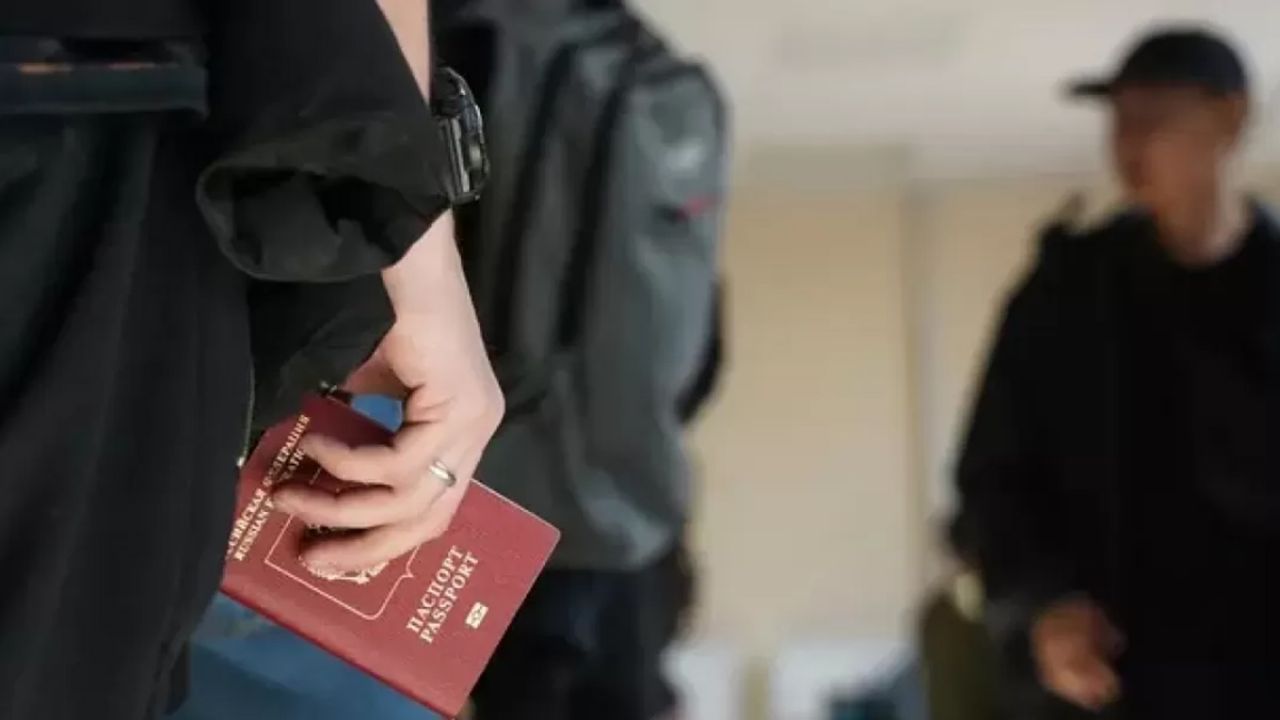
Kazakh law enforcement agencies are investigating a major criminal case involving forged temporary residence permits (TRPs). According to human rights advocates, the investigation could lead to the mass deportation of Russian citizens who moved to the country after the start of the war. The “Slovo Zashchite” project reported the information, citing lawyers and activists assisting […]

Asia-Plus

Kazakh law enforcement agencies are investigating a major criminal case involving forged temporary residence permits (TRPs). According to human rights advocates, the investigation could lead to the mass deportation of Russian citizens who moved to the country after the start of the war. The “Slovo Zashchite” project reported the information, citing lawyers and activists assisting Russian emigrants, and it was also published by Meduza.

According to their information, dozens of Russian citizens of conscription age are being questioned as witnesses in the case. Sources say the investigation began in late February 2026. Investigators are reportedly summoning people for questioning in small groups of three to four individuals at a time.

A temporary residence permit in Kazakhstan allows foreigners to stay in the country for up to one year. To obtain one, applicants must have official employment and registration at their place of residence.

The “Slovo Zashchite” project notes that for some time the Kazakh authorities had largely not interfered with the widespread practice of obtaining TRPs through intermediaries.

Human rights advocates also point out that the investigation is being conducted not by migration police but by a unit of the National Security Committee. In their view, this could indicate preparations for a large-scale deportation of Russian citizens, possibly based on lists coordinated with the Russian authorities.

In this context, activists advise Russians who may be connected to the case involving fake TRPs to leave Kazakhstan voluntarily as soon as possible in order to avoid forced deportation to Russia.

After the start of the full-scale war against Ukraine and the announcement of mobilization in Russia, Kazakhstan became one of the main destinations for Russians relocating abroad. Tens of thousands of people who left Russia because of the war are currently in the country. According to human rights groups, the number of deportations of Russian citizens sharply increased in 2026, including cases involving individuals who face political persecution or accusations of desertion in Russia. 

Article translations:

Related Articles

Оби зулол

Most Read

Join us on social media!

Recent Articles

Approximately 6,000 migrants to be deported from Russia following nationwide raids

Entry into the country will be closed for 7.7 thousand foreigners.

Emomali Rahmon accepted the credentials from new ambassadors

Nine countries have sent new diplomats to Tajikistan.

Russia evacuated 27 Tajikistan citizens from Iran

They worked at the Bushehr nuclear power plant, built by the Russian Federation in Iran.

Baku to host WUF13: shaping the future of sustainable urbanization

Baku, the capital of Azerbaijan, is set to host...

How the Energy Industry Began in Tajikistan 100 Years Ago

We have prepared a historical photo series for you.

Tajikistan and Belarus to establish a joint laboratory for radiation monitoring and nuclear safety

An agreement was signed by the Tajikistan Agency for Nuclear and Radiation Safety and the Belarusian National Technical University.

Former Press Secretary of Emomali Rahmon Sent a Letter to the President Requesting Support for Media Workers

Zafar Sayidzoda believes it is necessary to establish a Media Support Fund, which should operate in the interests of all media — both state and private.

Neither War nor Peace: What Will Be the Next Step for Iran and the US After the Failure of Negotiations?

Tajik experts say that Iran has another leverage that could pose a serious threat to the Trump administration.

In Dushanbe, a criminal group issuing SIM cards and bank cards to fictitious persons was exposed

Through illegally issued plastic cards, the suspects were withdrawing money from an online casino game.

The eKhonish program, an analogue of eDonish, launched in Bokhtar

Now parents and education representatives will be able to remotely monitor students' attendance and academic performance.