QURGHON TEPPA, March 1, 2010, Asia-Plus — Seven bridges with lift weight of more than 60 tons each will be built during the third phase of the Qurghon Teppa-Dusti road rehabilitation project.
We will recall that the project is rehabilitating 42 kilometers of the road from Qurghon Teppa, the capital of the Khatlon province to the town of Dusti. This road has become a high priority with the opening of the bridge across the Panj River providing a link to northern Afghanistan. Japan is building and rehabilitating a road from the bridge northwards to connect to existing roads and the southern town of Dusti.
Mr. Mazahiko Nonogaki (phonetically spelled), representative of Japan’s construction corporation, Nipo, told Asia-Plus that they would built the bridges using new method. According to him, they will be rectangle tunnels that will be much cheaper and much more stable and they will not need annual maintenance.
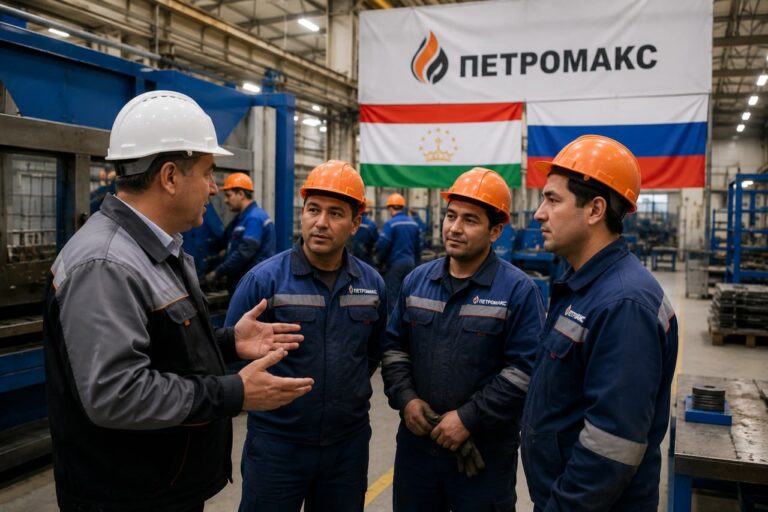
Mr. Nonogaki noted that 222 workers, with 112 of them being local residents, have been involved in implementation of the project. The main building materials are local, while ferroconcrete items and black oil for asphalt production are delivered from Russia.
The project consultant, Mr. George Koizumi, stressed that all building materials underwent strict quality control at the corporation’s lab located at the construction site. “All materials we use must meet American standard requirements,” he noted.
Tajik Deputy Minister of Transport and Communications, Jumakhon Zuhurov, for his part, noted that the Government of Japan had awarded a grant of some 35 million U.S. dollars through the Japan International Cooperation Agency (JICA) for implementation of the project.
“To-date, we have spent more than 3 million U.S. dollars,” said the deputy minister. “These funds have been used mainly for preparatory work, installation of mini plants at the construction site and purchase of building materials.” According to him, the project is expected to be finished by the end of 2012.
“We appreciate Japan’s great contribution to rehabilitation of this road, which is of significant importance for our country,” Zuhurov said.
Work on rehabilitation of the Qurghon Teppa-Dusti road officially commenced in July 2009.
This road is part of a potentially important regional corridor leading to the Indian sub-continent and Pakistan’s deep water ports. The major benefits of the rehabilitated road are lower vehicle operating costs and quicker travel times. In turn these results will lower transport costs, improve access to markets and increase access to social services. According to experts, most of these benefits will accrue to the local population, but other parts of Tajikistan as well as China, Pakistan and Afghanistan will also benefit.