
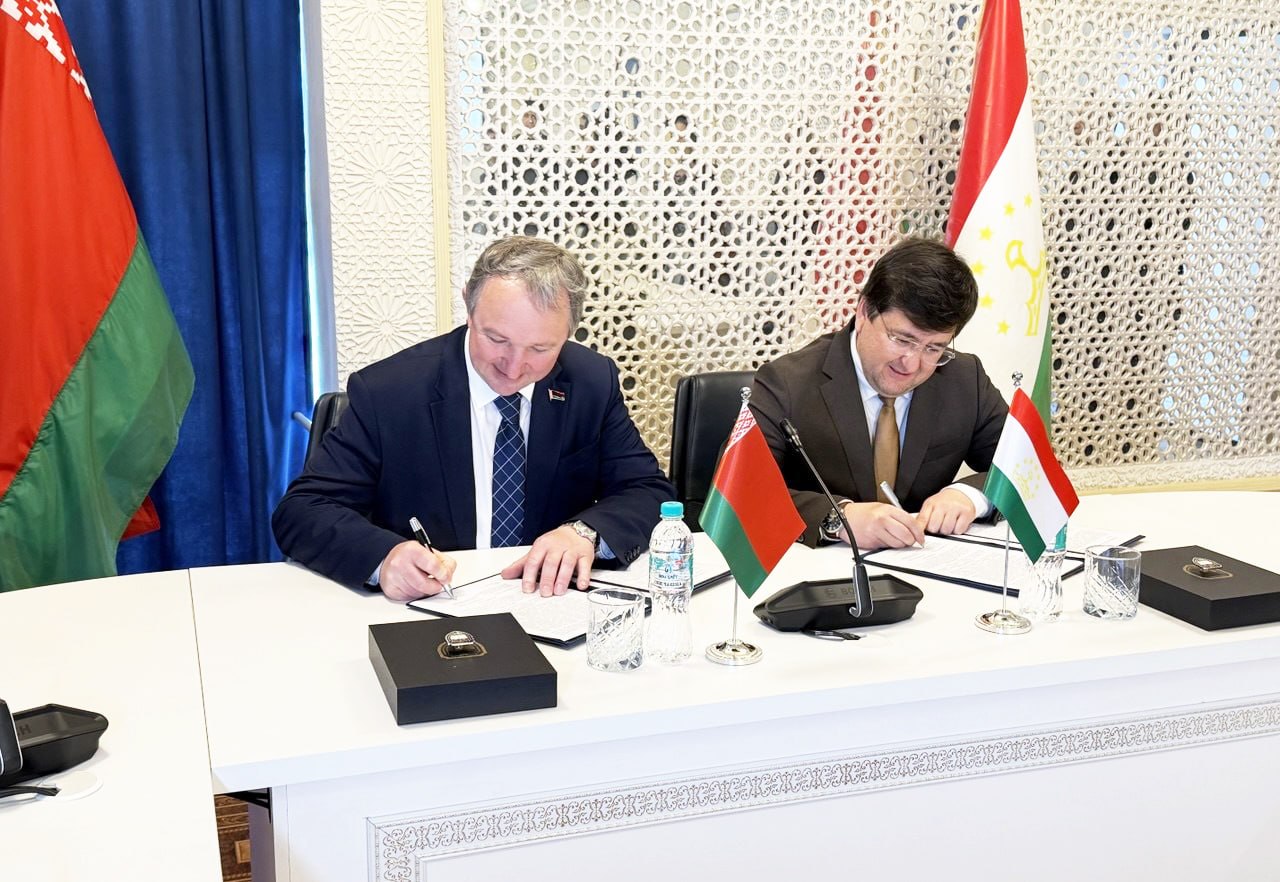
A signing ceremony for the Agreement on the establishment and operation of a joint scientific laboratory took place in Dushanbe between the Agency for Chemical, Biological, Radiological and Nuclear Safety (CBRN) of the National Academy of Sciences of Tajikistan and the Belarusian National Technical University (BNTU).
The document was signed by the Director of the Agency, Professor Ilhom Mirsaidzoda, and the Rector of BNTU, Doctor of Technical Sciences, Associate Professor Sergey Kharitonchik.
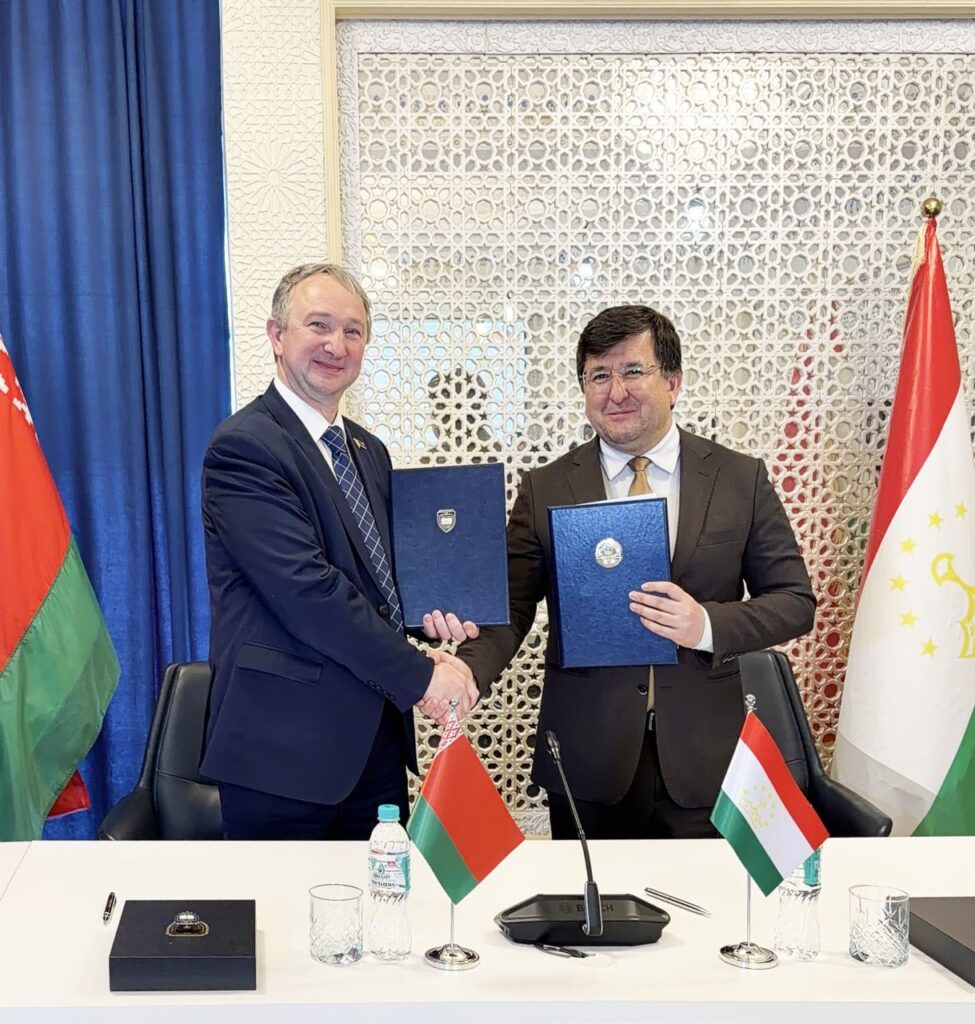
According to the document, the parties will establish a joint scientific “Laboratory for the Study of Technogenic Transformation of the Geological Environment, Radiation Monitoring, and Nuclear Safety”.
Its activities will focus on conducting fundamental and applied research, including:
– development of technologies for extracting rare earth element compounds from industrial waste phosphogypsum and uranium production waste
– assessment of risks of technogenic accidents at dumps and tailings storage facilities
– creation of geoinformation models of technogenically loaded areas
– computational and experimental studies in the field of nuclear and radiation safety
– development of technical regulatory legal acts in the relevant field.
The new laboratory will operate on two scientific and educational platforms — at the Regional CBRN Safety Center in Dushanbe and at the Faculty of Mining and Environmental Engineering of BNTU in Minsk.
“The signing of this agreement marks an important step in the development of practical scientific and technical cooperation between Tajikistan and Belarus,” notes the CBRN Safety Agency of Tajikistan.
The agreement is further underscored by the institutional potential of the Tajik side. In January 2025, the CBRN Safety Agency of Tajikistan was officially designated by the IAEA as a new Collaborating Centre for nuclear safety for the period 2025–2029. As noted by the IAEA, this decision is aimed at strengthening regional capacity, conducting international training courses and seminars, as well as developing training materials for detecting illicit trafficking of nuclear and other radioactive materials.
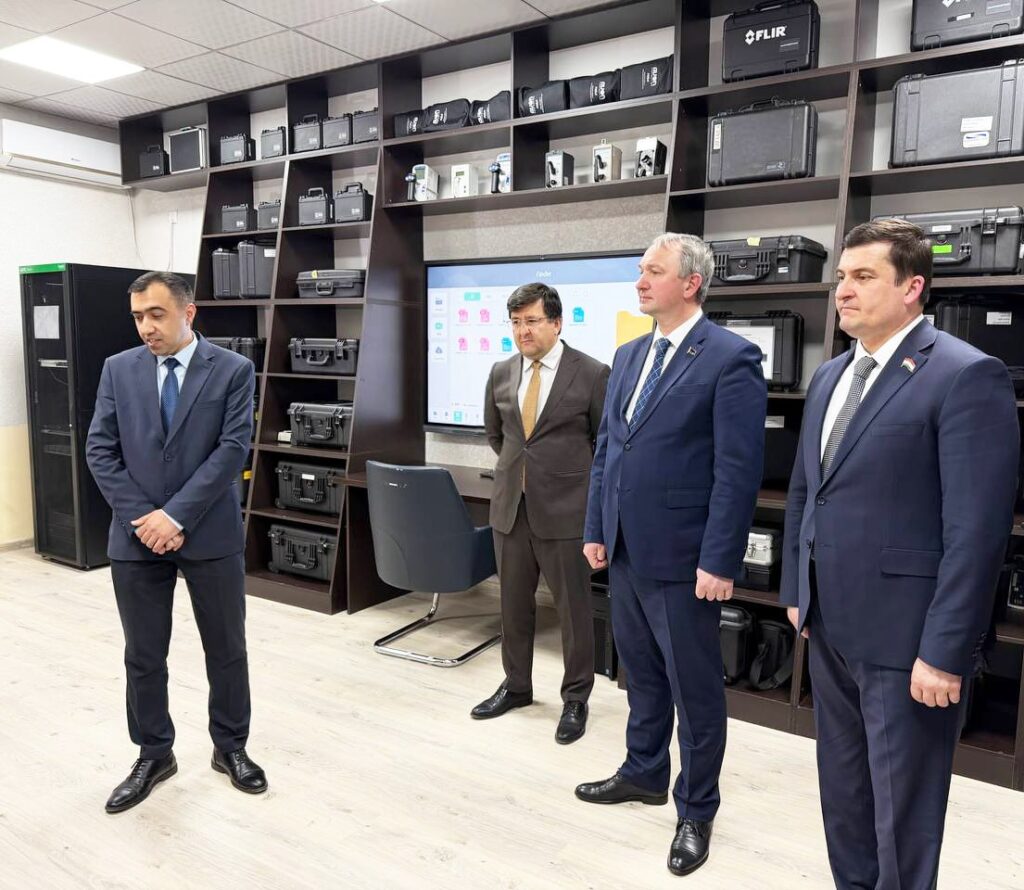
In this context, the establishment of a joint laboratory with BNTU logically enhances the scientific, educational, and applied components of the Agency’s international positioning.
BNTU, in turn, is one of the leading technical universities in Belarus and is positioned as a leader in the country’s technical education. The participation of this university in the project ensures the combination of a strong engineering school, academic expertise, and applied training with the scientific and practical capabilities of the Tajik side in the fields of radiation safety, geo-ecology, and nuclear safety.
The agreement provides for not only joint research but also the organization of scientific seminars, conferences and schools, the exchange of scientific staff and students, joint supervision of dissertations and research work, publication of results in peer-reviewed journals, joint grant applications, and the implementation of innovative technologies.
The document is concluded for a period of five years with the possibility of automatic extension and also enshrines the principles of scientific ethics, transparency, and anti-corruption accountability.
The joint laboratory’s activities are expected to become an effective platform for developing modern scientific solutions on issues of technogenic safety, sustainable natural resource management, radiation monitoring, training of highly qualified specialists, and expanding international cooperation between scientific and educational institutions of Tajikistan and Belarus.
