
The European Bank for Reconstruction and Development (EBRD) is providing Tajikistan with a loan and a grant totaling nearly 50 million euros to reduce electricity losses in Sughd and Khatlon provinces. What are the loan terms?
The bank is allocating 49.6 million euros to Tajikistan in the form of a loan and a grant to reduce electricity losses. Of this amount, 28 million is a loan, and the remaining part is a grant.
According to the ministry of Finance, the interest rate on the provided loan is 0.5% per annum + Eurobor; the loan must be repaid within 20 years. For the first 6 years, only interest on the loan will be paid, and for the following 14 years, the principal amount along with interest will be repaid.
As explained by the ministry, 0.5% + Eurobor means that a fixed markup is added to the interest rate depending on the global Eurobor rate, which changes daily. For example, if the Eurobor rate at the time of loan issuance is 0.2%, the total interest rate will be 0.7%.
The loan agreement was approved by the deputies of the Supreme Council at a parliamentary session on April 1.
Yusuf Majidi, the First Deputy Minister of Finance, presenting the agreement at the session, stated that its goal is to reduce energy losses, replace outdated infrastructure, implement modern accounting systems, and improve payment and fund collection procedures.
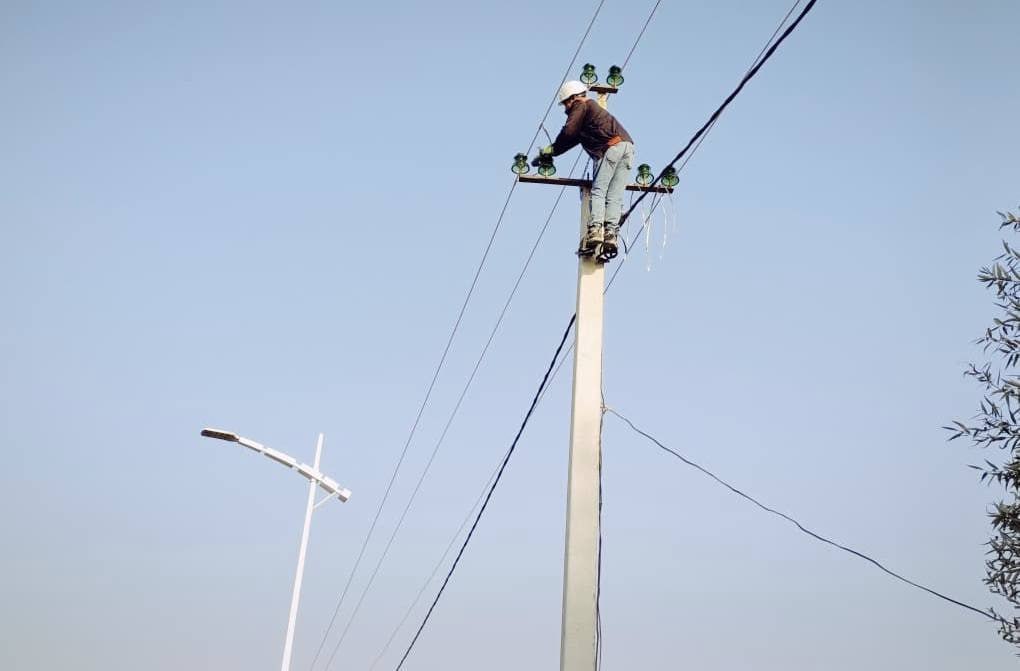
The project plans to modernize the electricity distribution networks in 9 branches of the distribution networks in Sughd and Khatlon provinces. The project implementation will begin in December 2025 and last until May 30, 2030.
It is worth noting that the mentioned agreement was signed on December 4, 2025, by the Minister of Finance of Tajikistan Fayziddin Qahhorzoda and the Head of EBRD in Tajikistan Holger Wiefel.
Earlier, Tajikistan’s President Emomali Rahmon, in his address to the parliament, noted that electricity losses in the country amounted to 3 billion kWh over the 11 months of 2025, which is 500 million kWh less compared to the same period last year.
The president emphasized that “some industry workers did not fully account for payments, and unauthorized electricity losses were artificially transferred to the population and other consumer groups.”
Experts associate electricity losses with the need for repairs of transformers, substations, and power lines that need to be replaced to avoid problems in electricity transmission. Despite statements that electricity losses in the country have decreased by 13%, experts argue that the losses are actually significantly higher.
