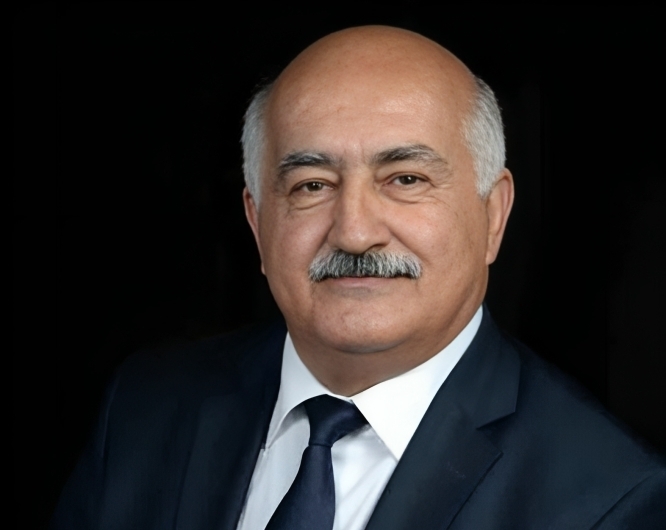
On May 25, 2026, the renowned Tajik scholar, Doctor of Sciences in Philology, and Professor at the Russian-Tajik (Slavic) University, Khusrav Jamshedovich Shambezoda, turned 70. This individual remarkably harmonizes the analytical mind of a major researcher, a careful regard for national roots, and a high pedagogical culture.
Heir to the “living encyclopedia”
Khusrav Shambezoda’s path to great science was deeply symbolic and predetermined by family traditions. He inherited a love for words from his father, the outstanding Tajik poet and statesman Jamshed Shambezoda. If the father earned the title of “living encyclopedia of Persian literature” in academic circles, then the son directed his talent toward the intersection of cultures, becoming a recognized expert in Russian linguistics and sociolinguistics.
The father, who was always concerned about the fate of minority languages, often said, “Language is not just a means of communication. It is the memory of a people, its soul. When a language dies, an entire world dies that can never be resurrected.” These words became Khusrav Jamshedovich’s scientific credo for decades to come.
This continuity was succinctly characterized by the father himself: “The irony is that Khusrav studied Russian language and literature here in Dushanbe, and now in Moscow, they teach him Tajik.” This sharp joke describes the scientist’s path more accurately than any biographical note: the deeper he immersed himself in Russian literature, the more clearly he realized the value and fragility of his native language.
Biographical strokes
Khusrav Jamshedovich Shambezoda was born on May 25, 1956, in Khorog. In 1980, he graduated with honors from the Faculty of Russian Language and Literature at the Dushanbe State Pedagogical Institute named after T.G. Shevchenko. His entire further life turned out to be forever connected with teaching and scientific research.
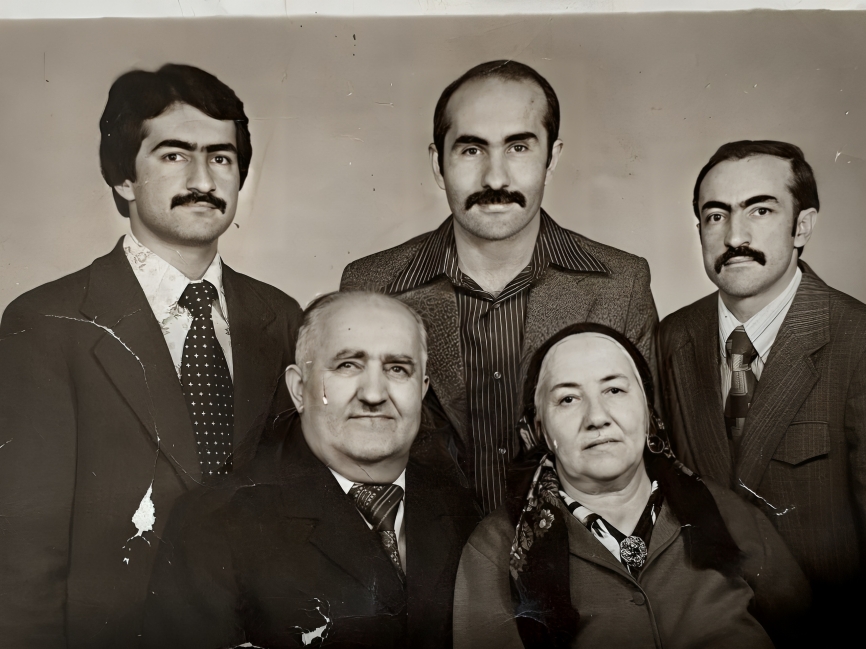
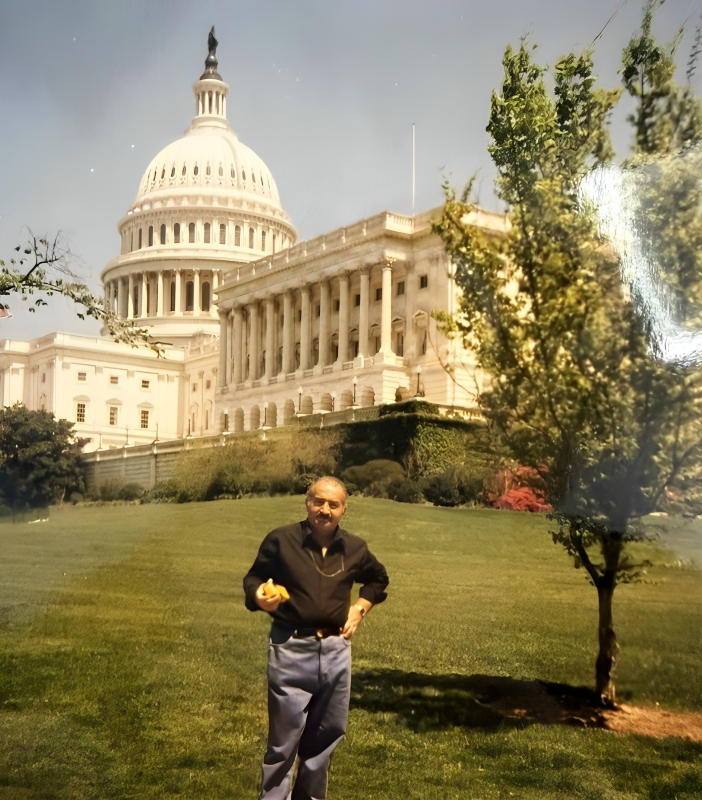
A major milestone in his academic biography was research at leading scientific centers in Russia. In 1996, he underwent an exchange internship at the Kennan Institute in Washington, USA, one of the most prestigious centers for studying the post-Soviet space. It was during this period that his work “National Language Policy in Tajikistan” was published, raising the issue of language policy in the young Tajik republic at the international level for the first time.
He is an active participant in major international forums: the conferences “Education and Science in a Changing World,” “Central Asia in the Foreign Policy of the European Union,” and “Russian Language and Literature in the States of Central Asia.”
Defender of minority languages
Professor Shambezoda’s scientific program is built around the theme of the functioning of non-written languages in multilingual conditions. His candidate’s dissertation “The Influence of Languages with Different Social Status on a Non-written Language” and his fundamental doctoral work “The Functioning of a Non-written Language of a Small Ethnic Group in a Polyethnic Society: On the Material of the Shugni Language in a Tajik-Russian Environment” have made groundbreaking contributions to national and global sociolinguistics.
Alongside theoretical research, the scientist publishes monographs. His major work “Functional Distribution of Languages of Small Ethnic Groups in Multilingual Conditions” remains the most comprehensive description of this topic in world science to this day.
No less important are his articles in international publications. The work “Languages of Interethnic Communication in the Gorno-Badakhshan Autonomous Region of Tajikistan” was included in the Berlin “Atlas of Languages of Intercultural Communication in the Pacific, Asia, and America,” one of the most authoritative reference books on the linguistic diversity of the world. The article “Geopolitical Foundations of the Functional Distribution of Languages” and the publication “The Fate of Native Language in Bilingualism and Multilingualism” established him as the leading theorist of sociolinguistics.
Particularly noteworthy is his recent work “On the Issue of the State Language and Language Policy in the Republic of Tajikistan.” In it, Professor Shambezoda analyzes the current linguistic situation in the country, examines the status and functioning of the state Tajik language, and the linguistic identity of its speakers.
“The state policy of Tajikistan in the linguistic sphere is based on the principles of equality of all languages, regardless of their number and the nature of their speakers’ settlement. Conditions have been created for the harmonious interaction of the Tajik language with other languages operating in the country. Proficiency in multiple languages expands opportunities for professional careers and increases social activity,” Khusrav Jamshedovich writes in the article.
The jubilarian’s scientific interests encompass general linguistics, semiotics, cognitive linguistics, and language policy. Khusrav Jamshedovich is the author of more than 100 scientific works published in Tajikistan, the CIS countries, and Europe. Under his guidance, the National Corpus of the Tajik Language was also developed.
Builder of academic bridges
Khusrav Shambezoda belongs to the generation of scientists who, in the transformative post-Soviet years, took responsibility for preserving the educational space of Tajikistan. Since the founding of RTSU in 1996, he has made an invaluable contribution to its development.
As an active public figure, Professor Shambezoda consistently defends the strengthening of the Russian language’s status in the country. His article “On the Status of the Russian Language in the Republic of Tajikistan,” prepared from materials of an international conference, largely determined the further discussion on this topic. His practical efforts laid the foundation for the creation of advanced Russian-language schools in Tajikistan.
Since 2004, he has represented Tajikistan in the Basic Organization for the Languages and Cultures of the CIS States, and since 2005, in the International Association of Teachers of Russian Language and Literature.
A true ustod
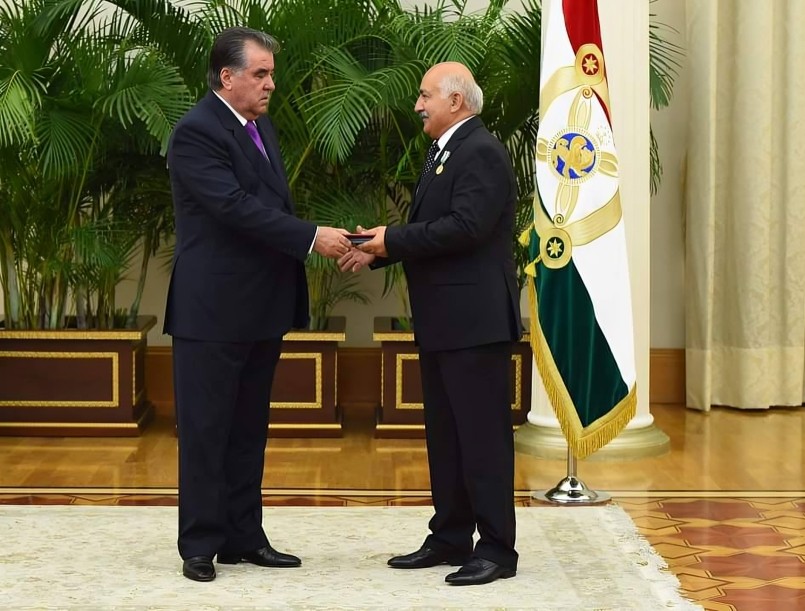
For his many years of fruitful work, Khusrav Jamshedovich has been awarded the honorary titles “Excellence in Education of the Republic of Tajikistan” and “Honored Worker of Higher Education of the Russian Federation.” In 2017, by the decree of the head of state, he was awarded the medal “Khizmati Shoista” (“For Merit”).
Under his leadership, 2 doctoral and 9 candidate dissertations have been defended: the professor imparts to his students not only the methods of theoretical and applied linguistics but also the passion for exploring the living word. His student and colleague, Doctor of Sciences in Philology, Professor of the Department of Theoretical and Applied Linguistics Manizha Davlatmirova, recalls her first meeting with her scientific mentor: “I still remember the anxiety before passing the candidate’s minimum. Khusrav Jamshedovich was among the examiners. He conducted the exam strictly and thoroughly; no question was left without deep discussion. It was then that I felt his rigorous attitude towards science. I remembered that exam for a long time.”
The same demand accompanied Manizha Davlatmirova during the years of working on her doctoral thesis: “Khusrav Jamshedovich was then the Vice-Rector for Science. At every department meeting, he would address me with the question: ‘Where is your thesis?’ There was neither pressure nor reproach in these words – only sincerity.” According to Davlatmirova, this is what made his guidance special: “He was distinguished by conscientiousness and an amazing systematic approach in work. He knew how to build relationships with subordinates and never left his people alone with difficulties, supporting each one.”
Behind all the scientific titles and academic achievements stands a living person. Khusrav Jamshedovich is a loving father of three daughters and a tender grandfather, the head of a large and close-knit family. Friends and colleagues know him as a loyal, generous, and responsive person, always ready to help.
Wishes from family and colleagues
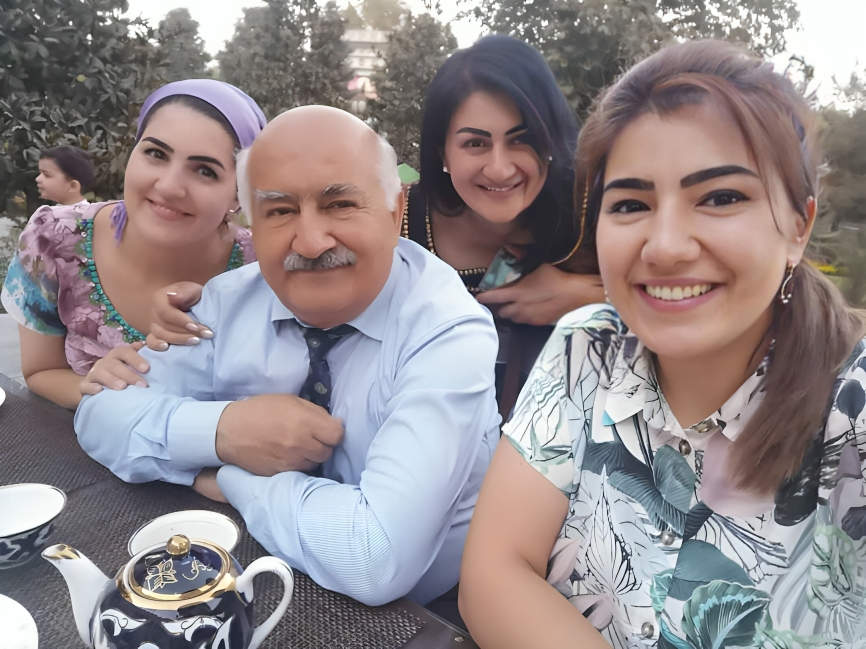
“Dear Dad! Accept from our entire family the most sincere congratulations on your 70th anniversary. Seven decades: this is an entire era filled with achievements, events, and most importantly, good deeds. Thanks to your care and love, more than one generation has grown up, and today we all want to say thank you. We wish you strong health, peace of mind, warmth of home, and that you remain energetic and full of strength for a long time. May each new day bring joy and peace, may the grandchildren delight you with their successes, and may your heart always be filled with calm, confident joy. For us, you are the main person, our support and example. Thank you for always being there, for your hands that fixed everything in the world, for your kind eyes and ability to find the right words. We love you very much and are proud to have you. Happy anniversary, our dear! Your family!“
“Dear Khusrav Jamshedovich!
On behalf of the entire Department of Theoretical and Applied Linguistics, please accept the most sincere, warm, and heartfelt congratulations on your anniversary.
May your life be filled with joy, warmth, support from loyal friends and devoted colleagues, and may each day bring satisfaction from the fruits of your noble labor.”
We wish the jubilarian strong health, family well-being, inexhaustible inspiration, and new successes for the benefit of science and education.