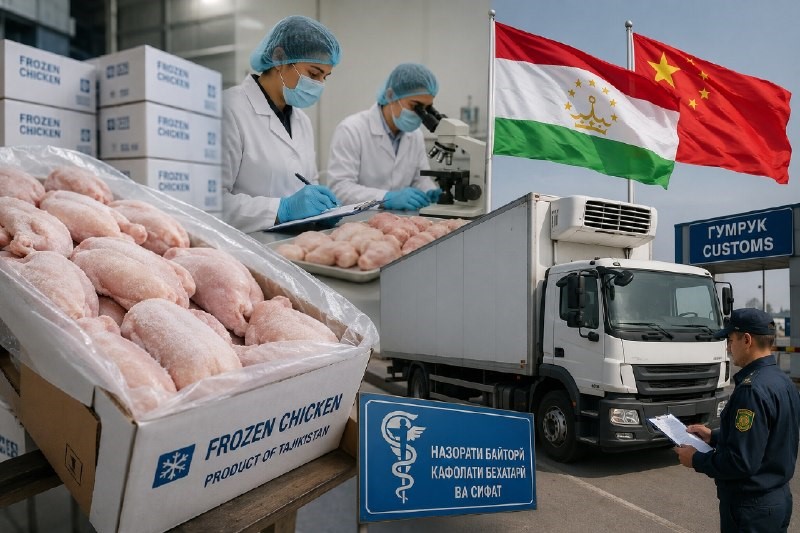
Tajikistan and China have signed an agreement on the export and import of chicken meat between the two countries. This document was signed between the Committee for Food Security of Tajikistan and the General Customs Administration of China and provides for the adoption of unified import and export rules between the two states, promoting safety and preventing the spread of diseases.
The document also establishes procedures in the event of avian infectious diseases and rules for the activities of exporting enterprises.
The agreement was signed on May 12, and under its terms, the parties reached agreements on control, quarantine, and food safety during the import and export of frozen chicken meat and thermally processed chicken meat.
Control of Infectious Diseases
According to the draft agreement, both countries are obliged to inspect chicken meat before export and import, conduct veterinary control, and issue a safety certificate. This is an official document confirming the absence of diseases in the products.
The poultry is inspected both before and after slaughter.
Tajikistan and China are also required to provide each other with laws, regulations, and procedures for processing poultry. This means that both countries must inform each other about how poultry is raised, kept, and slaughtered.
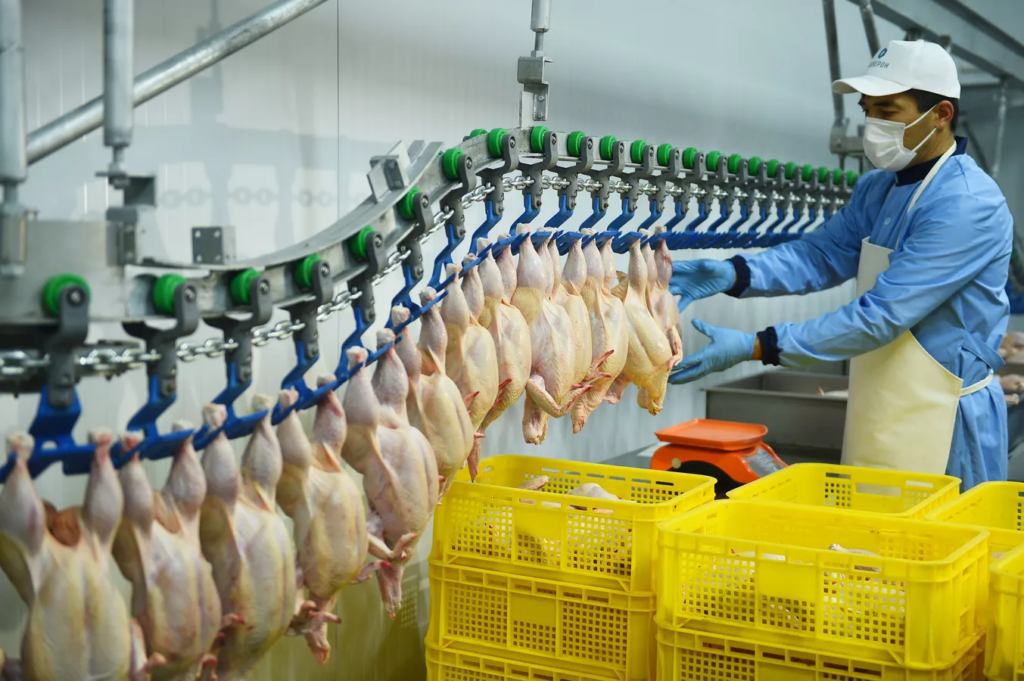
Moreover, the parties must provide information on which enterprises produce chicken meat, what volumes of products are exported, and whether any violations of rules or sanitary problems have been identified.
There will also be control over veterinary drugs, the presence of contaminants, and dangerous microorganisms to ensure the absence of harmful substances in the products.
Specialists from one country may be sent to the other country to conduct inspections.
Both parties must prove the absence of dangerous diseases when exporting chicken meat.
Export Rules for Tajikistan and China
According to the draft document, the rules for chicken exported from Tajikistan to China are as follows:
– the poultry must be raised and slaughtered in Tajikistan;
– it must be known from which farm the poultry originates;
– no infectious diseases should have been registered on the farm in the last 12 months;
– the farm should not have been under quarantine in the last 6 months.
The same requirements apply to the export of chicken meat from China.
Information on Enterprises
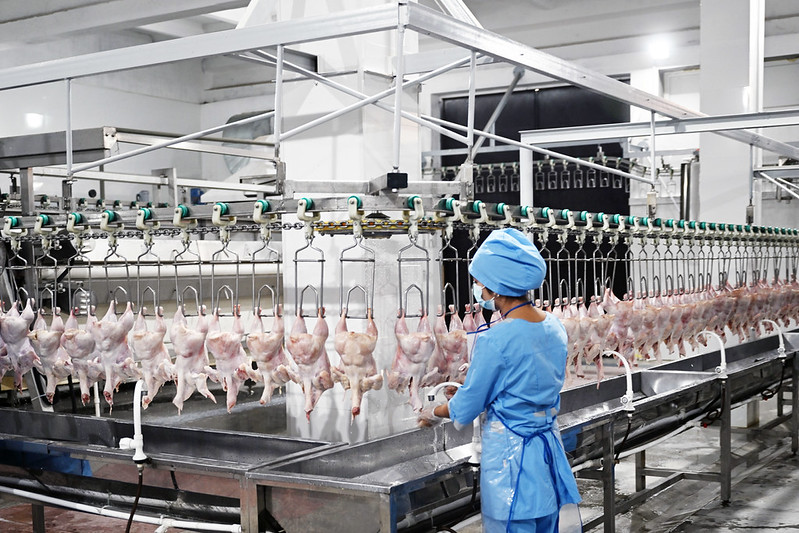
The agreement states that enterprises engaged in slaughtering, processing, and storing poultry products in refrigerators must comply with the sanitary and veterinary requirements of Tajikistan and China.
This means that not every enterprise will be able to export chicken meat to China or Tajikistan.
Enterprises must be officially registered and have special permits.
If an enterprise is not listed in the official registry, it is not allowed to export chicken meat. Only products produced after the registration of the enterprise may be exported.
According to the draft, lists of approved enterprises must be published on official websites.
Transportation and Storage
During the transportation of chicken meat intended for export, mixing it with other types of products is prohibited. During processing, mixing with other products is also prohibited.
Export products must be stored separately. During storage, the internal temperature of the meat must not exceed -15°C. If the temperature rises, the products may spoil or become contaminated with disease agents.
Packaging
The packaging must be sealed, and the boxes or packaging materials must be new, clean, and meet sanitary requirements.
Labeling is done in Tajik and Chinese or English. The packaging must indicate the product name, country of origin, enterprise number, production date, expiration date, and other important information.
Each batch of exported products must have an original veterinary certificate. This document can be issued in Tajik, Chinese, or English. The form and content of the certificate must be agreed upon in advance by the parties.
The parties will exchange samples of seals, signatures, and lists of authorized veterinarians to prevent the use of counterfeit documents and illegal importation of products.
Any changes to documents, including the replacement of seals and updating of certain rules, must be communicated to each other one month in advance.
Cases of Trade Suspension
If an infectious or parasitic disease occurs, the export of chicken meat is temporarily suspended. Dangerous products are subject to recall, meaning that if suspicious products have already entered the market, they are removed from sale.
After resolving the issues, negotiations are conducted, and the parties may resume trade.
Inspection in the Importing Country
The importing country re-inspects the products, even if they arrived with permission from another country. If the requirements are not met, the products are returned or destroyed.
The above norms apply to “frozen chicken meat,” edible by-products, and “thermally processed chicken.”
Thermally processed chicken includes muscle and skeletal parts of the bird (with or without bones) and edible by-products treated at a temperature of no less than 60°C for more than 30 minutes or for fully cooked products at a temperature of 70°C for more than 1 minute using effective heating equipment or other equivalent measures recognized by the parties.
By-products of poultry that are not approved by the parties are not allowed for export.
Which Additional Parts of Chicken are Allowed for Export?
The edible by-products of poultry permitted for export include:
– heart, liver, kidneys, gizzard;
– neck, feet, skin, tendons/cartilage, comb;
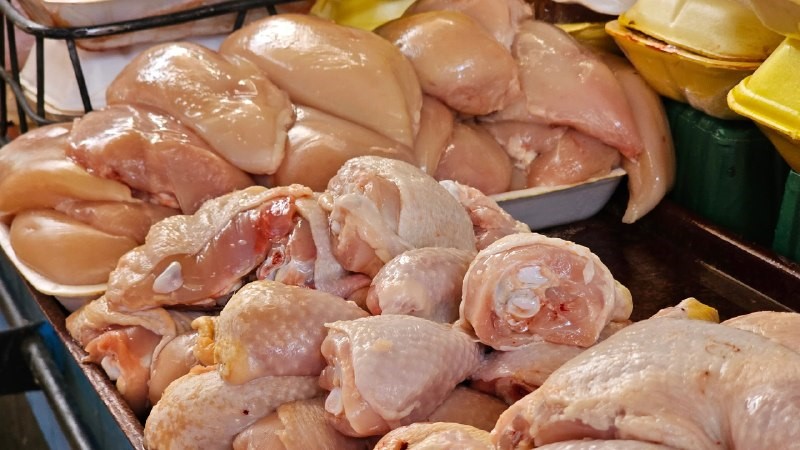
– frozen chicken breast (with skin or without skin, with bones or without bones);
– frozen chicken legs (whole, quarters, thighs, drumsticks);
– frozen chicken wings (whole wings, mid-wing, three-section wings, wing tips).
… It should be noted that this agreement is concluded for a period of 5 years and comes into force from the moment of signing. It may be amended by mutual agreement of the parties. If neither party notifies the other of its intention to amend or terminate the agreement at least six months before the expiration of the agreement, it will be automatically extended for another five years.