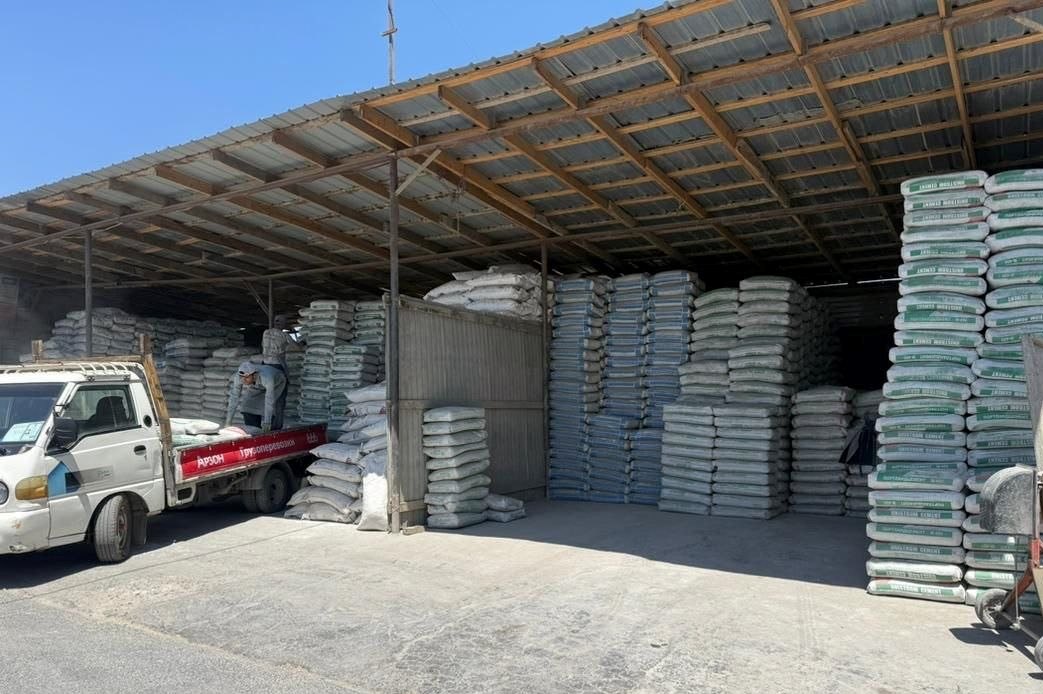
Cement prices have decreased by approximately 16.00–20.00 somoni, or about 23%, in Tajikistan, according to the Antimonopoly Agency under the Government of the Republic of Tajikistan.
According to the agency, following the instructions of President Emomali Rahmon, voiced at a government meeting on May 28, a working group was established. Its task is to monitor the cement market in the republic and carry out explanatory work to prevent unjustified price increases.
On the same day, working groups from the Antimonopoly Agency were reportedly sent to the markets of Dushanbe, districts subordinate to the center, as well as Sughd and Khatlon provinces.
The agency noted that since the second half of May, there had been a shortage of cement in the country’s markets. As a result, prices rose, and cement was sold for 70–85 somoni.
According to the Antimonopoly Agency, after joint measures were taken with cement production enterprises, the situation normalized within a day.
Monitoring conducted on May 29 showed that in cities and districts directly subordinate to the center, one 50-kg bag of cement was sold at a price ranging from 54.00 to 60.00 somoni. In some cases, taking into account transportation and delivery costs, the price reached 65.00 somoni. In Dushanbe, cement was sold for 54.00–60.00 somoni.
In the Sughd province, the price for one bag of cement was between 60.00 and 65.00 somoni, while in the Khatlon province, it ranged from 54.00 to 63.00 somoni.
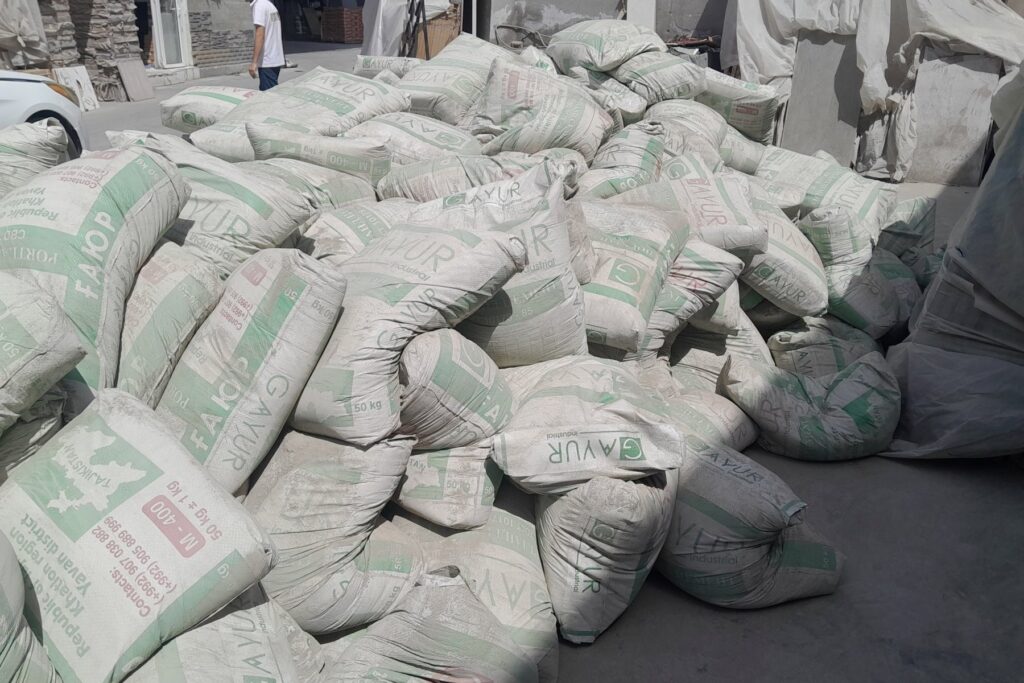
The Antimonopoly Agency reports that producers continue to supply retail outlets and markets with cement, and the price of cement is stabilizing.
The Agency’s working group will continue its work until the situation is fully normalized and will take necessary measures to regulate prices.
Earlier, it was reported that there was a shortage of cement in Tajikistan and its prices had risen.
Despite the increase in production of this construction material in the country, the domestic market faced shortages, supply disruptions, and a sharp rise in the prices of the material.
In Dushanbe, the cost of a 50-kg bag of cement rose from 50.00 to 70.00–75.00 somoni.
In the Khatlon and Sughd provnces, prices reached 75.00–85.00 somoni per bag, and in Khorog, the capitla of the Gorno-Badakhshan Autonomous Region (GBAO), according to local residents, there had been almost no cement in the markets for about a month, with prices potentially reaching up to 90.00 somoni.
At a government meeting at the end of May, it was noted that cement is one of the key materials for the development of infrastructure, industry, and construction, and its stable availability in the market has significant economic and social importance.
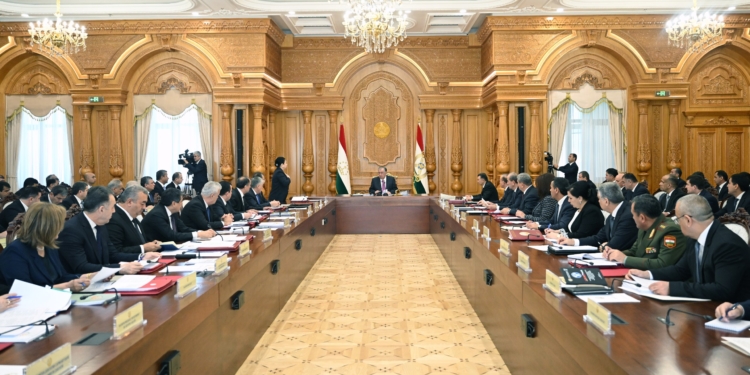
Among the reasons for the current situation were mentioned deficiencies in the coordination of enterprise activities, underutilization of production capacities, weak market regulation, and insufficient control over the activities of retail chains.
In particular, it was noted that some enterprises were halted for repairs during the most active construction season. Additionally, in some cases, the activities of intermediaries and dealers contributed to the price increase.
Emomali Rahmon emphasized that the price increase of cement could affect the pace of construction, the cost of housing, the implementation of social projects, and the development of the national economy, and he instructed to prepare measures for stabilizing the cement market within a week.
The president also instructed to take measures to fully supply the domestic market of the country with locally produced cement and indicated to build 4 new cement plants.