In Tajik schools, children are taught from an early age to be correct. To sit correctly, to answer correctly, to look correct, not to argue with elders, not to ask unnecessary questions, and most importantly – not to make mistakes. At the same time, the modern world increasingly values quite different qualities: the ability to think independently, to show initiative, to adapt to changes, and to find unconventional solutions.
But can these qualities develop in a system where the correct answer is often more important than the process of searching itself? And how does such a model of education affect children – not only in school but also in adult life? Today, on Children’s Day, we decided to consider this question.
Where the “be like everyone else” mindset comes from
Sociologist Gulnora Beknazarova believes that the “do not stand out” mindset in Tajik society is formed primarily by the very system of upbringing, where a child is perceived from an early age as part of the family and community, rather than as an individual with their own opinion.
“A child’s behavior is evaluated not only as their personal choice but also as a reflection of parental upbringing, family reputation, and the status of relatives. Therefore, the mindset of ‘be like everyone else’ often means: do not let your people down, do not violate expectations, do not become a source of condemnation,” explains the sociologist.
According to her, in a society where family reputation, respect for elders, and meeting the expectations of others are especially important, children are often taught not to express themselves but to be socially cautious.
This model, the expert believes, is then reinforced by schools.
At the same time, the problem, according to the sociologist, is related not only to the culture of upbringing but also to the very organization of the school system.
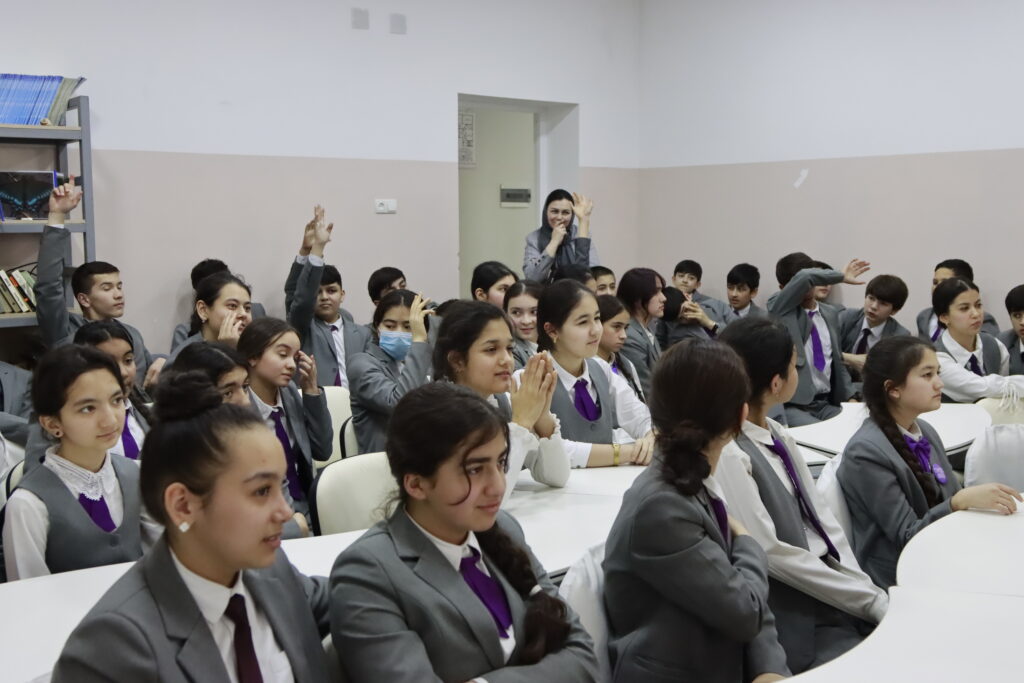
According to OECD data – the Organization for Economic Cooperation and Development, which mainly includes developed countries in Europe, North America, and Asia – there is an average of about 14 students per teacher in primary schools, and the average class size is 21 people.
Researchers from the organization note that the smaller the classes, the more opportunities the teacher has to pay attention to each child, build feedback, and develop students’ independence.
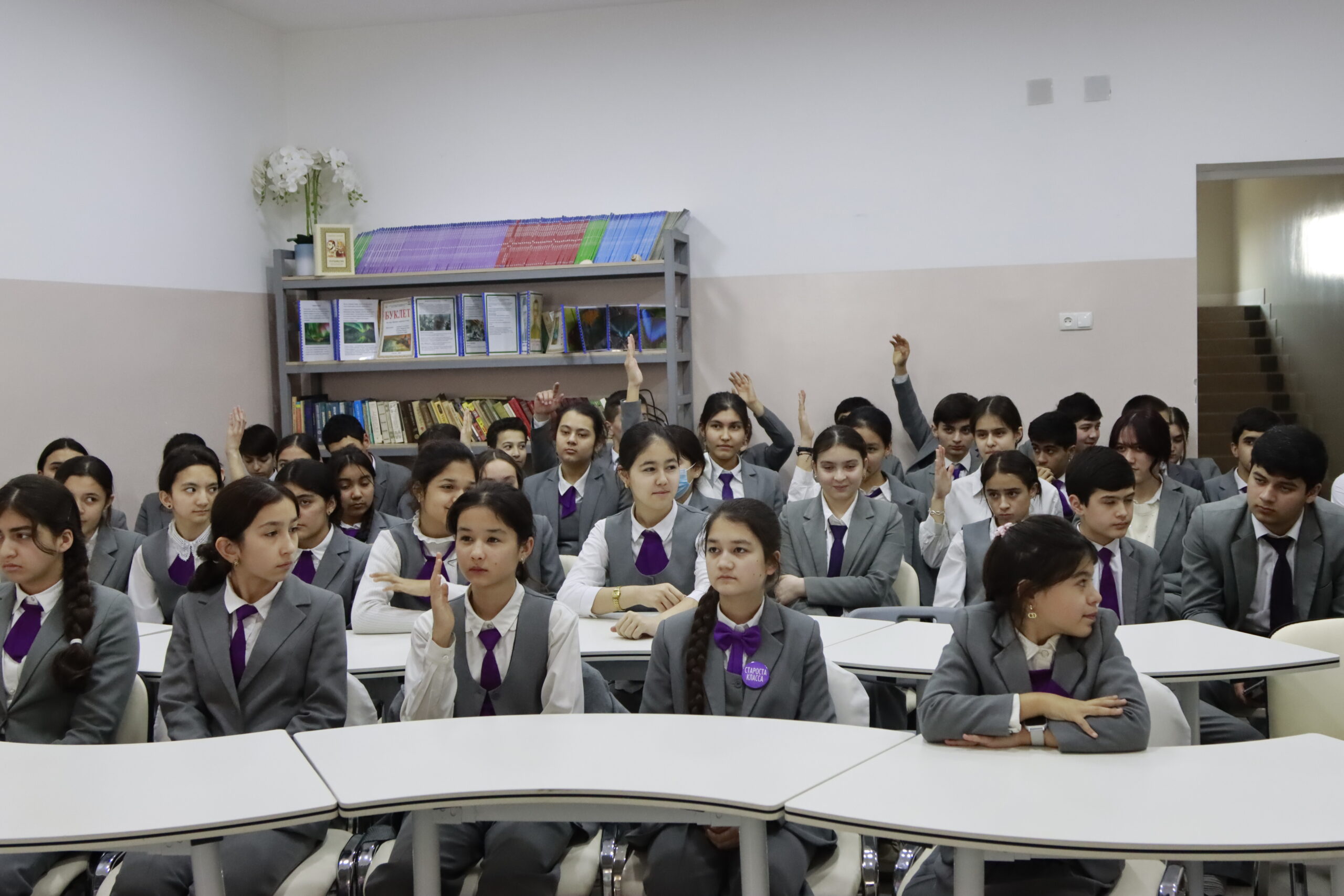
In Tajik schools, the situation is often quite different. In some classes, there are 40 or more children. And in such conditions, it is impossible for the teacher to pay attention to each child, hear their opinion, or calmly address mistakes.
Other problems in the education system exacerbate the situation: low teacher salaries, staff shortages, high workloads, and emotional burnout.
In such conditions, schools often have no choice but to operate under a model where children must sit quietly, not argue, and provide “correct” answers. There is simply not enough time, desire, or resources for teachers to foster initiative, independence, and creative thinking.
Error as a sentence
Many adults perceive school as a place where a child acquires knowledge, but clinical psychologist and neuropsychologist Nigora Abdugaffor believes that its role is much broader.
“School occupies a huge part of a child’s life. It is during these years that their self-image, perception of the surrounding world, and their place in it are formed. To a large extent, it is school that shapes a person as an individual, and this experience then influences their entire future life,” says the specialist.
According to her, when a child is constantly made to feel that asking unnecessary questions is not worth it, making mistakes is bad, and it is better to keep their opinion to themselves, they gradually develop a feeling that little depends on them.
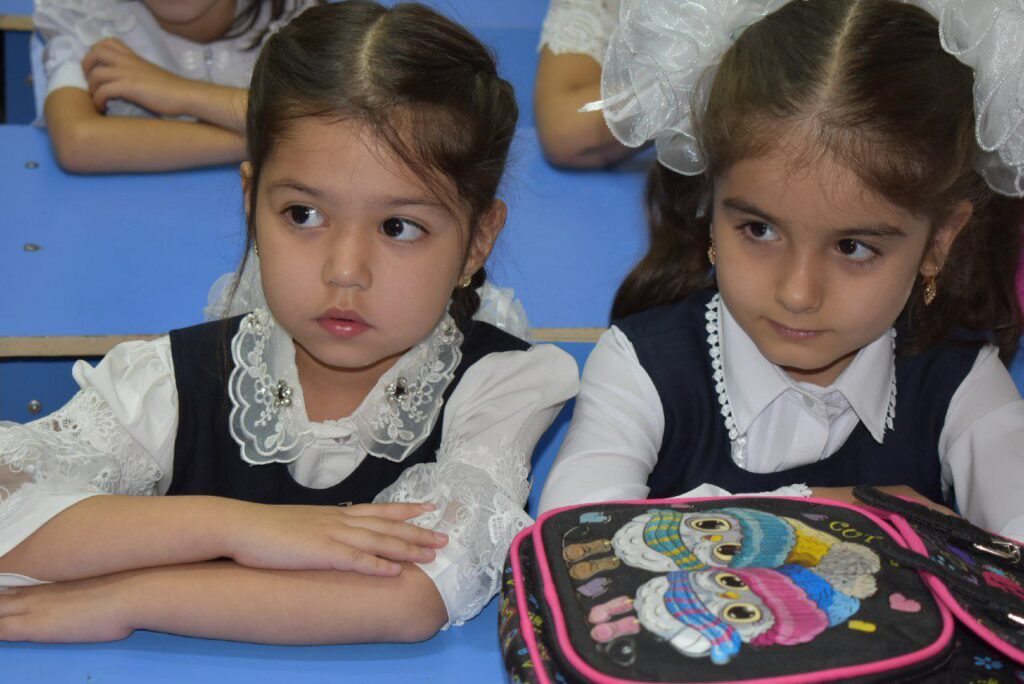
“Firstly, a child develops learned helplessness. This is observed in many of our children, who, at a sufficiently mature age, cannot decide where to enroll, where to go, or what steps to take. This state is one in which they stop believing that their actions can change anything. In other words, why try if nothing will come of it anyway?” explains the psychologist.
Another problem lies in the fact that learning begins to be associated not with acquiring new knowledge but with constant anxiety about possible mistakes.
“The child perceives any testing situation – an exam or an answer at the board – as something very alarming. Chronic anxiety depletes the nervous system and reduces cognitive functions, memory, attention, and flexible thinking. I am often approached specifically regarding the fear of exams, when the child forgets absolutely everything before the exam,” notes Nigor.
But perhaps the most unpleasant thing happens when a child begins to associate their worth with the result. According to the psychologist, many children stop perceiving mistakes as part of learning and start viewing them as indicators of their own inadequacy. This is why they are more likely to try not to find their own solutions but to guess the correct answers.
As a result, the fear of making mistakes gradually displaces curiosity, initiative, and creativity.
“Creative creativity and the fear of mistakes are completely interconnected. Any creative person is ready for uncertainty and failure. However, a person who is used to not being able to make mistakes finds it difficult to engage in creativity because they think in advance: what if this is wrong, what if it is condemned. And the child simply stops creating and being creative,” explains the neuropsychologist.
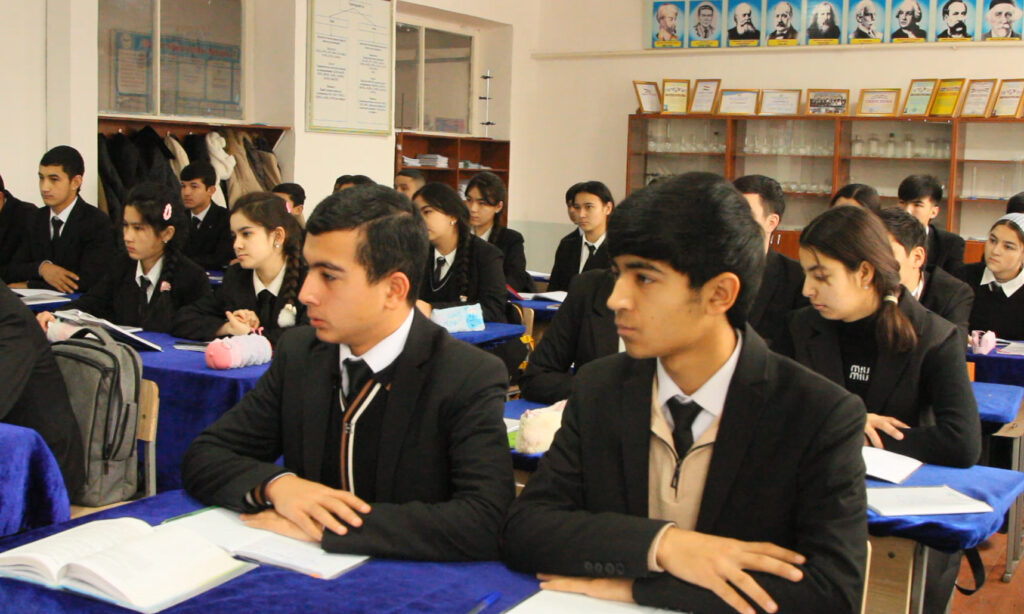
Instead of looking for their own solution, such a child tries to find the answer that is expected of them.
A generation of ready answers
The consequences of such a system become especially noticeable in adult life when former students enter the labor market.
Today, employers need not just people with diplomas or good grades. The world is changing too quickly; the ability to think independently, adapt, propose new ideas, and find unconventional solutions is increasingly valued.
Human resources development specialist at Arvand Bank, Nilufar Avlikhodjaeva, says that it is precisely such people who stand out today.
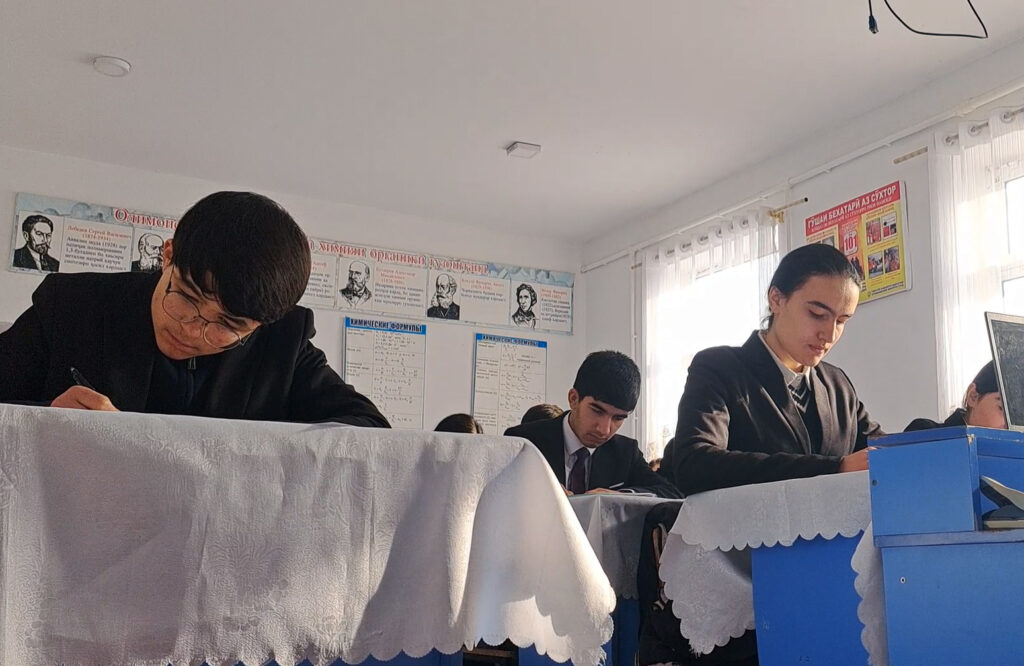
“Now, in the era of AI, and sometimes blind adherence to it, people with a sense of taste, the ability to look at situations from different angles, and find unconventional solutions stand out especially. There are few such young people, – she notes. – Even fewer are those who truly want to create and do something meaningful. The majority are ready for less, replacing ambition with quick dopamine hits and entertainment. Therefore, I can confidently say: a lively mind, initiative, and real potential are not just noticed in today’s labor market – they are ready to pay for them.”
However, according to the HR specialist, the problem for many young people today is not so much a fear of making mistakes as a lack of habit to think independently.
In her opinion, the roots of this largely go back to school, where children are taught from an early age to look for the only “correct” answer and avoid mistakes.
“The school is structured so that you need to know the correct answer in advance, otherwise you get a bad grade. A lively mind and creativity are not just not encouraged in this system; they are a hindrance. I know from my own experience: template reading of paragraphs and their retelling taught me nothing in particular,” says the specialist.
She admits that she feels the consequences of such a system even in herself. According to her, it is important to change the situation not only in schools but also within families: how parents communicate with their children, whether they can hear their opinions, and whether they allow the child to be imperfect.
“Our kids are only now starting to ask questions”
However, there are schools that are trying to establish a different model of communication with children.
Shamsia Raupova, the director of a private school in Buston, notes that children are gradually losing interest in the learning process, where grades become paramount. In her opinion, the situation can only change when the child feels safe and understands that their opinion truly matters.
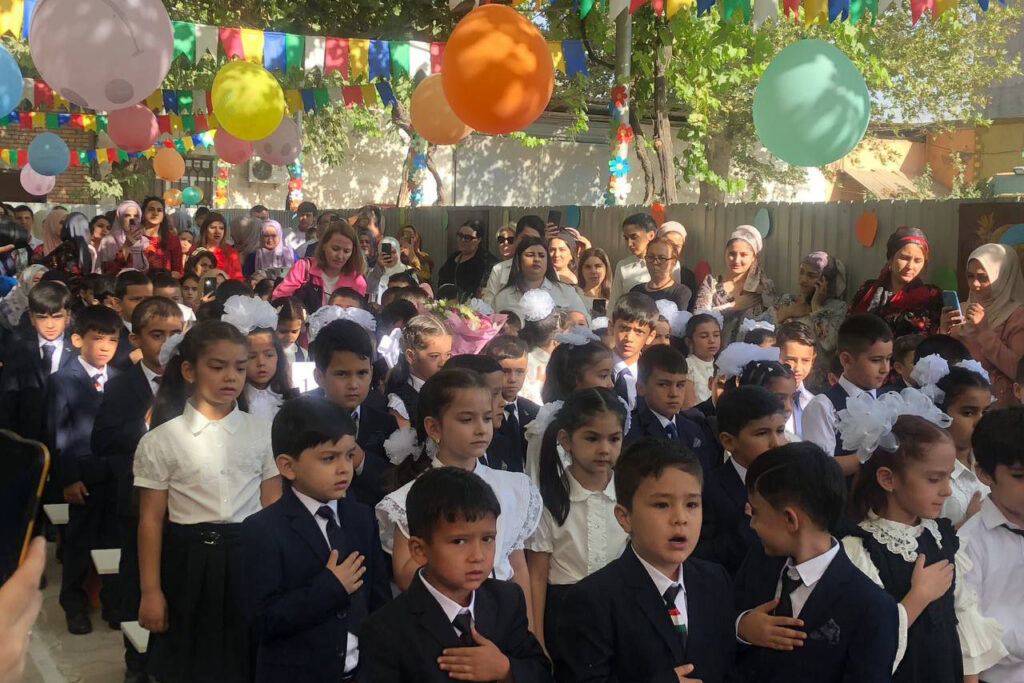
The difference is especially noticeable between children who have been taught from childhood simply to get good grades and those who have been allowed to think, argue, and seek their own solutions.
“Unfortunately, it must be acknowledged that there are very few kids with their own thinking and problem-solving paths. We enjoy listening to children who love to debate, express their opinions, and are always in search. It is very interesting to work with such kids,” she notes.
Perhaps the problem of creativity in Tajik schools is not so much that children cannot come up with something new. Rather, they learn too early to fear mistakes, condemnation, and incorrect answers.
And the main question today is no longer about grades, school uniforms, or discipline. But whether the child can ask questions, doubt, try new things, and not be afraid of mistakes.
After all, it is from this that creativity, independence, and the ability to choose one’s own path begin – qualities that are needed not only in school but also far beyond its walls.