Tajik authorities asks the United States to graduate Tajikistan from Jackson–Vanik amendment

DUSHANBE, October 24, 2011, Asia-Plus  — In a report released at a news conference in Dushanbe, Tajik Foreign Minister Hamrokhon Zarifi noted on October 22 that President Emomali Rahmon and U.S. Secretary of State Hillary Rodham Clinton discussed issues related to attraction of the U.S. investments and technologies for development of Tajikistan’s natural resources. According […]

Payrav Chorshanbiyev

DUSHANBE, October 24, 2011, Asia-Plus  — In a report released at a news conference in Dushanbe, Tajik Foreign Minister Hamrokhon Zarifi noted on October 22 that President Emomali Rahmon and U.S. Secretary of State Hillary Rodham Clinton discussed issues related to attraction of the U.S. investments and technologies for development of Tajikistan’s natural resources.

According to him, the sides also considered issues related to expansion of bilateral cooperation between Tajikistan and the United States in the field of energy as the main foundation for sustainable development of Tajikistan.

“The Tajik side expressed readiness to continue constructive dialogue with the United States over Tajikistan’s admission to the World Trade Organization,” Tajik minister noted.

Zarifi stressed that Tajikistan’s graduation from the Jackson–Vanik amendment was recognized as an important factor of development of trade relations.   

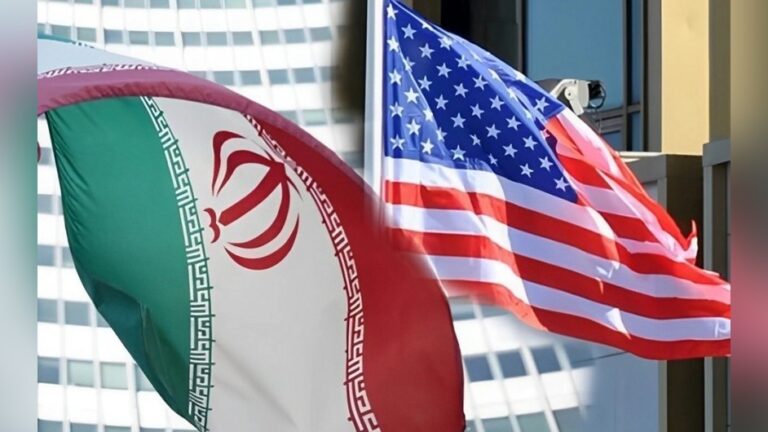
The Jackson–Vanik amendment is a 1974 provision in United States federal law, intended to affect U.S. trade relations with countries with non-market economies (originally, countries of the Communist bloc) that restrict freedom of emigration and other human rights. It was a response to the Soviet Union”s “diploma taxes” levied on Jews attempting to emigrate.

The amendment, named after its major co-sponsors Henry M. “Scoop” Jackson of Washington in the Senate and Charles Vanik of Ohio in the House of Representatives, both Democrats, is contained in Title IV of the 1974 Trade Act. The amendment passed both houses of the United States Congress unanimously. President Gerald Ford signed the bill into law with the adopted amendment on January 3, 1975. It remains to be valid, though it has been regularly granted a waiver vis-a-vis the Russian Federation.  In 2011, U.S. Vice President Joe Biden urged a repeal of the law.

The amendment denies most favored nation status to certain countries with non-market economies that restrict emigration, which is considered a human right. Permanent normal trade relations can be extended to a country subject to the law only if the President determines that it complies with the freedom of emigration requirements of the amendment. However, the President has the authority to grant a yearly waiver to the provisions of Jackson-Vanik, and these waivers were granted to the People”s Republic of China starting in the late 1970s and later to Vietnam.
Join us on social media!

Article translations:

Related Article

Оби зулол
Tenisi
Оби зулол

Most Read

Коммерсбонк Точикистон

Recent Articles

Major global investment companies show interest in Tajikistan’s economy

Among them are J.P. Morgan, Loomis Sayles & Company, Morgan Stanley Investment Management, and Global Evolution.

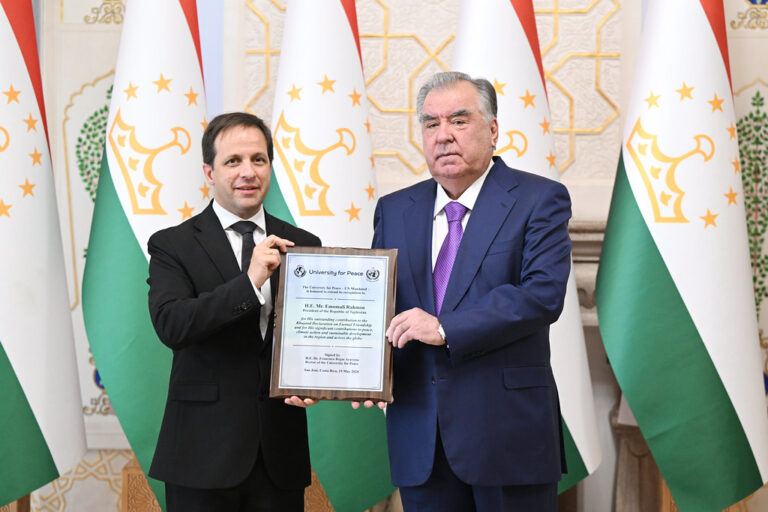
President Rahmon awarded UN University for Peace Certificate of Recognition

He is awarded for "significant contribution to establishing peace, developing regional cooperation, and strengthening mutual understanding between peoples."

Starlink satellite internet becomes available in Kyrgyzstan

And in Tajikistan, it was launched in February of this year.

In Dushanbe, 30 more new electric buses start operating

Each is designed to carry 100 passengers and can travel up to 300 kilometers without recharging.

Who is the man who “increased the Aryan race” and told the President of Tajikistan about it?

Kozie Koziyev, a folk craftsman, built dozens of houses, participated in the construction of a mosque and a kindergarten in Matcha, raised 11 children, and created a true dynasty of builders.

Tajik leader discusses water, climate, and global security issues with UN Deputy Secretaries-General

The parties paid special attention to the "Dushanbe Water Process," parliamentary diplomacy, and the peaceful resolution of conflicts.

Tajikistan completes the spring military draft target ahead of schedule

There is still a week left until the end of the conscription campaign.

Custodian of non-written languages and builder of academic bridges; philologist Khusrav Shambezoda turns 70

He could have devoted himself exclusively to the study of classical heritage, but he chose the challenging path of preserving the living word — and Tajik-Russian science gained in him a brilliant sociolinguist whose name became synonymous with dedication.

Tajikistan ranks among the top three leading trade reformers in Europe and Central Asia

The country has shown progress in the digitalization of trade procedures, the reduction of paper barriers, and the enhancement of transparency for exporters.

China to send workers to Tajikistan for modernization of the Kulma BCP

This is the only land border crossing point between Tajikistan and China.