Tajikistan’s foreign debt up $11 million in January-March

DUSHANBE, April 26, Asia-Plus – Tajikistan’s foreign debt has grown by $11 million so far this year, First Deputy Finance Minister, Sherali Safarov, remarked at a meeting with journalists Wednesday, April 25.  The debt increased from $866.4 million to $877.4 million as of April 1, according to him.  The deputy minister noted that over the […]

Zarrina Ergasheva

DUSHANBE, April 26, Asia-Plus – Tajikistan’s foreign debt has grown by $11 million so far this year, First Deputy Finance Minister, Sherali Safarov, remarked at a meeting with journalists Wednesday, April 25. 

The debt increased from $866.4 million to $877.4 million as of April 1, according to him.  The deputy minister noted that over the first quarter of the year, $10.67 million have been spent to serve and repay the foreign debt.  “Of this amount, 7.97 million have gone to repaying the debt and $2.27 million have gone to making interest payments on the debt,” Safarov said, adding that this year’ budget provides for $45 million to serve the country’s foreign debt.  

The ministry of finance (MoF) attributed the debt to newly attracted loans. 

According to Safarov, the World Bank (WB) and the Asian Development Bank (ADB) remain Tajikistan’s largest creditors.  “As of April 1, 41 investment projects for a total amount of 106.6 million somonis have been implemented in the country in cooperation with international financial institutions,” said the deputy minister, “This amount includes loans for 48.6 million somonis, grants for 23.1 million somonis and the government’s share of 34.9 million somonis.” 

Safarov told journalists that over the report period, Tajikistan has signed a number of agreements on investment projects, including the project for enhancement of the agrarian sector supported by the ADB grant of $17.1 million, the project for reducing commercial energy losses supported by the grant in the amount of $8 million provided by the Swiss government, and the second phase of the project for irrigation of the Danghara steppe funded by the Kuwaiti Fund for Arab Economic Development, which provided $13.8 million for implementing this project.
Join us on social media!

Article translations:

Related Article

Оби зулол
Оби зулол
Tenisi

Most Read

Коммерсбонк Точикистон

Recent Articles

The number of migrants from Central Asia, including Tajikistan, has increased in Poland — expert

Many migrants from Central Asian countries are increasingly reluctant to work in Russia and are exploring new destinations.

Tajikistan to transfer rural water utilities to a unified digital platform

The task is to integrate all 500 drinking water supply organizations in the country into one system.

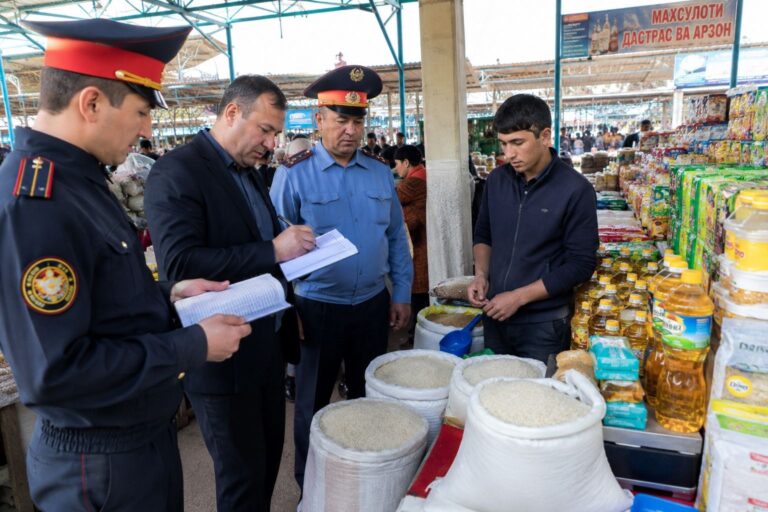
Dushanbe authorities tighten price controls ahead of the Eid al-Adha holiday

Briefings and explanatory discussions are being conducted with vendors in the capital's markets, and violators face administrative protocols.

Major global investment companies show interest in Tajikistan’s economy

Among them are J.P. Morgan, Loomis Sayles & Company, Morgan Stanley Investment Management, and Global Evolution.

President Rahmon awarded UN University for Peace Certificate of Recognition

He is awarded for "significant contribution to establishing peace, developing regional cooperation, and strengthening mutual understanding between peoples."

Starlink satellite internet becomes available in Kyrgyzstan

And in Tajikistan, it was launched in February of this year.

In Dushanbe, 30 more new electric buses start operating

Each is designed to carry 100 passengers and can travel up to 300 kilometers without recharging.

Who is the man who “increased the Aryan race” and told the President of Tajikistan about it?

Kozie Koziyev, a folk craftsman, built dozens of houses, participated in the construction of a mosque and a kindergarten in Matcha, raised 11 children, and created a true dynasty of builders.

Tajik leader discusses water, climate, and global security issues with UN Deputy Secretaries-General

The parties paid special attention to the "Dushanbe Water Process," parliamentary diplomacy, and the peaceful resolution of conflicts.