Tajikistan and Kyrgyzstan the most vulnerable to financial crisis in Central Asia, says international expert

DUSHANBE, March 17, 2009, Asia-Plus  – Tajikistan and Kyrgyzstan are the most vulnerable to the financial crisis in Central Asia, Johannes Linn, Executive Director of the Wolfensohn Center for Development and Senior Fellow of the Global Economy and Development program at the Brookings Institution, said in an interview with Voice of America’s (VOA) Russian Service. […]

Payrav Chorshanbiyev

DUSHANBE, March 17, 2009, Asia-Plus  – Tajikistan and Kyrgyzstan are the most vulnerable to the financial crisis in Central Asia, Johannes Linn, Executive Director of the Wolfensohn Center for Development and Senior Fellow of the Global Economy and Development program at the Brookings Institution, said in an interview with Voice of America’s (VOA) Russian Service.

According to him, water-and-energy crisis, decline in export of cotton, gold and other goods have affected significantly these countries.  “Additional problem for these countries is returning labor migrants.  However, there is hope that Tajikistan and Kyrgyzstan will show any inconsiderable growth.

International expert noted that in Kyrgyzstan and Tajikistan, things have not got going since 2007 and it was connected with energy crisis and short delivery of energy resources.  The situation has been aggravated by cold winters.

Therefore, it is obvious that crisis in these countries occurred at least a year before the global financial crisis.  Authorities responded to that, and were trying to establish trade relations with neighbors, normalize power deliveries.  International community also rendered assistance, providing food products, seeds and energy resources.  However, this has proved to be not enough, and therefore, the International Monetary Fund (IMF), the Asian Development Bank (ADB), the World Bank together with governments of these countries have begun implementing comprehensive anti-crisis programs, Mr. Linn said.

In the meantime, international expert expressed concern that the anti-crisis measures taken by Tajikistan and Kyrgyzstan would be insufficient and noted that it was necessary to do much more, because the global financial crisis has just started and its effects could be disastrous for many countries. 
Join us on social media!

Article translations:

Related Article

Оби зулол
Оби зулол
Tenisi

Most Read

Коммерсбонк Точикистон

Recent Articles

Software Updates: Your First Line of Defense Against Cyber ​​Threats

In today's digital age, the importance of timely software...

The number of migrants from Central Asia, including Tajikistan, has increased in Poland — expert

Many migrants from Central Asian countries are increasingly reluctant to work in Russia and are exploring new destinations.

Tajikistan to transfer rural water utilities to a unified digital platform

The task is to integrate all 500 drinking water supply organizations in the country into one system.

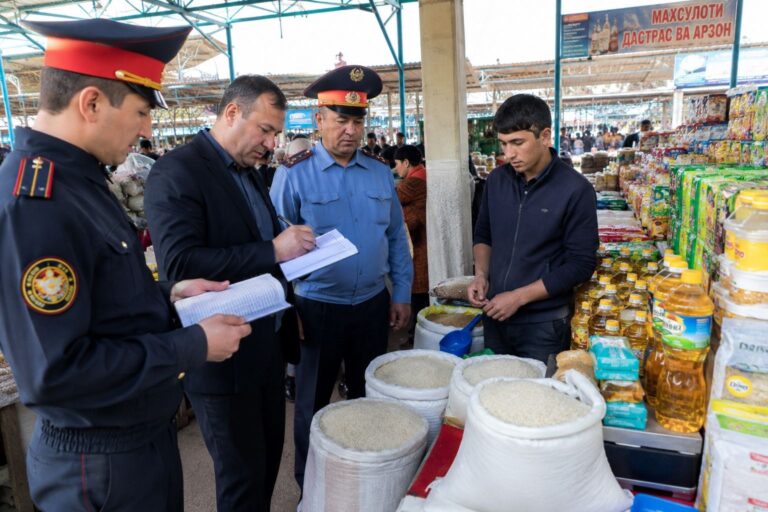
Dushanbe authorities tighten price controls ahead of the Eid al-Adha holiday

Briefings and explanatory discussions are being conducted with vendors in the capital's markets, and violators face administrative protocols.

Major global investment companies show interest in Tajikistan’s economy

Among them are J.P. Morgan, Loomis Sayles & Company, Morgan Stanley Investment Management, and Global Evolution.

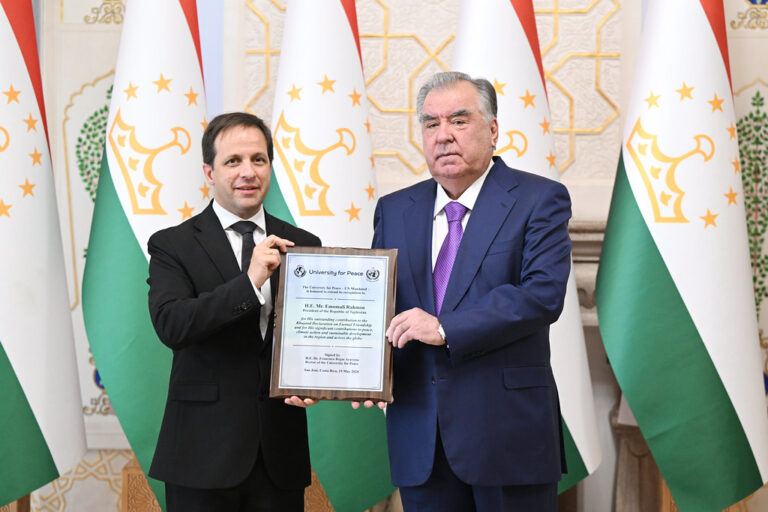
President Rahmon awarded UN University for Peace Certificate of Recognition

He is awarded for "significant contribution to establishing peace, developing regional cooperation, and strengthening mutual understanding between peoples."

Starlink satellite internet becomes available in Kyrgyzstan

And in Tajikistan, it was launched in February of this year.

In Dushanbe, 30 more new electric buses start operating

Each is designed to carry 100 passengers and can travel up to 300 kilometers without recharging.