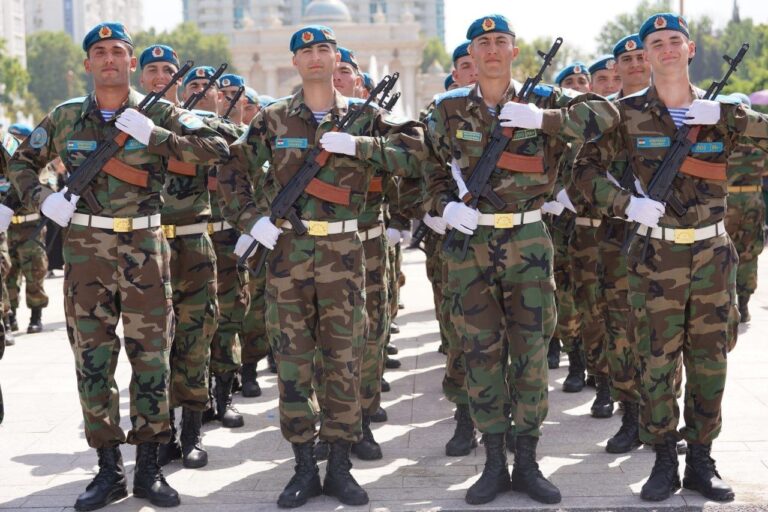
DUSHANBE, May 20, 2009, Asia-Plus — A group of officers from the law enforcement agencies have gone to the Rasht Valley (eastern Tajikistan) to tighten control at all checkpoints in the region. According to eyewitnesses, the number of checkpoints in the territory of the Rasht Valley has considerably increased and all officers at the checkpoints are well-armed.
Speaking in an interview with Asia-Plus, Major Mahmadullo Asadulloyev, a spokesman for the Ministry of Interior (MoI), noted that the number of the law enforcement officers in the region had been increased in connection with the ongoing large-scale anti-drug operation, dubbed Poppy 2009. “Large poppy and cannabis plantations have been revealed in Afghan Badakhshan,” said Asadulloyev, “To ward off drug trafficking attempts and reveal plantations of drug-containing plants a large-scale anti-drug operation has been launched in the Rasht region. The Ministry of Interior does not have any information about penetration of a group of armed people into Tajikistan.”
In the meantime, a number of foreign media have released reports that a group of armed people allegedly appeared in the Rasht Valley.
Some independent experts have also questioned the MoI official version and consider that the police checkpoints in eastern Tajikistan were reinforced in connection with appearance of former members of one of illegal armed formations there. According to them, they are, most likely, confederates of Mullo Abdullo, one of the filed commanders of the United Tajik Opposition (UTO), who had controlled the territory of the Darband (currently Nourobod) district during the civil war.
Mullo Abdullo did not accept the ceasefire agreement signed during inter-Tajik negotiations in 1994 and after singing of the General Peace Agreement in 1997, he and his supporters had been continuing destabilizing the situation in the Rasht region. In 2000, the government forces carried out operation to neutralize Mullo Abdullo’s group and major part of his group was annihilated, Mullo Abdullo and his nearest supporters fled into Afghanistan, where they had fought for Taliban. Only in 2002, Afghan forces managed to capture him.
In the meantime, the chairman of the Rasht district Mahmadsharif Tolibov told Asia-plus yesterday afternoon that the situation in the Rasht Valley is calm.