Victims of landmine war: When will be put an end to it?

DUSHANBE, August 29, 2011, Asia-Plus — The first victim of Uzbek government’s unilateral decision to mine rural border areas with Tajikistan was reported on August 29, 2000. The Mine Action Cell (TMAC) director Jonmahmad Rajabov says 74 Tajik national have been killed and 87 other Tajik citizen shave been wounded in mine explosions on the […]

Nargis Hamroboyeva

DUSHANBE, August 29, 2011, Asia-Plus — The first victim of Uzbek government’s unilateral decision to mine rural border areas with Tajikistan was reported on August 29, 2000.

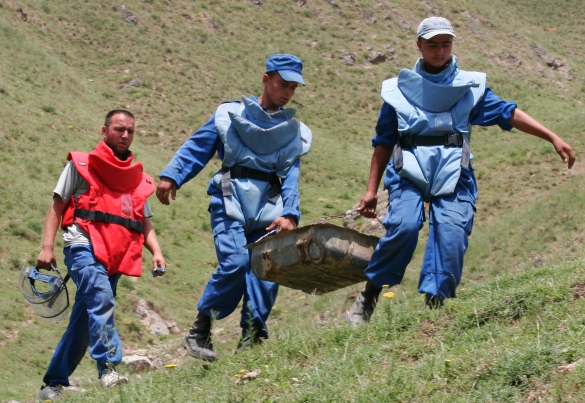
The Mine Action Cell (TMAC) director Jonmahmad Rajabov says 74 Tajik national have been killed and 87 other Tajik citizen shave been wounded in mine explosions on the Tajik-Uzbek border.  Aimed at hindering the movement of Islamic militants in the area, it is Tajik civilians of these rural border areas who suffer from Tashkent’s security initiative, the TMAC director noted.

According to him, Tajikistan’s Foreign Ministry has repeatedly applied to the Uzbek authorities with solicitation to discuss that problem and consider the issue of handover of the map of minefields.  “Unfortunately, Tashkent has responded to this request and we are currently carrying out work to detect mined areas by ourselves,” said Rajabov, “Recently, two our demining teams worked in Asht district and we are currently analyzing their reports.  They will continue survey in other districts after the September holidays.”

In January 2002, the Red Crescent Society of Tajikistan also launched a special program, entitled Raising Awareness of Mines and Unexploded Ordnance. The goal was to cut the number of casualties by teaching local people in affected areas some rules of safe conduct.  Rajabov said fewer people had stepped on mines since the project was launched

To-date, Tajik demining teams have to clear an area of little more than nine million square meters of land mines and unexploded ordnances (UXOs).

Most land mines in Tajikistan were laid during the devastating five-year civil war, which ended in 1997.  In some areas the mines still pose a deadly threat as well as a major impediment to effective land use.

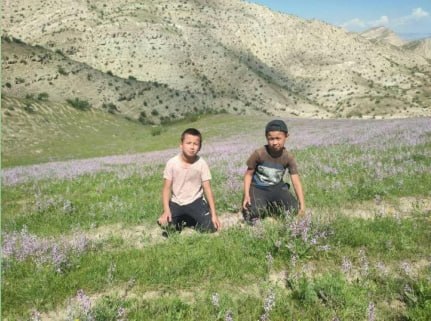
Additional mines were laid along the Tajik-Uzbek border by the authorities in Tashkent.  The action was reportedly taken to stave off incursions by the Islamic Movement of Uzbekistan (IMU), listed by the US State Department as a terrorist organization which trained in and operated from Tajik territory. To date, not one Uzbek militant has been blown up by these mines, while casualties among the civilian Tajik population have increased.  Most of the victims were women and children who were gathering firewood along the border as well as shepherds pasturing cattle in the areas.  Almost all who have survived have become disabled for life.
Join us on social media!

Article translations:

Related Article

Оби зулол
Оби зулол
Tenisi

Most Read

Коммерсбонк Точикистон

Recent Articles

Major global investment companies show interest in Tajikistan’s economy

Among them are J.P. Morgan, Loomis Sayles & Company, Morgan Stanley Investment Management, and Global Evolution.

President Rahmon awarded UN University for Peace Certificate of Recognition

He is awarded for "significant contribution to establishing peace, developing regional cooperation, and strengthening mutual understanding between peoples."

Starlink satellite internet becomes available in Kyrgyzstan

And in Tajikistan, it was launched in February of this year.

In Dushanbe, 30 more new electric buses start operating

Each is designed to carry 100 passengers and can travel up to 300 kilometers without recharging.

Who is the man who “increased the Aryan race” and told the President of Tajikistan about it?

Kozie Koziyev, a folk craftsman, built dozens of houses, participated in the construction of a mosque and a kindergarten in Matcha, raised 11 children, and created a true dynasty of builders.

Tajik leader discusses water, climate, and global security issues with UN Deputy Secretaries-General

The parties paid special attention to the "Dushanbe Water Process," parliamentary diplomacy, and the peaceful resolution of conflicts.

Tajikistan completes the spring military draft target ahead of schedule

There is still a week left until the end of the conscription campaign.

Custodian of non-written languages and builder of academic bridges; philologist Khusrav Shambezoda turns 70

He could have devoted himself exclusively to the study of classical heritage, but he chose the challenging path of preserving the living word — and Tajik-Russian science gained in him a brilliant sociolinguist whose name became synonymous with dedication.

Tajikistan ranks among the top three leading trade reformers in Europe and Central Asia

The country has shown progress in the digitalization of trade procedures, the reduction of paper barriers, and the enhancement of transparency for exporters.

China to send workers to Tajikistan for modernization of the Kulma BCP

This is the only land border crossing point between Tajikistan and China.