Amnesty completed in Tajikistan

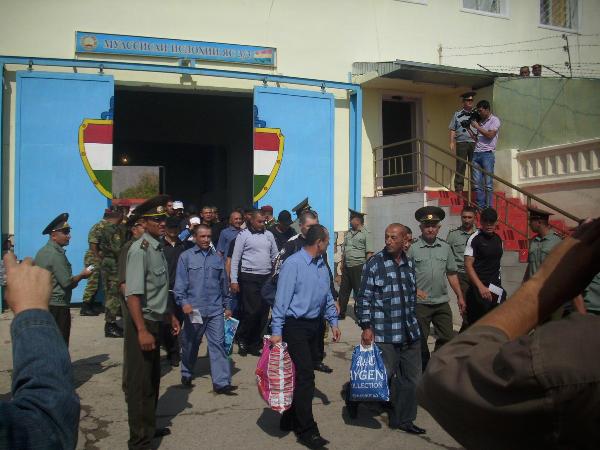
DUSHANBE, November 25, 2011, Asia-Plus  — The amnesty declared on the occasion of the 20th anniversary of Tajikistan’s has been completed and more than 4,300, including 196 women and 153 minors, have been released under this amnesty, the source in the punishment execution directorate of the Ministry of Justice told Asia-plus Friday afternoon. According to […]

Nargis Hamroboyeva

DUSHANBE, November 25, 2011, Asia-Plus  — The amnesty declared on the occasion of the 20th anniversary of Tajikistan’s has been completed and more than 4,300, including 196 women and 153 minors, have been released under this amnesty, the source in the punishment execution directorate of the Ministry of Justice told Asia-plus Friday afternoon.

According to him, some 5,000 other prisoners have had their prison terms cut.

“The amnesty has also benefited more than 5000 people who were under examination or on trial but not yet convicted,” said the source.

Those granted amnesty include 72 members or supporters of the outlawed religious extremist groups such as Hizb ut-Tahrir and Islamic Movement of Uzbekistan (IMU) as well as some 100 supporters of the mutiny Colonel Mahmoud Khudoiberdyev.   

The 2011 amnesty mainly benefited men over 55, those prisoners suffering from cancer or tuberculosis, and women.  The amnesty also applied to members of political parties, public associations and illegal religious organizations who were sentenced to five years in prison as well as persons who were sentenced to more than five years in prison and have served three-quarters of their terms.  The amnesty also benefited militants who fought government troops in 1997 in Khatlon province, Dushanbe, Hisor, Shahrinav and Tursunzoda as well as armed clash of 1998 in Sughd province if they have served half their sentences.

The amnesty excluded those serving sentences for serious crimes such as terrorism and extremism, killing two and more people, recidivists or those who committed crimes in prison.

In all, more than 15,000 people have fallen under the 2011 amnesty, which is the 13th amnesty the government has approved.

According to the Ministry of Justice (MoJ), there are 17 penitentiary institutions in Tajikistan.  
Article translations:

Related Articles

Оби зулол

Most Read

Join us on social media!

Recent Articles

Emomali Rahmon accepted the credentials from new ambassadors

Nine countries have sent new diplomats to Tajikistan.

Russia evacuated 27 Tajikistan citizens from Iran

They worked at the Bushehr nuclear power plant, built by the Russian Federation in Iran.

Baku to host WUF13: shaping the future of sustainable urbanization

Baku, the capital of Azerbaijan, is set to host...

How the Energy Industry Began in Tajikistan 100 Years Ago

We have prepared a historical photo series for you.

Tajikistan and Belarus to establish a joint laboratory for radiation monitoring and nuclear safety

An agreement was signed by the Tajikistan Agency for Nuclear and Radiation Safety and the Belarusian National Technical University.

Former Press Secretary of Emomali Rahmon Sent a Letter to the President Requesting Support for Media Workers

Zafar Sayidzoda believes it is necessary to establish a Media Support Fund, which should operate in the interests of all media — both state and private.

Neither War nor Peace: What Will Be the Next Step for Iran and the US After the Failure of Negotiations?

Tajik experts say that Iran has another leverage that could pose a serious threat to the Trump administration.

In Dushanbe, a criminal group issuing SIM cards and bank cards to fictitious persons was exposed

Through illegally issued plastic cards, the suspects were withdrawing money from an online casino game.

The eKhonish program, an analogue of eDonish, launched in Bokhtar

Now parents and education representatives will be able to remotely monitor students' attendance and academic performance.

#AP30/Experts. Rashid Ghani Abdullo: “Asia-Plus” has become a brand of Tajikistan

A well-known Tajik political scientist expressed his opinion on the role of our media in the informational space of the country and the region.