DUSHANBE, June 7, 2013, Asia-Plus — The Collegium of the Ministry of Education of the Republic of Tajikistan, which was held on May 28, 2013, approved the Early Childhood Education (ECE) curriculum for alternative preschool education models, press release issued by UNICEF Country Office in Tajikistan on June 6 says.
The ECE curriculum was developed by Academy of Education in collaboration with UNICEF and Aga Khan Foundation in Tajikistan.
The Early Childhood Education (ECE) Curriculum is based on the “Early Learning Development Standards” (ELDS) developed by the Ministry of Education and UNICEF. It also draws on the work of several early childhood theories, but heavily on the work of the High Scope Educational Research Foundation in the United States. This approach has proven to be adaptable to various settings and responsive to different cultures while still retaining the elements of a quality early childhood curriculum.
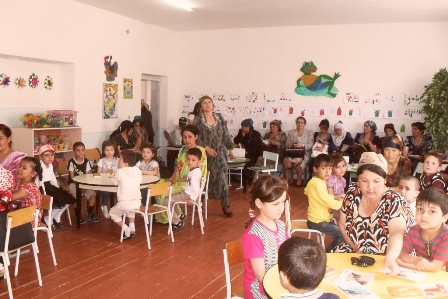
The ECE curriculum takes the format of stating learning outcomes and providing practical guidelines on learning experiences that teachers can utilize in their teaching practice. It promotes holistic development of children and allows space for more child initiated activities. The new ECE curriculum will be offered to children age 4-7 in alternative early learning groups for a homogeneous approach to early childhood development.
The Ministry of Education, with support from UNICEF, Aga Khan Foundation, and other partners will develop teacher training packages that will support the roll-out of the new ECE curriculum. It is expected that these packages be approved and adopted by the end of 2013.
UNICEF works in 190 countries and territories to help children survive and thrive, from early childhood through adolescence. The world’s largest provider of vaccines for developing countries, UNICEF supports child health and nutrition, good water and sanitation, quality basic education for all boys and girls, and the protection of children from violence, exploitation, and AIDS. UNICEF is funded entirely by the voluntary contributions of individuals, businesses, foundations and governments. UNICEF is working in Tajikistan since 1993.