DUSHANBE, February 12, 2014, Asia-Plus — The Paris-based Reporters Without Borders (RSF) released its annual World Press Freedom Index on February 12.
The report, which measures the level of freedom of information in 180 countries, ranks Tajikistan 115th.
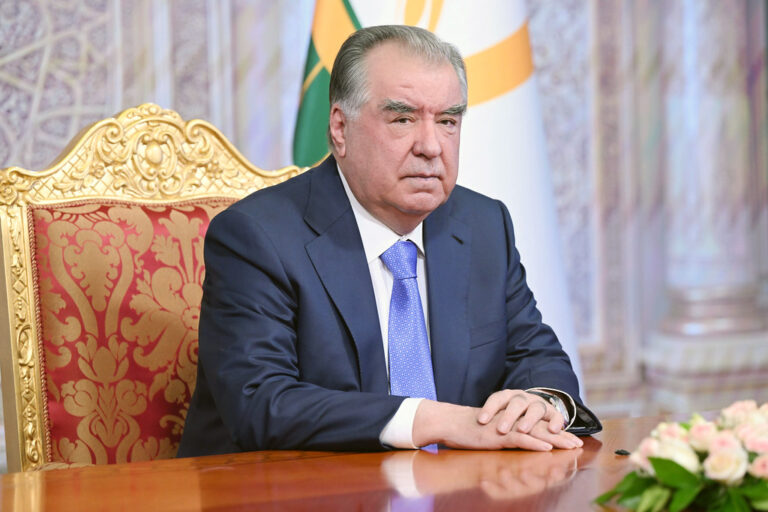
“In Tajikistan, coverage of the 2013 presidential election campaign was openly skewed in favor of the incumbent, Emomali Rahmon, who has ruled for more than 20 years,” RSF says.
According to the report, the arbitrary blocking of independent news websites has become common in Tajikistan, even if it usually lasts just a few days.
The report says a new media law of Tajikistan that took effect in March 2013 contained satisfactory provisions on paper but seems to have made no difference in practice so far.
RSF says the situation with freedom of information in the former Soviet republics is getting “bleaker every year.”
Russia came 148th in the survey, which notes that Russian authorities have reportedly adopted more and more draconian laws.
In Belarus, which came 157th, RSF says journalists who cover street protests are routinely detained, and authorities often use “combating extremism” as a pretext for silencing those who refuse to toe the official line.
Ukraine ranks 127th, but RSF says the political crisis that began in December 2013 and the government’s adoption of “very repressive policies” came after the period covered by this year’s index.
The report ranks Kazakhstan 161st and Azerbaijan 160th.
Strict censorship also prevails in Uzbekistan (166th), where no fewer than 10 journalists and netizens are currently detained, the report says.
Turkmenistan (178th) is at the bottom of the ranking.
The report notes that the former Soviet republics that most violate freedom of information – Turkmenistan, Uzbekistan, Kazakhstan and Azerbaijan – are subjected to little pressure from the international community for the simple reason that they are rich in oil and gas deposits, and pipelines. Rich enough to feel untouchable, they are also wooed because of the strategic importance. So for the time being they keep their news media under tight control and jail recalcitrant journalists with complete impunity.
The region”s four best-placed countries are Moldova (56th), Armenia (78th), Georgia (84th), and Kyrgyzstan (97th).