The share of migrants returning to Tajikistan reportedly eases

DUSHANBE, March 30, 2016, Asia-Plus – The World Bank notes that Tajikistan, as the poorest country in Central Asia, is particularly vulnerable to shocks.  From the current economic downturn in the Russian Federation, to seasonal electricity, water, and heating shortages, the country reportedly faces substantial risks to livelihoods and wellbeing. According to the World Bank, […]

Asia-Plus

DUSHANBE, March 30, 2016, Asia-Plus – The World Bank notes that Tajikistan, as the poorest country in Central Asia, is particularly vulnerable to shocks.  From the current economic downturn in the Russian Federation, to seasonal electricity, water, and heating shortages, the country reportedly faces substantial risks to livelihoods and wellbeing.

According to the World Bank, some of these risks could potentially derail the extensive improvements seen for the poor and vulnerable over the past decade.  Strong economic growth in Tajikistan has helped to lower the poverty rate from 37.4 percent in 2012 to 31.6 percent in the 1st quarter of 2015, but sustaining gains and ensuring further progress will be increasingly difficult in the current environment.

In May 2015 the World Bank Poverty team rolled out the “Listening to Tajikistan” survey (L2TJK) to monitor the impact of emerging trends throughout the country at high frequency.  The survey rapidly clarifies the severity of the economic downturn, the evolution of vulnerabilities, and household responses to risk and deprivation over time.  The survey enables a focus on poorer and more vulnerable households, and generates evidence for targeted policy-making.

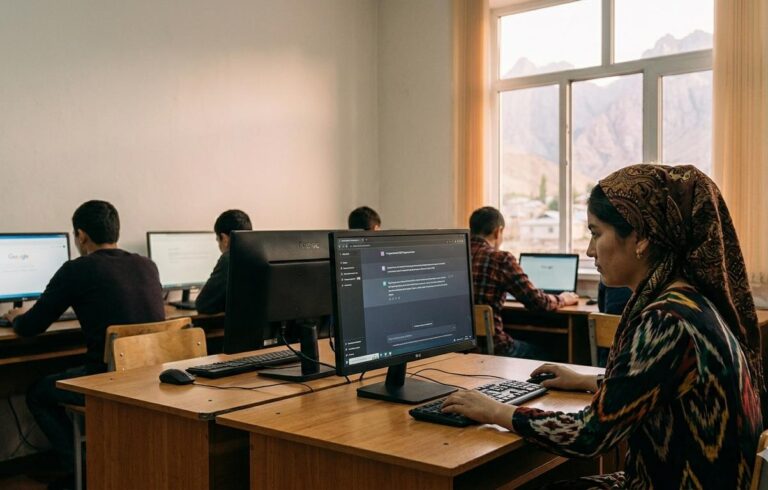
The survey, in particular, notes that the share of migrants returning to Tajikistan eased to about 3 percent of the current group of migrants in January, from about 4 percent in December.  The share of migrants currently working declined from 84 percent in November to about 75 percent in January.

Since August, the share of respondents interested in migrating to Russia reportedly continued a slow increase, while the share preferring to migrate to Kazakhstan declined significantly between September and January.

The average real value of remittances decreased from a high of about 1,100 somoni in November to about 775 somoni in January as the season for migrant labor drew to a close.  The decline was largest in urban areas and for households in the top 60 percent of the consumption distribution.


Article translations:

Related Article

Оби зулол

Most Read

Join us on social media!

Aura

Recent Articles

Sanctions lifted: Dushanbe City Bank resumes international operations

The bank is returning to full-scale international operations.

Gasoline and diesel fuel in Dushanbe rose in price by 8.9% due to the war in the Middle East

The rise in global oil prices and, consequently, the cost of petroleum products has triggered the closure of the Strait of Hormuz.

The Ministry of Labor organizes consultations for migrants returning from Russia at Dushanbe airport

Employees of the Migration Service explain the requirements of Russian legislation and offer job vacancies in their homeland.

Tajikistan and Uzbekistan discuss simplification of customs procedures and implementation of VIN.TJ system

The VIN.TJ system is designed to simplify the process of vehicle registration and control.

Tajikistan climbs four places in the global fixed internet speed ranking

This is the country's best performance in the past five years.

President of Tajikistan launches hydro unit No. 7 at Nurek HPP

As of today, three units have been completely replaced at the country's largest hydroelectric power station.

Italian Opera in Dushanbe: Shohrukh Yunusov invites to an evening of musical revelations

The evening will feature the most recognizable Italian works alongside world and Tajik classics.

The European Union lifts sanctions on Tajik banks

This is attributed to successful reforms and improved financial transparency in the country.

Meta announced plans to lay off about 10% of its staff

The reason cited is the high costs of artificial intelligence development.