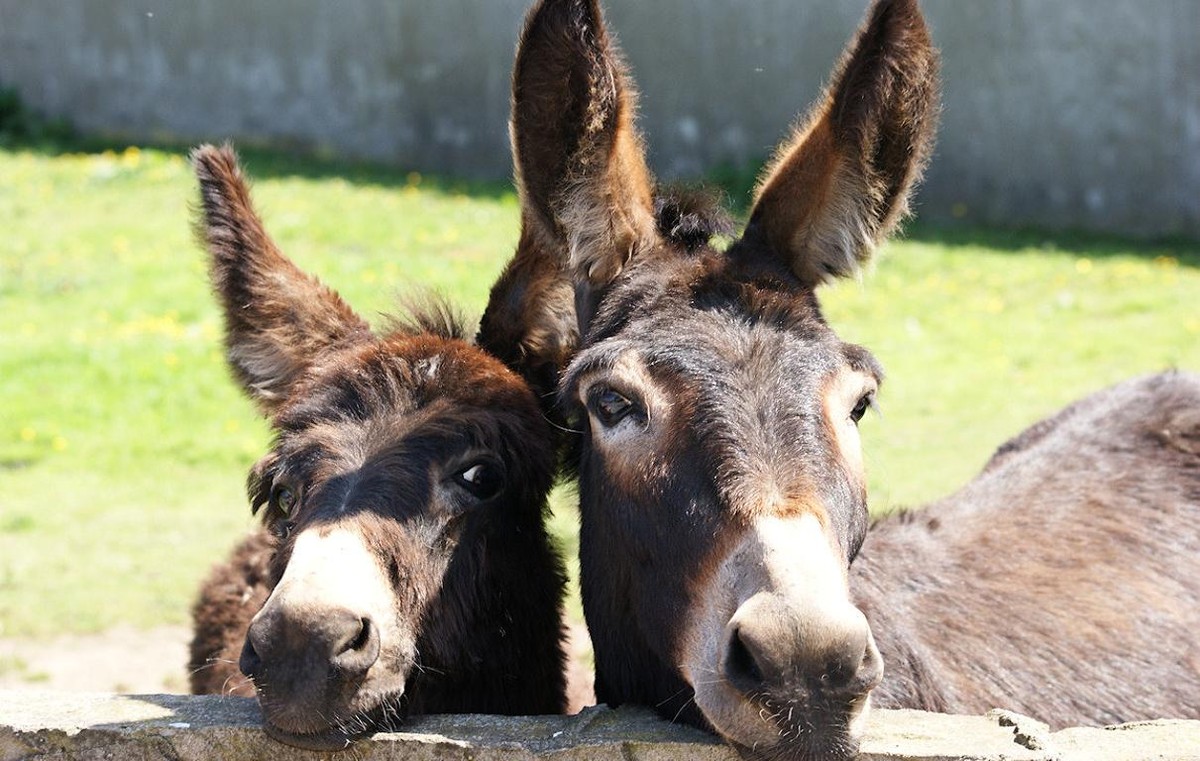
Entrepreneurs have appeared in some regions of Tajikistan, who buy donkeys in bulk, sending their meats and skins to China.
Resident of one of mountain villages has told Asia-Plus that middlemen are buying all donkeys without distinction.
That means it’s a good time to be in the donkey business. Accordingly, the price for the animals has quadrupled in some regions of the country. For many years, 100 somoni was enough for a donkey, but the price has skyrocketed to 400 somoni.
State statistics show the donkey population in Tajikistan is more than 186,000 and they used here as pack animals.
Last year, Tajikistan refused an application by Russian and Chinese entrepreneurs for establishment of a donkey meat processing plant in Tajikistan. The donkey meat was supposed to be exported to China.
CNN reported in September 2016 that gelatin produced from donkey hide is a key ingredient of one of China's favorite traditional remedies, known as ejiao, which is used to treat a range of ailments from colds to insomnia.
But as the rising power shifts towards advanced industry and away from traditional agriculture, donkeys are in decline. State statistics show the population has fallen in China from 11 million to six million over the last 20 years.
China is now increasingly looking to Africa to boost its stocks, and imports donkeys from countries across the continent.
Niger recently became the latest African state to ban exports of donkeys, following a surge in sales to China.
Chinese demand is expected to increase with a growing consumer class willing to spend on luxury goods such as ejiao.
“Ejiao,” the name for the rubbery substance extracted from boiled donkey skin that is reputed in traditional Chinese medicine to replenish the blood, cure coughs and insomnia, and offer a general boost. But with the spread of machinery, donkeys have retreated.
Citing China’s National Business Daily, The New York Times reported in January 2016 that In the 1990s, China had 11 million of them, but that has fallen to six million, and the population keeps dropping by about 300,000 a year.
Still, many Chinese people remain sure of the curative benefits of donkey gelatin, and demand remains high.