

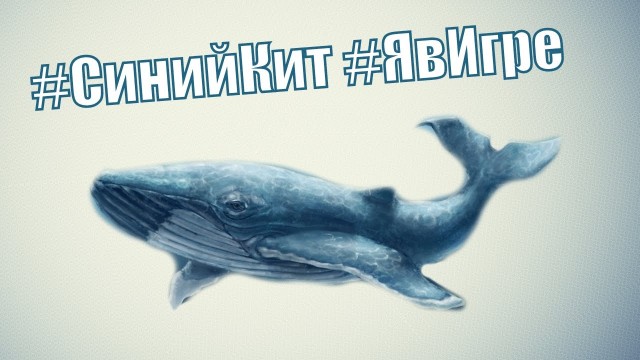
Employees of the Interior Ministry and the Ministry of education and Sciences of Tajikistan are carrying out work among teenagers to explain them the danger of the Blue Whale game.
Representatives of these ministries are also conducting prophylactic conversations with parents to urge them to be vigilant, track their children's activities on their home computers and discuss boundaries and appropriate online behavior with their children.
According to data form the Interior Ministry, no suicide cases related to the Blue Whale game have been reported in Tajikistan.
Blue Whale involves teens completing daily tasks for 50 days including self-harming, watching horror movies and waking up at unusual hours.
But on the 50th day, the controlling manipulators behind the game reportedly instruct the youngsters to commit suicide.
The suicide game named after the way whales sometimes beach themselves and then die.
Across Russia and the Central Asian countries of Kazakhstan and Kyrgyzstan, alarming Blue Whale headlines have become a nearly daily occurrence: a child or teen being encouraged to commit suicide through participation in a ghoulish online "game" driven by Russian-language hashtags including “blue whale,” “sea of whales,” “I'm in the game,” “Wake me at 4:20,” “F58,” and many others.
Recall, concern about the game was piqued by a much-criticized article in Novaya Gazeta in May last year that claimed that the “vast majority” of the roughly 130 youth suicides in Russia between November 2015 and April 2016 were tied to the Blue Whale phenomenon. The paper published an equally alarming follow-up article on February 16, 2017.
In Kazakhstan, Interior Minister Kalmukhanbet Kasymov has called for creating a national database of social-media users.
In the Kyrgyz capital, Bishkek, police have combed through schools and Internet cafes checking children for signs of cutting or for suspicious messages on their phones.
In all three countries, there have been calls for blocking websites and other similar measures.