30 teachers from Russia will come to Tajikistan

Teachers of the Russian language, chemistry, physics, mathematics, biology and computer science come to Tajikistan from different regions of Russia at the end of August. They will work in local schools, their wages will amount to 74 thousand rubles, – Reports “Rossiyskaya Gazeta”. About thirty teachers from Russia will come to Tajikistan at the end […]

Teachers of the Russian language, chemistry, physics, mathematics, biology and computer science come to Tajikistan from different regions of Russia at the end of August. They will work in local schools, their wages will amount to 74 thousand rubles, – Reports “Rossiyskaya Gazeta”.

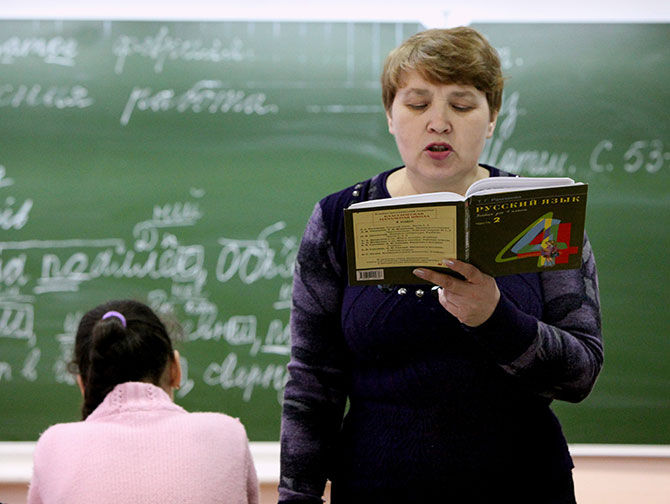
About thirty teachers from Russia will come to Tajikistan at the end of August – they will teach various disciplines in Tajik schools, such as Russian language, mathematics, physics, biology, chemistry, and computer science. Teachers gathered from different regions – Kostroma and Kemerovo regions, Bashkiria, Dagestan, Tatarstan.

The Tajik side provides teachers with housing and an average salary in the country – 14,000 rubles. Another 60 thousand rubles will be paid by the Ministry of Education and Science of the Russian Federation, plus it will provide medical insurance.

In addition, in schools in Tajikistan with teaching in Russian for the new academic year, Russia will donate 20 tons of textbooks and teaching aids, this is about 70,000 copies of books, the "RG" reports with reference to the Russkiy Mir Foundation, which popularizes and supports Russian language.

The instruction to send the manuals was signed by the head of the Council of Federation Valentina Matvienko.

In February this year, First Deputy Prime Minister Igor Shuvalov, following the talks between the presidents of the two countries, said that Russia intends to build 20 general education schools in Tajikistan, in which classes will be conducted in Russian.

"We discussed projects related to the construction of schools that will teach in RussianThe president instructed the government to work through the issue and make an approximate calculation of the budgetary period next year, in order to start the construction of such schools here in Tajikistan, – noted then Shuvalov.

He explained that "this should be an investment of the Russian state, but the school will contain Tajikistan, and the material infrastructure itself will be created at the expense of Russia's budget investments". 

Join us on social media!

Article translations:

Related Article

Оби зулол
Tenisi
Оби зулол

Most Read

Коммерсбонк Точикистон

Recent Articles

RZD announces the restoration of passenger services between Moscow and Dushanbe

Direct rail services between the capitals of Russia and Tajikistan were suspended in March 2020 due to the COVID-19 pandemic.

#AP30/Stories. “Selam! Heller nichek?” How Tatars live today in Sughd province

On the 30th anniversary of "Asia-Plus," we continue to publish reports that remain relevant even after years. This story was told in 2021, and since then, little has changed in the life of the Tatar community in Tajikistan.

15,000 cameras, drones, and robots: how technology monitors pilgrims in Mecca and Medina

During Hajj 2026, Mecca and Medina were under unprecedented digital control.

Another child in Dushanbe removed from family and sent to boarding school

The Ministry of Internal Affairs reports that the parents did not pay adequate attention to the child.

Emomali Rahmon instructs to address issues in seed production following criticism of the industry

Issues have been noted with certification, seed quality, and the material and technical base of the industry.

Water, climate, and a $130 billion deficit: seven key outcomes of the Water Conference in Dushanbe

At the forum, countries and international organizations discussed new mechanisms for cooperation, investments, and technologies that are essential for addressing the global water crisis.

Eskhata Bank introduces a new generation children’s wallet

"Eshkata Bank" has created a full-fledged digital platform that helps children aged 7 to 16 learn how to manage money.