Tajikistan and the European Union held their ninth Human Rights Dialogue here on October 12, according to the Delegation of the European Union to Tajikistan.
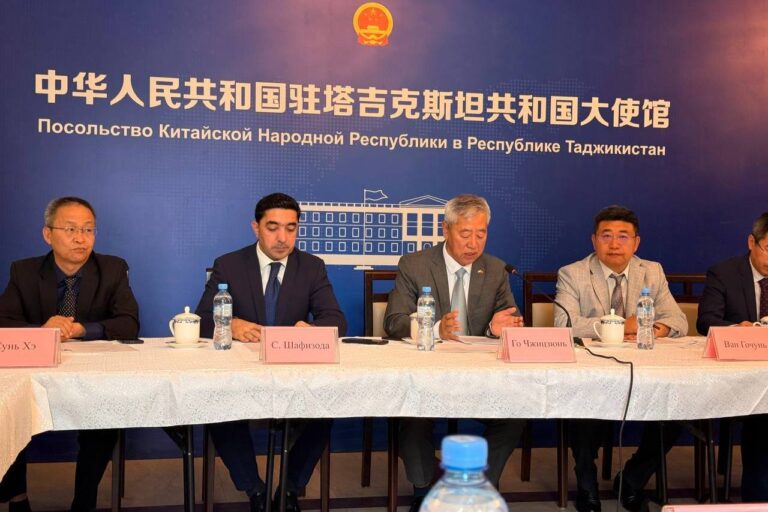
The European Union was represented at the Dialogue by Toivo Klaar, Head of Central Asia Division, European External Action Service, and the Government of Tajikistan by Abdujabbor Sattorzoda, Head of Human Rights Guarantees Department of President’s Executive Office.
The Dialogue was reportedly an opportunity to discuss human rights matters in an open and honest manner.
The space for the work of civil society organizations in Tajikistan has become more restricted, for instance with regard to administrative inspections, press release issued by the European Delegation says. The Tajik government should better involve NGOs in the legislative process relating to the new draft law on non-commercial organizations and the draft civil code.
All participants concurred that there has been good progress in the area of women’s rights, such as the prevention of domestic violence. The European Union also expressed its appreciation for the active work of Mr. Alizoda, the Tajik Ombudsman for Human Rights, across a wide range of issues.
Significant efforts have reportedly been made by the Tajik government to prevent torture and ill treatment. However, shortcomings remain, and the European Union raised specific torture cases including in the Tajik military, pre-trial detention, and semi-closed and closed institutions.
The European Union says the Tajik government must review the case of imprisoned defense lawyer Mr. Buzurgmehr Yorov and arrange for a visit of the monitoring group under the Ombudsman. The European Union expects the Tajik authorities to ensure that no pressure is exerted on family members of the political opposition, including those living abroad.
Both sides agreed that significant progress had been achieved in addressing statelessness in Tajikistan.
The European Union drew attention to the critical findings of the UN Special Rapporteur on the right to freedom of opinion and expression following his visit to Tajikistan in March 2016, and urged the Tajik government to take concrete measures to lift restrictions on the media and independent journalists. The European Union similarly raised questions concerning the freedom of religion and belief.
Finally, the European Union welcomed the renewal of the OSCE’s mandate in Tajikistan, and stressed the importance of the OSCE’s work in all three dimensions – politico-military, economic and environmental, and human dimensions – in all regions of the country.