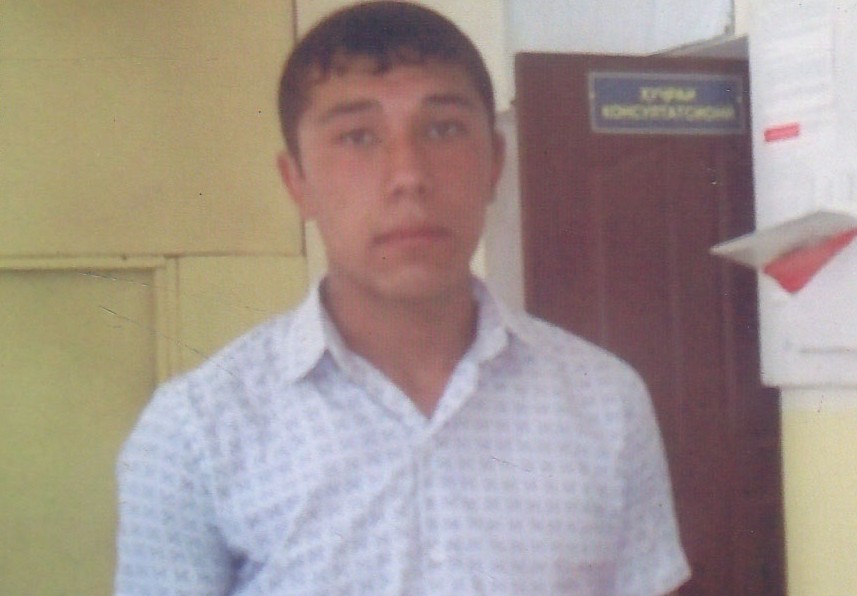
The Sughd regional court has upheld the Khujand city court’s verdict against the 21-year-old resident of the Isfara district Safroniddin Shomurodov, who is charged with propagating ideas of the outlawed Jamaat Ansarullah group through social networks.
The Khujand city court sentenced Safroniddin Shomurodov to 14 years in prison. The sentence followed his conviction on charges of participating in a criminal group, public calls for extremist activities through media, participating in an extremist group and mercenary activity. He will serve his term in a high-security penal colony.
Chairperson of the Khujand city court, Ms. Mavjouda Sharifzoda, says Safroniddin Shomurodov met a member of Jamaat Ansarullah group Salohiddin through social network in September 2016 while working as labor migrant in the Russian city of Novosibirsk. Salohiddin reportedly sent agitation videos calling on citizens to join armed forces and fight in Syria to Shomurodov through WhatsApp. Shomurodov resent those videos to his three fellow villagers.
In November 2016, Salohiddin invited Shomurodov to travel to Istanbul, where Shomurodov met one more active member of Jamaat Ansarullah group Aburakhob (phonetically spelled).
Shomurodov was detained upon arrival in Moscow on March 15, 2017 and three days later he was extradited to Dushanbe.
According to official data, more than 1,500 Tajik nationals have joined the so-called Islamic State (IS) terrorist group and more than 300 of them were killed in Iraq and Syria over the last four yes. More than 60 Tajik nationals have returned to Tajikistan voluntarily.
Tajikistan is one of the most migration-dependent economies in the world. Islamist recruiters have targeted those working abroad. The majority of Tajik nationals have been recruited while working as labor migrants in the Russian Federation.
Thus, an article entitled How Can We Explain Radicalization among Central Asia’s Migrants? by Edward Lemon and John Heatherwhaw, in particular, notes that over 80% of the known Tajik IS militants, for example, were recruited while working as labor migrants in Russia.
Jamaat Ansarullah, also known as the Society of Allah’s Soldiers, first came to light in September 2010 when the heretofore unknown organization claimed responsibility for a suicide attack on September 3 in Khujand. An explosives-packed car rammed into the building of the Sughd regional organized crime control department, killing two officers and two civilians and wounding 28 people. The suicide bomber was local resident Akmal Karimov, who was reportedly trained in al-Qaeda camps in Afghanistan and Pakistan.
In September 2011, Jamaat Ansarullah issued several videos calling on Tajikistan’s citizens to embrace jihad against “infidels” and urging them to take action to support the implementation of Islamic Sharia law. “Those who pray namaz, who follow fasting rules but support democracy are nonbelievers,” a man on the video said. “Allah is killing nonbelievers by our hands and, thus, blesses us.” Some politicians and experts, however, doubt whether these videos can really be traced back to Jamaat Ansarullah.
In May 2012, Tajikistan’s Supreme Court officially banned Jamaat Ansarullah as extremist on the basis of a suit filed by the Prosecutor-General’s Office.