Pamir Energy has won Event Awards Central Asia 2017 in three nominations: The Best Invent for Brand; The Best Mass Event; and the Best Children’s Event.
The company has reportedly become winner in these nominations due its project, The Power of Gladness.
According to the Event Awards Central Asia (EACA)’s website, the award has been given for best events in twenty nominations of different categories held in Kazakhstan, Kyrgyzstan, Tajikistan and Uzbekistan during the period from October 29, 2016 to October 15, 2017.
The winners have the right to submit projects for GLOBAL Event Awards (GEA).
Recall, Pamir Energy won the 2017 International Ashden Award this year for Increasing Energy Access for its work bringing hydro power to 220,000 people in southeastern Tajikistan and 35,000 people in northern Afghanistan, as well as to many businesses, schools, and health centers
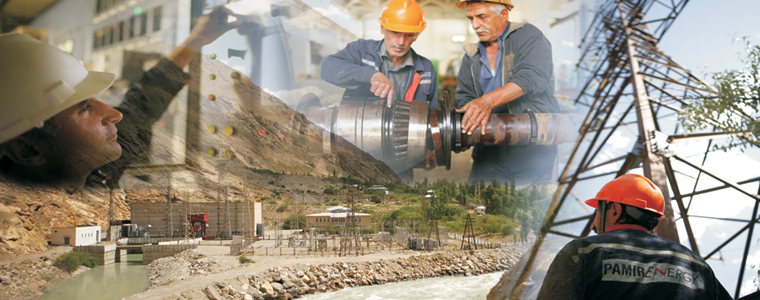
Since 2002, Pamir Energy has restored 11 micro hydro power plants and upgraded 4,300km of transmission lines, as well as distribution facilities. During critical phases of the project, the Swiss government, through the State Secretariat for Economic Affairs (SECO), provided vital support through an innovative customer support scheme and the provision of technology that ensured affordable access for the poorest households in the Gorno Badakhshan Autonomous Region (GBAO).
Today, 96% of households in GBAO, some 220,000 people, have access to clean, reliable and affordable energy. In 2008, the company began exporting energy across the Panj River to communities in northern Afghanistan – some receiving electricity for the first time in their history. Currently, 35,000 Afghans are connected. The company plans to reach thousands more customers in Afghanistan in the coming years and to expand its operations to Northern Pakistan by 2025.
Pamir Energy marks its 15th anniversary this year. In this regard the company has organized a number of industrial and social activities.
This year, small hydropower plants “Tekharv” and “Andarbak” have been introduced into operation in the Vanj district and a new Service Center has opened in the Darvoz district. Besides, Pamir energy has built a children’s playground in Khorog.
The company has also organized a chess contest among pupils of primary classes in schools of Khorog and the Shugnan district. Four winners have got the right to participate in Open Chess Olympiad in Issul-Kul, Kyrgyzstan.
In July this, youth festival, dubbed “The Power of Gladness,” was held in Khorog as well as in Ishkashim and Rushan districts.
Following the collapse of the Soviet Union in 1991 and a five-year civil war, Tajikistan’s electrical infrastructure required major investment. Among the most affected areas was the Gorno-Badakhshan Autonomous Region, where people and economic development suffered during the cold winter months.
The Aga Khan Fund for Economic Development (AKFED), in partnership with the International Finance Corporation (IFC), formed the Pamir Energy Company in 2002 to address the situation. Fifteen years ago only 13% of households in the region had reliable energy.
Pamir Energy is a joint project of the Government of Tajikistan, AKFED, IFC, and the Swiss Agency for Development and Cooperation (SDC). A total cost of the project is some 26.5 million U.S. dollars, including the Tajik government’s contribution of 10 million U.S. dollars.
The project was designed as a public-private partnership between the Government of Tajikistan, the World Bank Group, and the Aga Khan Fund for Economic Development.
The company has a 25 year concession on the assets formerly under the management on Barqi Tojik (Tajik electricity supplier) in GBAO. In exchange for this concession (management right), Pamir Energy has invested in completing the Pamir hydropower station, rehabilitating power generation, transmission and distribution assets, and improving the management of the company.
The Pamir Private Power Project has helped to enhance development and improve welfare in GBAO by providing reliable, affordable, and clean electricity.