Employees of the National Bank of Tajikistan (NBT) have got acquainted with experiences of central banks of Turkey, Azerbaijan and Kyrgyzstan in introducing Islamic banking software solutions.
The presentation was given here at the end of the last week by experts of Turkey’s Gaia Bilgi Sistemleri Sanayi ve Ticaret Ltd, according to the NBT press center.
Turkish experts reportedly acquainted employees of relevant departments of Tajik central bank with software for formation of a centralized accountability and an automated system in Islamic banking.
Recall, Tajik joint-stock bank for entrepreneurship support Sohibkorbonk is going to convert operations to become a full-fledged Islamic bank.
During their four-day visit, the Islamic Corporation for the Development of the Private Sector (ICD) representatives last month got acquainted with activities of the bank, its financial indicators, structure, qualification of its employees as well as products and services being offered by the bank, according to the Sohibkorbonk press center. ICD representatives gave recommendations to the bank about procedures to speed up introduction of Islamic banking.
The sides coordinated the preliminary term of the conversion.
Chairman of Sohibkorbonk Board Sherali Zardov and ICD chief executive Khaled Al-Aboodi signed a memorandum of understanding (MoU).
As it had been reported earlier, Tajik lender Bonki Rushdi Tojikiston (Tajikistan Development Bank) planned to switch to Islamic banking in 2015, after it signed an agreement with ICD to advice on the transition. However, no specific decisions have been made so far.
The law on Islamic banking in Tajikistan came into force on August 5, 2014.
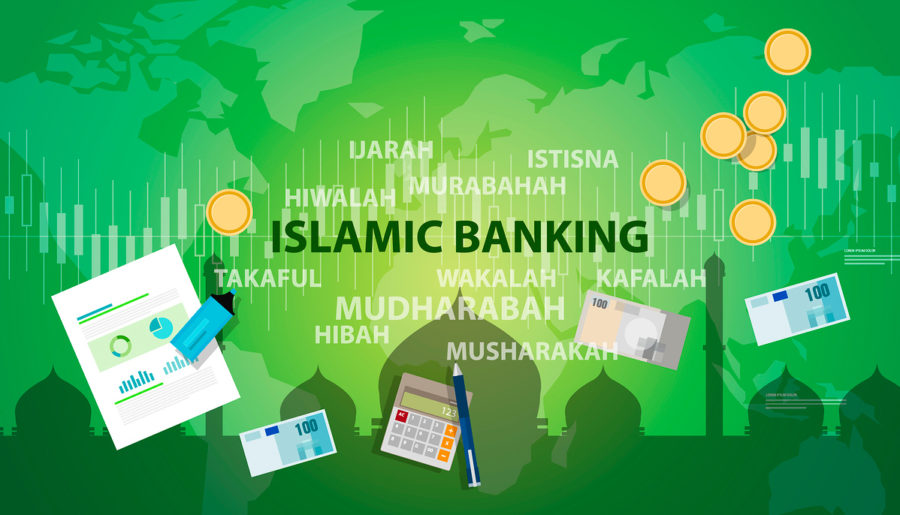
Islamic banking is a banking activity that is consistent with the principles of Sharia and its practical application through the development of Islamic economics. Sharia prohibits the fixed or floating payment or acceptance of specific interest or fees (known as riba, or usury) for loans of money. Investing in businesses that provide goods or services considered contrary to Islamic principles is also haraam ("sinful and prohibited"). Although these principles have been applied in varying degrees by historical Islamic economies due to lack of Islamic practice, only in the late 20th century were a number of Islamic banks formed to apply these principles to private or semi-private commercial institutions within the Muslim community.
Islamic banking has the same purpose as conventional banking: to make money for the banking institute by lending out capital. But that is not the sole purpose either. Adherence to Islamic law and ensuring fair play is also at the core of Islamic banking. Because Islam forbids simply lending out money at interest, Islamic rules on transactions (known as Fiqh al-Muamalat) have been created to prevent it. The basic principle of Islamic banking is based on risk-sharing which is a component of trade rather than risk-transfer which is seen in conventional banking.
Islamic banks reportedly have more than 300 institutions spread over 51 countries, including the United States through companies such as the Michigan-based University Bank, as well as an additional 250 mutual funds that comply with Islamic principles.