Tajik officials reportedly warn against dolls in Islamic dress

The first commercial batches of dolls in Tajik national dress have arrived in shops and bazaars across the country in time for the New Year's shopping season. According to Radio Liberty, it is part of an intensified government effort against overt displays of conservative Islam. Retailers said state consumer-goods and -services agency raids of toy […]

RFE/RL

The first commercial batches of dolls in Tajik national dress have arrived in shops and bazaars across the country in time for the New Year's shopping season.

According to Radio Liberty, it is part of an intensified government effort against overt displays of conservative Islam.

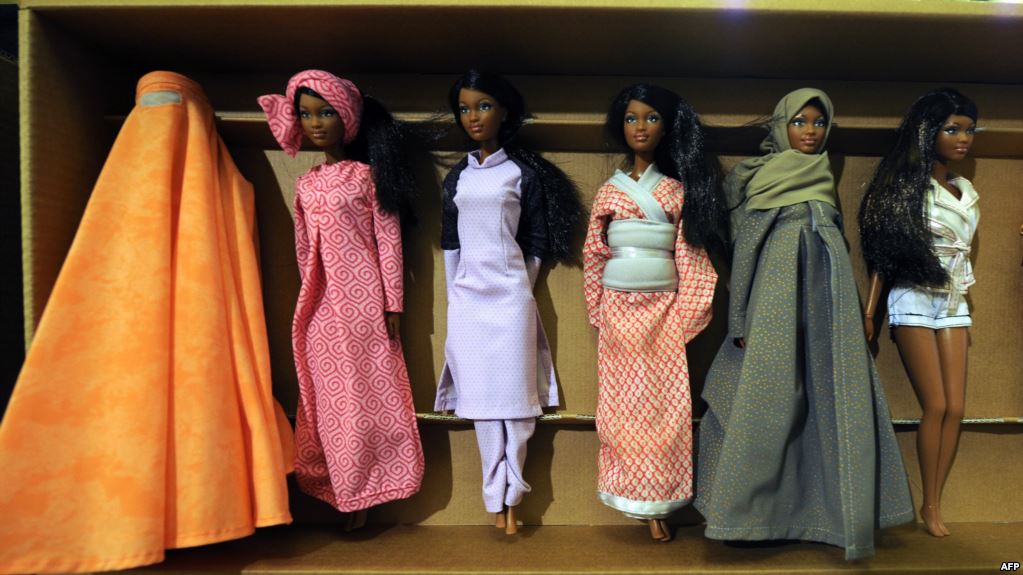
Retailers said state consumer-goods and -services agency raids of toy shops in late November drove home the point, and included warnings against the sale of Barbie or other dolls in Islamic head scarves.

In the weeks before the November inspections, U.S.-based toy manufacturer Mattel announced that in 2018 it would introduce a version of its globally recognized Barbie doll in conservative Islamic clothing, known as the hijab, inspired by U.S. Olympic fencer Ibtihaj Muhammad.

"We have been told to place orders with our Chinese partners for dolls wearing traditional Tajik costumes," Saodat Doniyorova, who imports toys wholesale from neighboring China, told RFE/RL's Tajik Service.

Doniyorova and other private merchants talked about the raids by Tojikstandart, a state agency regulating consumer goods and services.

"The officials instructed us not to import the Barbie dolls wearing the hijab," Doniyorova said on December 17.

An official at Tojikstandart confirmed that the state agency has “advised” the retailers not to import dolls in headscarves and instead place orders with manufacturers for dolls in Tajik traditional costumes.

Speaking on condition of anonymity, as he was not authorized to brief media, the source said the move was aimed at supporting the government's policies and promoting Tajik culture.

The official said “there was not yet a final decision” on a possible official ban on the Barbie in the hijab, “as no one has yet approached us to discuss their import.”

Meanwhile, toy sellers in Dushanbe, Kulob and other cities of the country said the dolls in Tajik costumes are proving popular with customers as people shop ahead of New Year's celebrations.

The new dolls in Tajik toy shops boast several types of Tajik traditional costumes, representing different regions of the country.  

       

Join us on social media!

Article translations:

Related Article

Оби зулол
Оби зулол
Tenisi

Most Read

Коммерсбонк Точикистон

Recent Articles

RZD announces the restoration of passenger services between Moscow and Dushanbe

Direct rail services between the capitals of Russia and Tajikistan were suspended in March 2020 due to the COVID-19 pandemic.

#AP30/Stories. “Selam! Heller nichek?” How Tatars live today in Sughd province

On the 30th anniversary of "Asia-Plus," we continue to publish reports that remain relevant even after years. This story was told in 2021, and since then, little has changed in the life of the Tatar community in Tajikistan.

15,000 cameras, drones, and robots: how technology monitors pilgrims in Mecca and Medina

During Hajj 2026, Mecca and Medina were under unprecedented digital control.

Another child in Dushanbe removed from family and sent to boarding school

The Ministry of Internal Affairs reports that the parents did not pay adequate attention to the child.

Emomali Rahmon instructs to address issues in seed production following criticism of the industry

Issues have been noted with certification, seed quality, and the material and technical base of the industry.

Water, climate, and a $130 billion deficit: seven key outcomes of the Water Conference in Dushanbe

At the forum, countries and international organizations discussed new mechanisms for cooperation, investments, and technologies that are essential for addressing the global water crisis.

Eskhata Bank introduces a new generation children’s wallet

"Eshkata Bank" has created a full-fledged digital platform that helps children aged 7 to 16 learn how to manage money.