NBT denies report about setting up WG for improvement of financial situation of banks as ‘baseless’

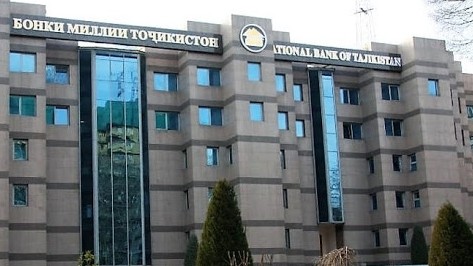
The National Bank of Tajikistan (NBT) has denied the report about setting up a working group (WG) for improvement of financial situation of local distressed commercial banks as absolutely “unfounded.”  In a statement released on December 27, Tajik central bank notes that information about the establishment of a working group for improvement of financial situation […]

The National Bank of Tajikistan (NBT) has denied the report about setting up a working group (WG) for improvement of financial situation of local distressed commercial banks as absolutely “unfounded.” 

In a statement released on December 27, Tajik central bank notes that information about the establishment of a working group for improvement of financial situation of banks does not correspond to the facts.

“The National Bank of Tajikistan, which is a competent body regulating activities of credit organizations, would have been informed about the establishment of such a working group,” the statement says.  

It is about the report released by Radio Liberty’s Tajik Service on December 26 and reproduced by a number of media outlets, including Asia-Plus.  

Citing a source in Tajikistan’s banking system, RFE/RL’s Tajik Service reported on December 26 that the Government of Tajikistan has set up a working group for improvement of financial situation of local commercial banks.

The chairman of the Majlisi Namoyandagon (Tajikistan’s lower house of parliament) Committee on Finance and Economics, Sharif Rahimzoda, has reportedly been appointed to head this group.

According to the source, the working group will focus on bringing two distressed banks – Agroinvestbonk and Tojik Sodirot Bonk (TSB) – out of crisis. 

“Narrow means of the budget do not allow allocating additional funds for solution of the problem.  One of the possible options offered by the government is tax debt relief.  Thereby it is possible to resolve the problem partially,” the source said.  

He further added that the government is now the main stakeholder in both banks.  

Recall, four local commercial banks, including Agroinvestbonk and TSB, have been experiencing liquidity issues since 2015.  Parliament in December 2016 approved a government decree to issue bonds to recapitalize the mentioned banks.

TSB and Agroinvestbonk were topped up by 2.25 billion somoni (US$284 million) and 1.7 billion somoni (US$215 million) respectively.      

Join us on social media!

Article translations:

Related Article

Оби зулол
Tenisi
Оби зулол

Most Read

Коммерсбонк Точикистон

Recent Articles

RZD announces the restoration of passenger services between Moscow and Dushanbe

Direct rail services between the capitals of Russia and Tajikistan were suspended in March 2020 due to the COVID-19 pandemic.

#AP30/Stories. “Selam! Heller nichek?” How Tatars live today in Sughd province

On the 30th anniversary of "Asia-Plus," we continue to publish reports that remain relevant even after years. This story was told in 2021, and since then, little has changed in the life of the Tatar community in Tajikistan.

15,000 cameras, drones, and robots: how technology monitors pilgrims in Mecca and Medina

During Hajj 2026, Mecca and Medina were under unprecedented digital control.

Another child in Dushanbe removed from family and sent to boarding school

The Ministry of Internal Affairs reports that the parents did not pay adequate attention to the child.

Emomali Rahmon instructs to address issues in seed production following criticism of the industry

Issues have been noted with certification, seed quality, and the material and technical base of the industry.

Water, climate, and a $130 billion deficit: seven key outcomes of the Water Conference in Dushanbe

At the forum, countries and international organizations discussed new mechanisms for cooperation, investments, and technologies that are essential for addressing the global water crisis.

Eskhata Bank introduces a new generation children’s wallet

"Eshkata Bank" has created a full-fledged digital platform that helps children aged 7 to 16 learn how to manage money.