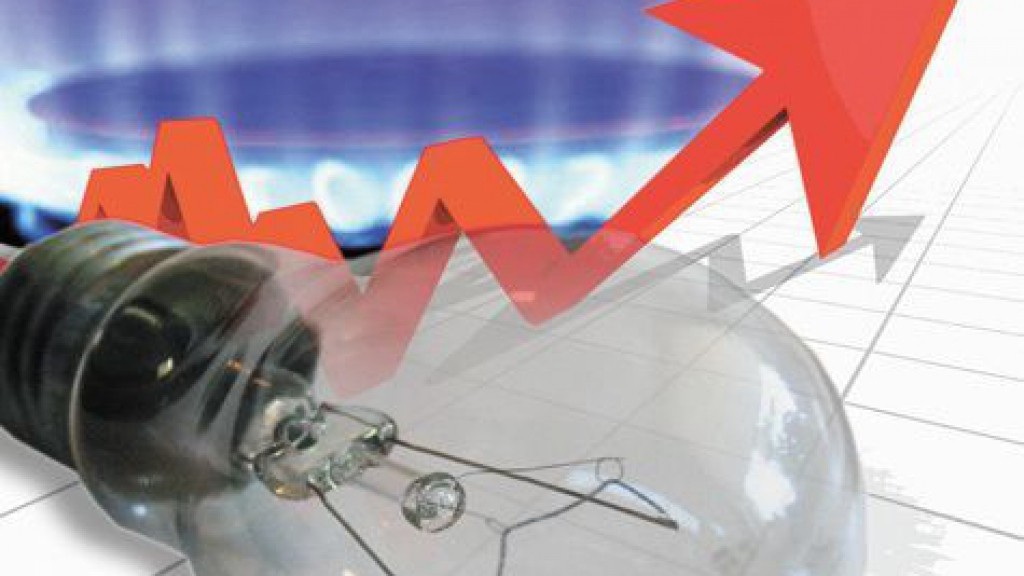
Tajikistan: Heightened Vulnerabilities, Despite Sustained Growth, a report released by the World Bank on December 28 notes that the Tajik authorities have prioritized energy sector reform given the sector’s strategic importance in ensuring the country’s overall economic development.
However, despite the strategic objectives and policy measures already underway (including an 18 percent increase to average tariffs since October 2016), the sector reportedly remains in financial distress. Although some efficiency improvements have been realized by the energy company, Barqi Tojik (Tajikistan’s national integrated power company), including higher collection rates and a reduction in inventory turnover, the company is still experiencing operational cash shortages due to: 1) below cost-recovery tariffs; 2) low collection rates; and 3) excessive electricity losses.
On the below cost-recovery tariffs, the report, in particular, notes that the average tariff is estimated to be at 45 percent of the cost-recovery level. Debt service costs have a significant impact on cost-recovery tariff levels because over 90 percent of long-term and short-term debt is denominated in foreign currency. The depreciation of the somoni in 2017 led to a significant rise in debt servicing costs because Barqi Tojik’s revenues are in somoni; there has been no exchange rate-based tariff adjustment. An additional 12 percent average tariff increase took effect from October 2017.
Concerning low collection rates, the report says the average collection rate for billed electricity reached 86 percent in 2017. However, nearly 10 percent of sales still do not generate revenue for the company.
As far as excessive electricity losses are concerned, the report says losses are believed to be around 17 percent.
Recall, the World Bank recommended in 2012 that Tajikistan should gradually raise electricity rates to 3.5 cents for the purpose of encouraging rationalization of electricity consumption; today residential customers pay almost 2.00 cents for 1 one kWh of electricity.
The Tajikistan: Promoting Export Diversification and Growth study released by the Asian Development Bank (ADB) in August 2016 says Tajikistan’s electricity system is strained financially by low tariffs, poor collection, and large receivables from major consumers, including TALCO.
The study notes that Tajikistan’s electricity prices were kept very low until 2007, and while they have gradually increased since then, the prices are still below the cost of supply and remain among the lowest in the world.
According to the study, the lack of provisioning for uninterrupted and sufficient power supply is a critical constraint for growth in Tajikistan. The government therefore needs to focus on maximizing efficiencies at its existing hydropower plants and minimizing transmission losses. On top of this, it needs to rationalize electricity tariffs and subsidies so it can provide electricity to as many productive stakeholders as possible rather than skewing the supply to a few preferred heavy power users, the study says.
A report by the European Bank for Reconstruction and Development (EBRD), Transition Report 2017-18: Sustaining Growth, notes that efforts should be further accelerated to restructure the vertically integrated electricity company Barqi Tojik and rationalize the tariff-setting in the sector.
Cost transparency for electricity generation, transmission and distribution needs to be enhanced, and ultimately the three parts should be unbundled and tariffs adjusted gradually over time, while related social issues need to be addressed, according to the report.
The report also says that securing the completion of CASA-1000 and more transparency in the management of the Roghun project will also be important going forward.
Tajikistan raises electricity rates practically every year. For the last time, Tajikistan raised electricity rates on October 1, 2017.
Current prices for 1 kWh of electricity are 16.85 dirams (15 percent increase) for residential customers, 40.00 dirams for industrial and non-industrial customers, and 16.85 dirams for federally funded institutions, including public utilities and sports complexes,
Electricity rates for pumping stations for mechanized irrigation and repair-and-production bases of the Agency for Land Reclamation and Irrigation under the Government of Tajikistan rose to 5.86 dirams for the period from April 1 to September 30 and to 16.85 dirams for the period from October 1 to March 31.
The price of one KWh of electricity for vertical drainage wells and land reclamation pumping stations was raised to 5.8 dirams.
Electricity rates for electric boilers, hot water supply and heating system rose to 101.54 dirams for non-federal sphere and to 30.13 dirams for federally funded institutions.
Meanwhile, prices for the Tajik Aluminum Plant (TALCO) remained unchanged – 7.20 dirams for period from May 1 to September 30 and 11.80 dirams for the period from October 1 to April 30.