Attestation of imam-khatibs sees dozens of imam-khatibs sacked for insufficient knowledge of Islam

Compulsory attestation, or examination of imam-khatibs (worship leaders of Friday mosques) by a commission comprising representatives of the Committee on Religious Affairs (CRA) and the Shuroi Ulamo (Council of Ulama — an Islamic council that issues fatwas (religious rulings) and religious guidance to Islamic religious organizations) has reportedly seen dozens of imam-khatibs sacked for alleged […]

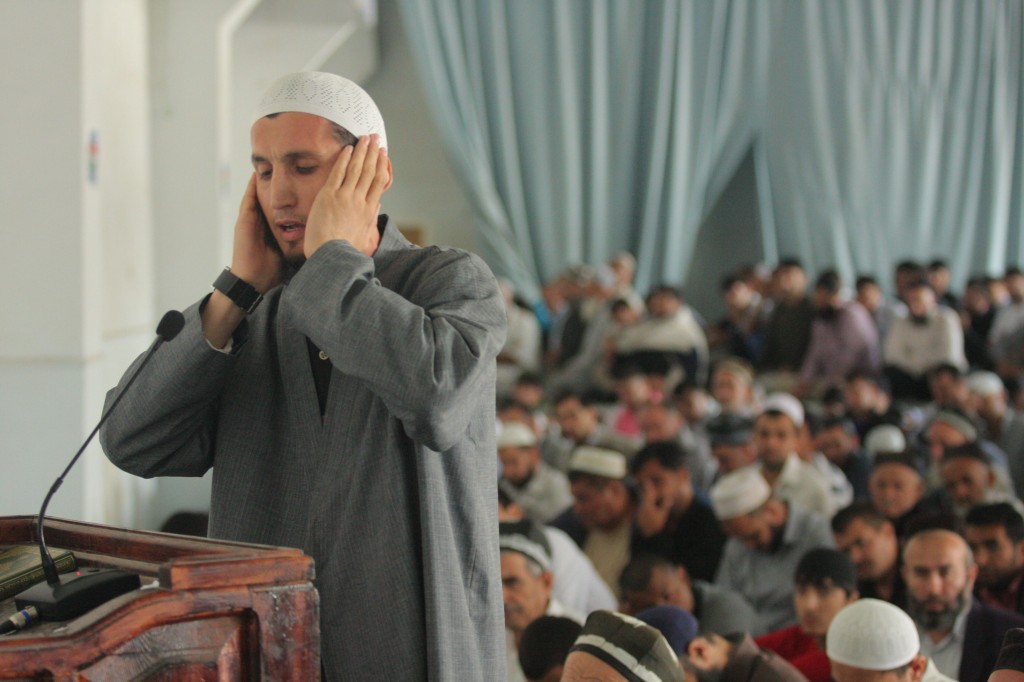
Compulsory attestation, or examination of imam-khatibs (worship leaders of Friday mosques) by a commission comprising representatives of the Committee on Religious Affairs (CRA) and the Shuroi Ulamo (Council of Ulama — an Islamic council that issues fatwas (religious rulings) and religious guidance to Islamic religious organizations) has reportedly seen dozens of imam-khatibs sacked for alleged insufficient knowledge of Islam.

The attestation of imam-khatibs to allow them to retain their positions began in late December and before the attestation there had been 265 imam-khatibs in Tajikistan; dozens of them had failed to meet the requirements of their positions.  They were obliged to leave their posts. 

An official source at the CRA says the attestation of 3,000 imams of mosques for daily prayers will start in the near future.  

The examination of religious knowledge of imam-khatibs has been conducted in Tajikistan over the past nine years.  

Meanwhile some experts consider that the attestation is a way to control politically outspoken religious figures.  

In early 2104, the Tajik authorities introduced uniform and dress code for the country's imams.  The uniform consists of a grey satin shirt, trousers, a turban, and a long powder-blue robe highlighted by traditional white embroidery on the cuffs, lapels, and front trim.

In the same year, the government began issuing monthly salaries to mosque imams, depending on their position.  The decision to provide the wages was reportedly made at the request of imam-khatibs.  

Mosques are not considered a state agency in Tajikistan, but all official religious bodies are controlled and regulated by state bodies.

Join us on social media!

Article translations:

Related Article

Tenisi
Оби зулол
Оби зулол

Most Read

Коммерсбонк Точикистон

Recent Articles

RZD announces the restoration of passenger services between Moscow and Dushanbe

Direct rail services between the capitals of Russia and Tajikistan were suspended in March 2020 due to the COVID-19 pandemic.

#AP30/Stories. “Selam! Heller nichek?” How Tatars live today in Sughd province

On the 30th anniversary of "Asia-Plus," we continue to publish reports that remain relevant even after years. This story was told in 2021, and since then, little has changed in the life of the Tatar community in Tajikistan.

15,000 cameras, drones, and robots: how technology monitors pilgrims in Mecca and Medina

During Hajj 2026, Mecca and Medina were under unprecedented digital control.

Another child in Dushanbe removed from family and sent to boarding school

The Ministry of Internal Affairs reports that the parents did not pay adequate attention to the child.

Emomali Rahmon instructs to address issues in seed production following criticism of the industry

Issues have been noted with certification, seed quality, and the material and technical base of the industry.

Water, climate, and a $130 billion deficit: seven key outcomes of the Water Conference in Dushanbe

At the forum, countries and international organizations discussed new mechanisms for cooperation, investments, and technologies that are essential for addressing the global water crisis.

Eskhata Bank introduces a new generation children’s wallet

"Eshkata Bank" has created a full-fledged digital platform that helps children aged 7 to 16 learn how to manage money.