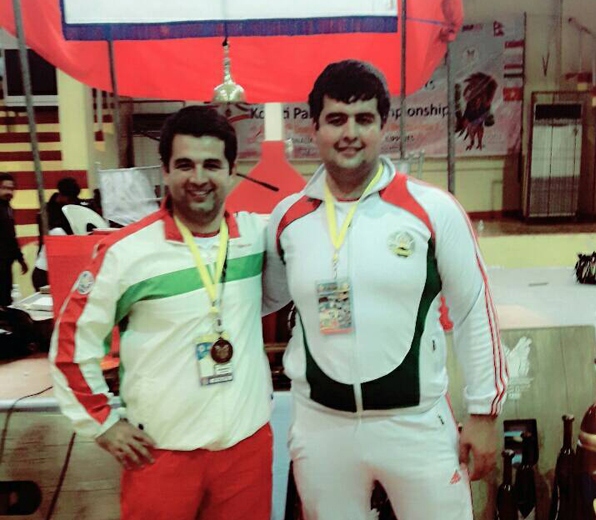
Tajik zurkhaneh practitioners have demonstrated good results at the 6th Asian Zurkhaneh Sports & Koshti Pahlavani Championship that took place in the City of Tanauan, the Philippines.
In all, athletes from twenty-seven countries participated in the 6th Asian Zurkhaneh Sports & Koshti Pahlavani Championship.
Arabov brothers represented Tajikistan and they demonstrated good results.
Navrouz Arabov finished third in the Meel Sangin contest and silver medal in Koshti Pahlavani (-90kg).
His brother Jahongir Arabov won bronze medal, finishing third in the Sang Giri contest.
Meanwhile, the Iranian team claimed a gold medal in team event of the competitions, besides five gold ones out of six in individual contests.
Koshti Pahlevani (Pahlavani wrestling) goes back to ancient Persia, and was originally used to train warriors. It combines martial arts and wrestling techniques, calisthenics, strength training and epic music. The two competitors try to take control over each other by throwing the opposite combatant back on his shoulder. The wrestler is allowed to grab his opponent’s pants or belt as a grip. He can also use his or own legs to off-balance a rival, hence causing him to fall to the ground.
Pahlevani and zurkhaneh rituals is the name inscribed by UNESCO for varzesh-e pahlavani (heroic sport) or varzesh-e bastani (ancient sport), a traditional system of athletics originally used to train warriors in Iran and adjacent lands. It combines martial arts, calisthenics, strength training and music. Recognized by UNESCO as the world's longest-running form of such training, it fuses elements of pre-Islamic Persian culture (particularly Zoroastrianism, Mithrāism and Gnosticism) with the spirituality of Shia Islam and Sufism. Practiced in a domed structure called the zurkhaneh, training sessions consist mainly of ritual gymnastic movements and climax with the core of combat practice, a form of submission-grappling called koshti pahlavani.