Tajik zurkhaneh practitioners demonstrate good results at the 6th Asian Zurkhaneh Sports & Koshti Pahlavani Championship

Tajik zurkhaneh practitioners have demonstrated good results at the 6th Asian Zurkhaneh Sports & Koshti Pahlavani Championship that took place in the City of Tanauan, the Philippines. In all, athletes from twenty-seven countries participated in the 6th Asian Zurkhaneh Sports & Koshti Pahlavani Championship. Arabov brothers represented Tajikistan and they demonstrated good results. Navrouz Arabov […]

Asia-Plus

Tajik zurkhaneh practitioners have demonstrated good results at the 6th Asian Zurkhaneh Sports & Koshti Pahlavani Championship that took place in the City of Tanauan, the Philippines.

In all, athletes from twenty-seven countries participated in the 6th Asian Zurkhaneh Sports & Koshti Pahlavani Championship.

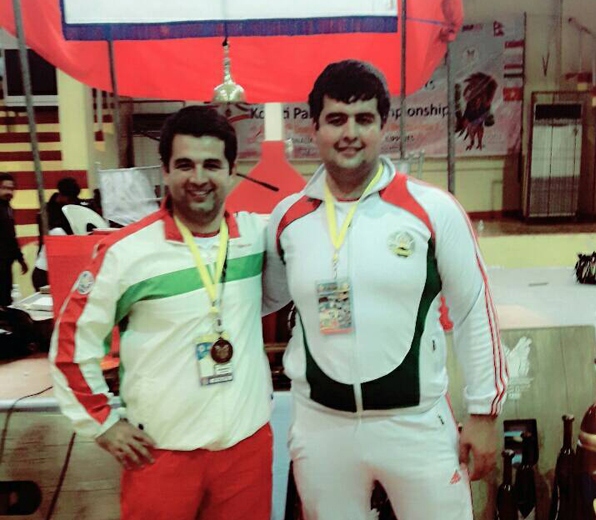
Arabov brothers represented Tajikistan and they demonstrated good results.

Navrouz Arabov finished third in the Meel Sangin contest and silver medal in Koshti Pahlavani (-90kg). 

His brother Jahongir Arabov won bronze medal, finishing third in the Sang Giri contest.    

Meanwhile, the Iranian team claimed a gold medal in team event of the competitions, besides five gold ones out of six in individual contests.

Koshti Pahlevani (Pahlavani wrestling) goes back to ancient Persia, and was originally used to train warriors.  It combines martial arts and wrestling techniques, calisthenics, strength training and epic music.  The two competitors try to take control over each other by throwing the opposite combatant back on his shoulder.  The wrestler is allowed to grab his opponent’s pants or belt as a grip.  He can also use his or own legs to off-balance a rival, hence causing him to fall to the ground.

Pahlevani and zurkhaneh rituals is the name inscribed by UNESCO for varzesh-e pahlavani (heroic sport) or varzesh-e bastani (ancient sport), a traditional system of athletics originally used to train warriors in Iran and adjacent lands.  It combines martial arts, calisthenics, strength training and music. Recognized by UNESCO as the world's longest-running form of such training, it fuses elements of pre-Islamic Persian culture (particularly Zoroastrianism, Mithrāism and Gnosticism) with the spirituality of Shia Islam and Sufism.  Practiced in a domed structure called the zurkhaneh, training sessions consist mainly of ritual gymnastic movements and climax with the core of combat practice, a form of submission-grappling called koshti pahlavani.

Article translations:

Related Article

Оби зулол

Most Read

Join us on social media!

Recent Articles

Mudflows and dust storms expected in Tajikistan

Citizens are urged to protect themselves from dust.

Russia doubles temporary stay duration for truck drivers from CIS and Georgia

Tajik drivers will have their term increased from 90 to 180 days a year.

How a guide dog project could help people with visual impairments in Tajikistan

In Tajikistan, there is an enthusiast who can build such a school, but he urgently needs help, primarily financial.

Wildberries opened access to the platform for all sellers from Tajikistan

Now local brands, manufacturers, and individual entrepreneurs can enter the largest online platform and expand their sales market.

CMWP Uzbekistan: The boutique hotel market in Tajikistan shows the fastest growth in the region

Such hotels in the republic offer their guests a high level of comfort and convenience.

Emomali Rahmon signs decree on increasing salaries and paying bonuses to IT sector workers

The document provides for the creation of a new incentive system for specialists in the field of information technology.

Not advertising, but influence: what was discussed at IMPACT Creative Night and why businesses need meaning today

Today, audiences trust direct advertising less and less, which means brands have to compete not for attention, but for trust and a place in the agenda.

Russia extends the experiment on collecting biometrics from foreigners

The decision was justified by the necessity of gradually modernizing all border crossing points.

“Convenient, affordable, and cheap”: Dushanbe residents speak out on raids against shared taxis

They say that late at night buses and trolleybuses disappear from the streets, so cheap route taxis remain the only way for many to get home.