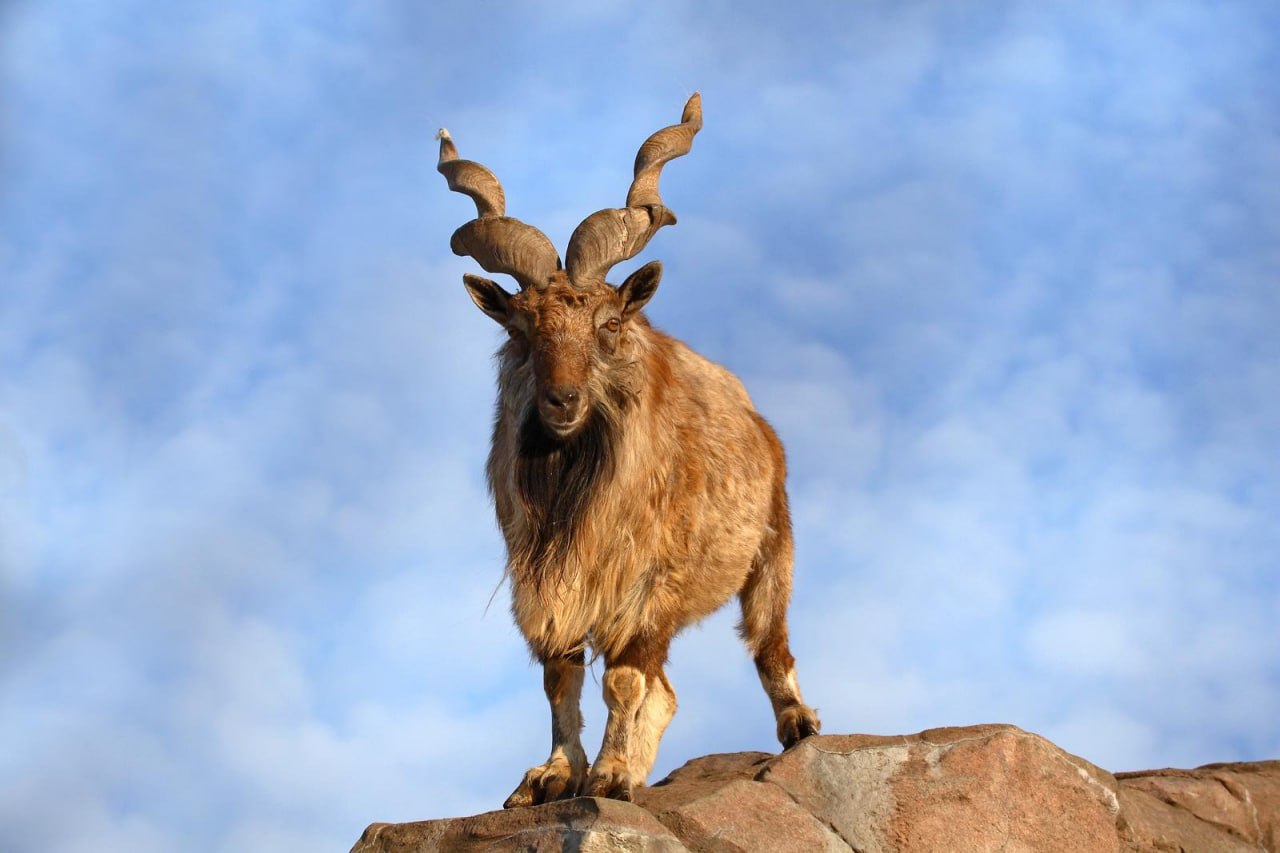
On May 18, 2026, a high-level event was held at the UN headquarters in New York dedicated to International Markhor Day, which is celebrated annually on May 24.
As reported by the press service of the Committee for Environmental Protection under the Government of Tajikistan, the event was organized by the Permanent Missions of Tajikistan and Pakistan with the support of the UN Environment Program and the International Union for Conservation of Nature. Its theme was strengthening global efforts for the conservation of mountain biodiversity and sustainable development.
On behalf of Tajikistan, the Chairman of the Committee for Environmental Protection, Bahodour Sheralizoda, spoke. He emphasized the important role of the markhor in maintaining the balance of mountain ecosystems and noted the country’s achievements in protecting this rare species.

According to him, the population of the markhor in Tajikistan has grown from about 300 individuals in the 1990s to more than 7,000 today.
This result was made possible due to conservation measures, scientific monitoring, local community involvement, and responsible wildlife management.
Tajikistan also proposed considering the possibility of holding International Markhor Day in May 2027 in Dushanbe as a global event.
International Markhor Day was proclaimed by the UN General Assembly on the initiative of the President of Tajikistan, Emomali Rahmon. Meeting participants emphasized the need to expand scientific monitoring, transboundary cooperation, and environmental education for the youth.

The markhor (screw-horned goat) in Tajikistan is listed in the Red Book and is protected under conservation legislation. Monitoring, habitat protection, and work with local communities are conducted to preserve the species.
The main habitats of the markhor are the mountainous regions in the south of the country, including Darvoz district in the Gorno-Badakhshan Autonomous Region (GBAO) and Shamsiddin-Shohin district in Khatlon province, along the border with Afghanistan. State accounting, habitat protection, anti-poaching efforts, and community conservation areas are in place to preserve the species. The markhor is also protected under the international CITES convention.