Tajik scientists conducted a study of the winter dynamics of the snow cover on a glacier in the Pamirs for the first time since the country’s independence. The research showed that over the past five years, the seasonal snow cover on Glacier No. 457 has almost disappeared even at altitudes above 5100 meters. In 2025, the glacier lost more than a meter in thickness, indicating its active melting.
First expedition: measuring winter snow
University of Central Asia in cooperation with the State Scientific Institution “Center for Research of Glaciers of the National Academy of Sciences of the Tajikistan” successfully conducted the first scientific field expedition to assess the winter mass balance of Pamir glaciers at Glacier No. 457 in the Ghunt River basin.
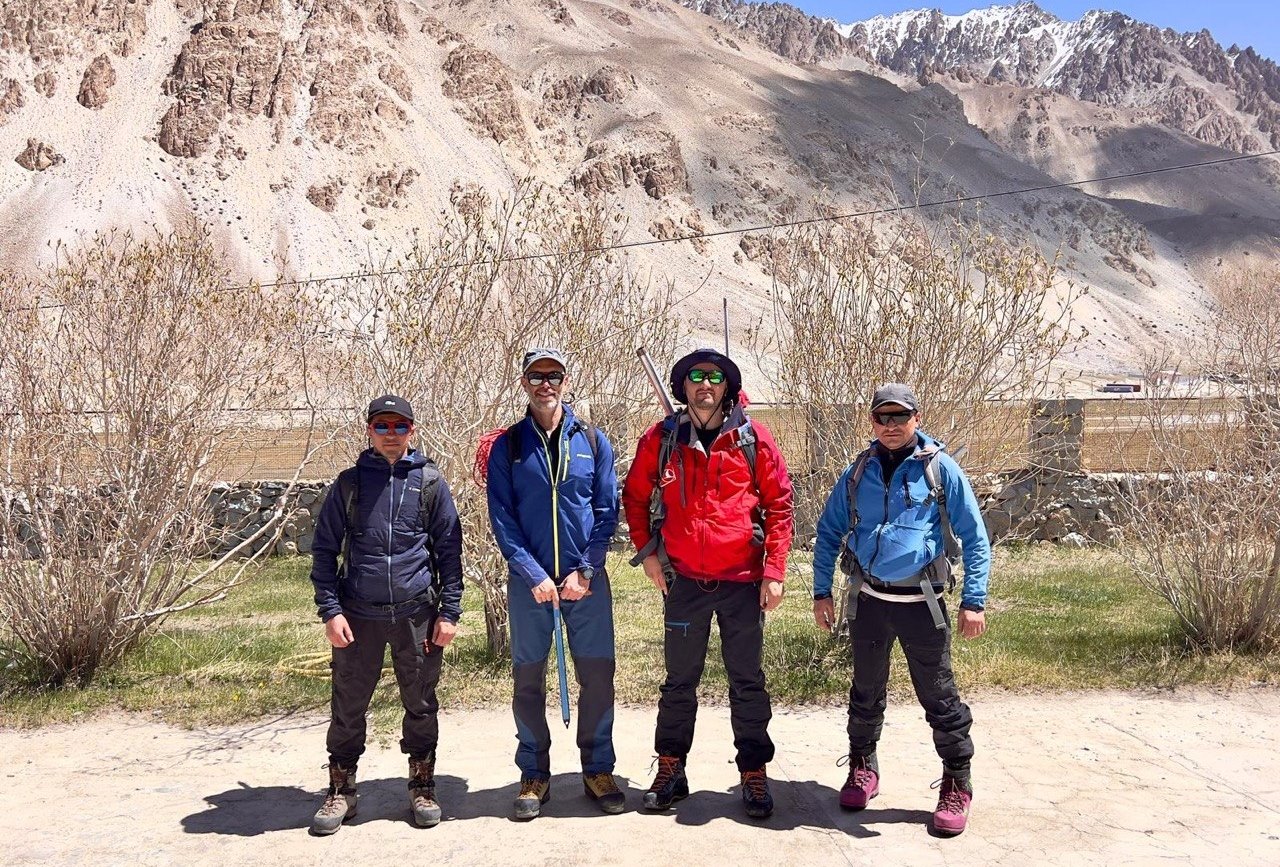
The expedition took place on May 6–15 May 2026, as part of the global initiative “Decade of Action for Cryospheric Sciences, 2025–2034” spearheaded by the President of the Republic of Tajikistan and launched under the auspices of the United Nations. Researchers Prof. Denis Samyn and Dr. Hofiz Navruzshoev from UCA’s Mountain Societies Research Institute (MSRI) participated in the study.
Denis Samyn noted that for decades, the glaciers of Central Asia received very little attention from scientists. With the support of the government and foreign institutes, the region is now building its potential and expertise, forming a new generation of specialists. UCA’s MSRI has become a leading institute in cryosphere research in the region and is now collaborating with various regional partners in this field.
What the scientists studied
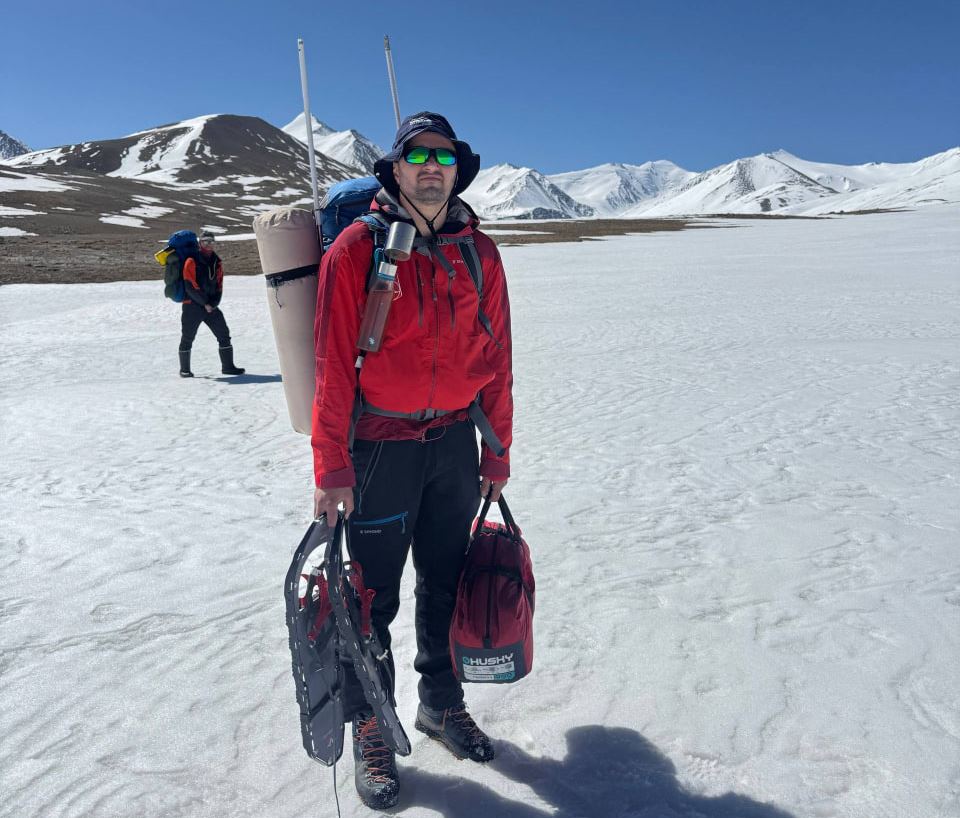
The main goal of the expedition was to assess the winter mass balance of the glacier. Scientists studied how much snow accumulated over the winter period, its density, and how the snow cover is distributed over the glacier’s surface.
According to the organizers, direct field measurements of the winter mass balance of glaciers are being conducted for the first time since Tajikistan’s independence. Previously, field monitoring of glaciers in the country was conducted during summer expeditions and focused mainly on the overall dynamics of glaciers and satellite observation methods.
“Snow cover is practically absent”
Hofiz Navruzshoev, a research associate at the University of Central Asia, noted that research on Glacier No. 457 has been conducted annually since 2020. Due to the area’s inaccessibility, the remoteness of the glacier, and harsh weather conditions, specialists previously mainly studied only the summer melting of the glacier.
“These studies allowed for the assessment of the glacier’s melting intensity through the installation of ablation stakes and subsequent monitoring of glacier mass loss,” he explained.
According to Navruzshoev, over the past five years, in the glacier’s accumulation zone, at altitudes above 5100 meters, the seasonal snow cover is practically absent.
The researcher emphasized that measuring winter snow accumulation is crucial for calculating the glacier’s overall annual balance, considering both snow accumulation and summer melting.
Why is this important?
Denis Samyn noted that working on the Pamir glaciers, as well as working at an altitude of 5000 meters, requires professional training and significant practical experience.
Before the expedition began, Samyn conducted a safety briefing for the team on moving on the glacier and using mountaineering equipment. Special attention was paid to ensuring that team members always moved together and avoided undue risk on the glacier. According to him, the safety of the group must come first.
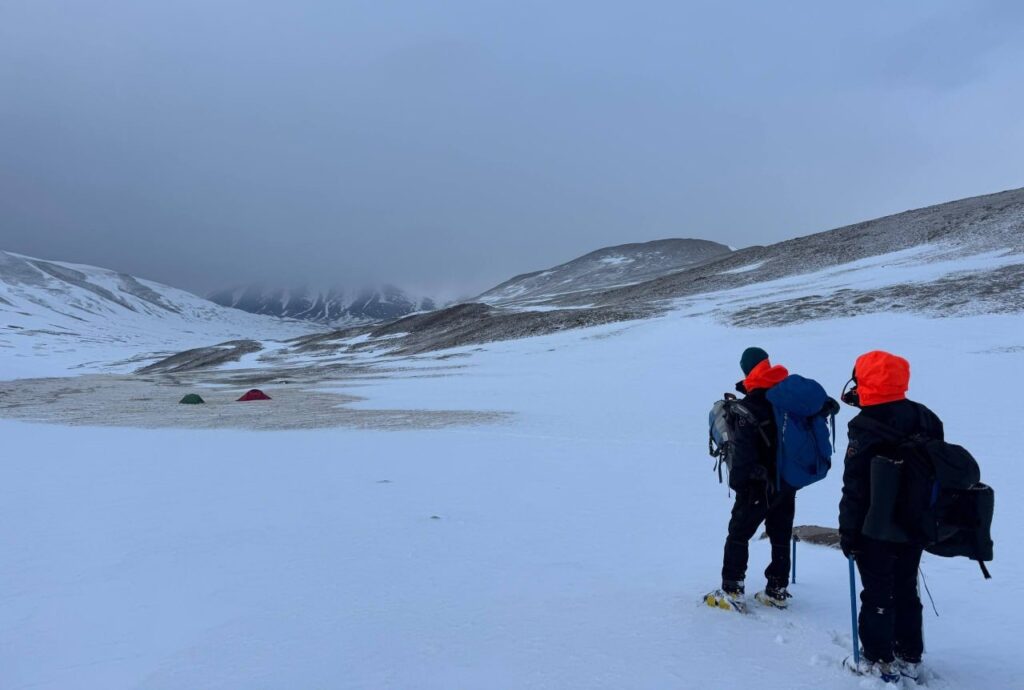
According to the expert, fieldwork was conducted under challenging conditions: on one day, after a clear morning, snow and strong winds suddenly began, and visibility sharply deteriorated.
During the expedition, scientists managed to dig five snow pits at altitudes from 4790 to 5012 meters, measure the thickness and density of the snow cover, and collect data on the distribution of snow reserves on the glacier.
According to him, the new data will help better assess how much snow and ice the Pamir glaciers accumulate and lose in the winter.
The obtained materials are planned to be used for further glacier monitoring and preparing forecasts related to changes in water resources.