


The humanitarian crisis in Afghanistan is worsening: due to unemployment, drought, and reduced aid, thousands of families cannot provide themselves with food. The BBC’s Russian Service tells the stories of Afghan residents faced with a terrible choice, trying to survive.
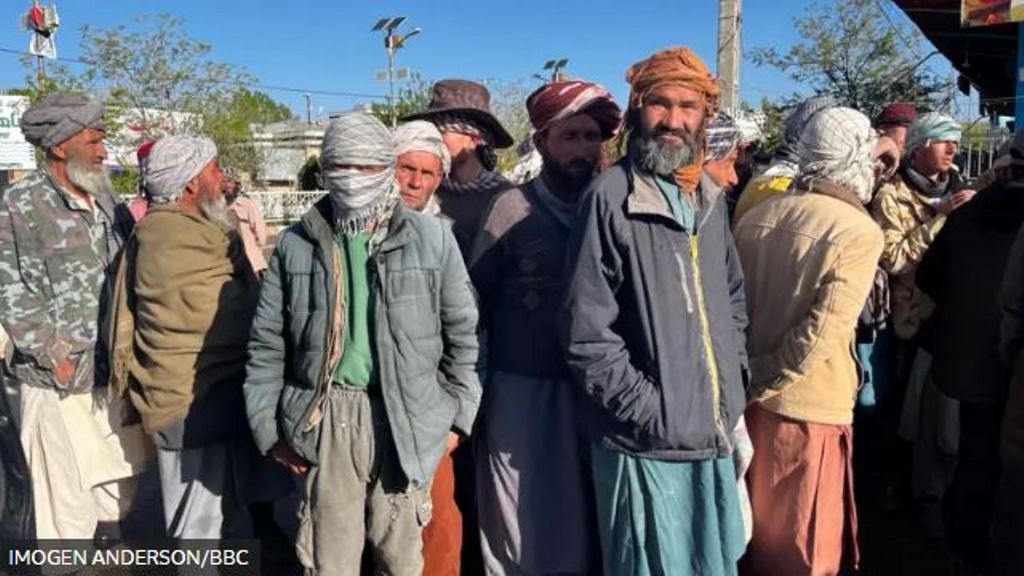
At dawn, hundreds of men gather in the dusty square in the city of Chaghcharan, the capital of Ghor province in Afghanistan. They line up along the road hoping that someone will offer them any kind of work. Their family’s ability to eat today depends on this.
But there’s little hope for that.
A 45-year-old Juma Khan has found work for only three days in the past six weeks, for which he was paid between 150 to 200 Afghanis ($2.35–$3.13) per day.
His story is not uncommon.
According to the UN, today three-quarters of Afghanistan’s population cannot meet their basic needs. The country has massive unemployment, the healthcare system remains in a deplorable state, and the humanitarian aid that once provided millions with essentials has been reduced to a fraction of its previous volume.
Ghor is one of the regions where the hunger problem is most acute. The men here are desperate.
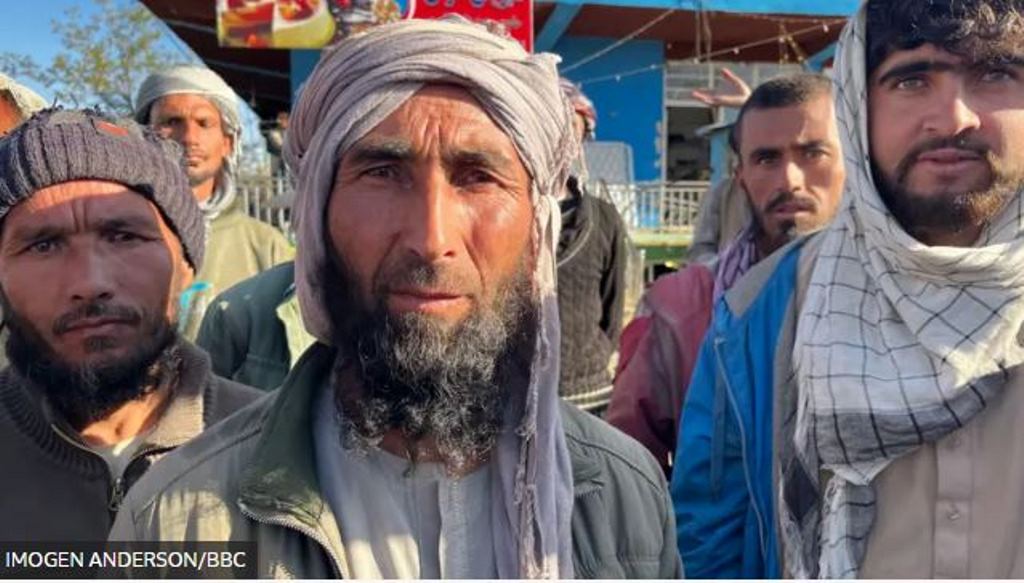
“I got a call saying my children hadn’t eaten for two days,” says Rabbani, struggling to hold back tears. “I wanted to end my life. But then I thought, how would that help my family? So here I am, looking for work.”
“Papa, give us bread”
Khwaja Ahmad mutters a few words and begins to cry.
When the bakery next to the square starts working, its owner hands out stale bread to the crowd. In seconds, the loaves are torn to pieces, and half a dozen men grab the precious crusts.
A new scuffle suddenly erupts. A man on a motorcycle passes by: he wants to hire one worker to transport bricks. Dozens of men rush towards him.
In the two hours we spent at this spot, only three men were hired.
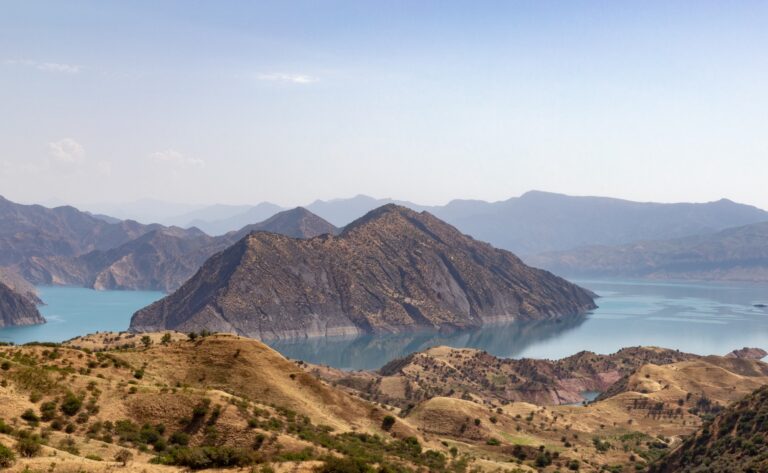
In nearby settlements — modest homes scattered across barren brown hills against the backdrop of snow-capped peaks of the Siah Koh mountain range — the devastating effects of unemployment are hard to miss.
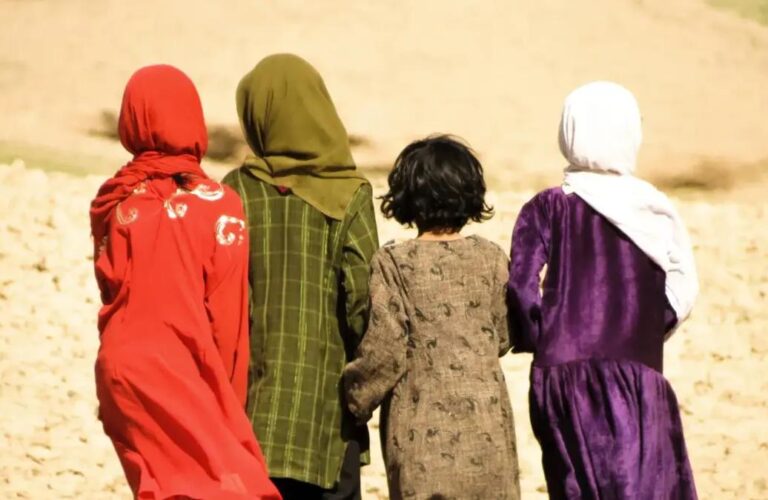
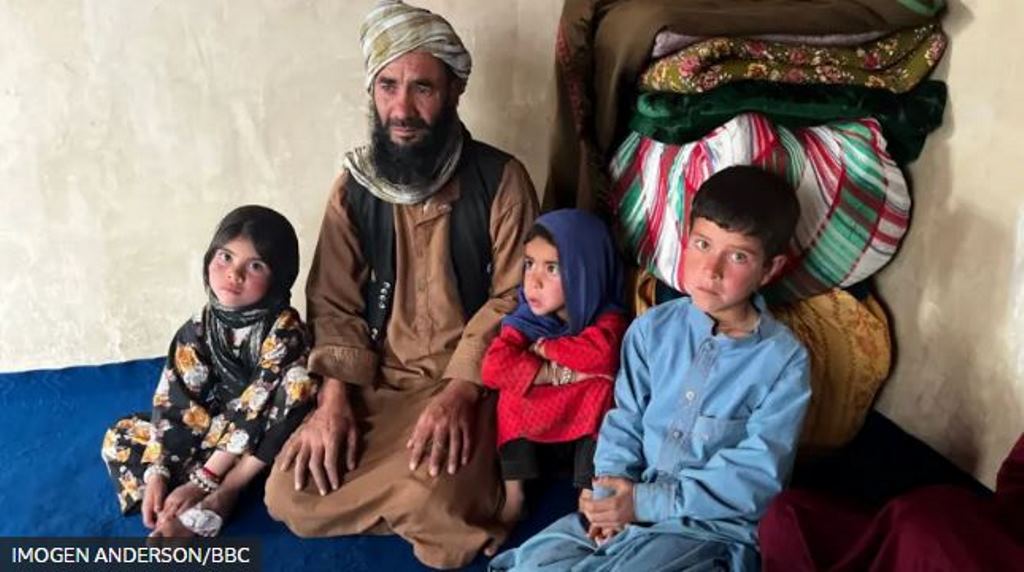
Abdul Rashid Azimi invites us into his home and brings in his two children — seven-year-old twins Rokiya and Rohila. He holds them close, striving to explain why he has to make an unbearable choice.
Abdul tells us he is prepared to sell his daughters into marriage or work as servants: “If I sell one daughter, I can feed the rest of the children for at least four years.”
He hugs Rohila, kisses her, and cries: “It breaks my heart, but it is the only way out.”
“All we have to eat is bread and hot water, not even tea,” says a woman named Kaihan.
Two of her teenage sons work as shoe shiners in the city center. Another collects trash, which Kaihan uses as fuel for cooking.
Additionally, by local tradition, the groom’s family usually gives a gift to the bride’s family before the wedding.
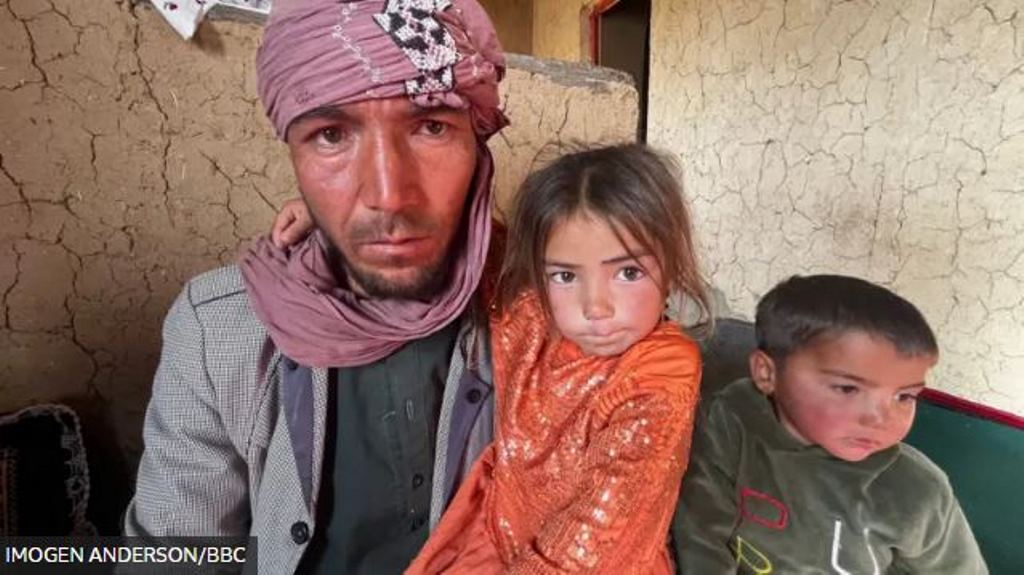
Said Ahmad shares that he already had to sell his five-year-old daughter Shaika after she was diagnosed with appendicitis and a liver cyst.
Shaika’s surgery was successful. The money for it came from the 200,000 Afghanis ($3,200) for which she was sold.
“If I took the whole amount at once, he would have taken her away. So, I told him: Give me enough now to cover her treatment, and you can give me the rest over the next five years, after which you can take her,” explains Said.
She hugs his neck with her tiny hands. They are clearly very attached to each other, but in five years, she will have to leave for the relative’s home.
In Afghanistan, the practice of marrying off children before adulthood remains widespread. Given the Taliban’s ban on girls’ education, such cases are becoming even more frequent.
Just two years ago, Said was somewhat better off: like millions of other Afghans, he and his family received food assistance — flour, vegetable oil, lentils, and vitamin supplements for children.
But massive cuts in aid over the past few years have left the overwhelming majority of residents without this vital support.
What are the causes of hunger: reduced aid and drought
The US — once Afghanistan’s largest donor — cut nearly all aid to the country last year. Many other key donors have significantly reduced their contributions, including the UK. Current UN data indicates that the volume of aid received this year is 70% lower than in 2025.
Severe drought affecting more than half the country’s provinces exacerbates the problems.
“No one helped us — neither the government nor NGOs,” says village resident Abdul Malik.
The Taliban government, which came to power in 2021, also blames the previous Afghan administration.
However, one of the main reasons donors are turning away from the country is the Taliban’s policies, particularly restrictions on women.
The Taliban reject any responsibility for donors leaving, stating that “humanitarian aid should not be politicized.”
Fitrat also points to the Taliban’s plans “to reduce poverty and create jobs by implementing major economic” initiatives, listing several infrastructure and mining projects.
Long-term projects may help over time, but it is clear that millions of people simply will not survive without urgent aid.
For example, people like Mohammad Hashem, whose 14-month-old daughter died a few weeks ago. “My child died from hunger and lack of medicine… When a child is sick and hungry, it’s obvious they will die,” he says.
As a local elder recounts, child mortality, mostly due to malnutrition, has “really increased” over the past two years.
Small and large graves
However, there are no official mortality data here.
The cemetery is the only place where evidence of the sharp rise in child deaths can be found.
And so, as before, we counted the small and large graves separately. There were about twice as many small graves as large ones — indicating that twice as many children are dying as adults.
In the main provincial hospital in Chaghcharan, there is other evidence to this effect.
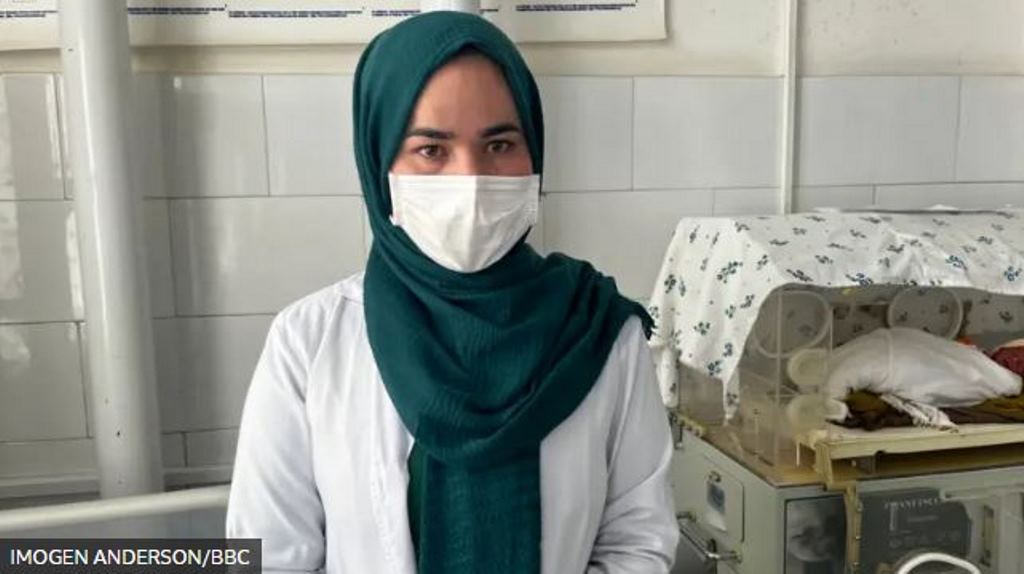
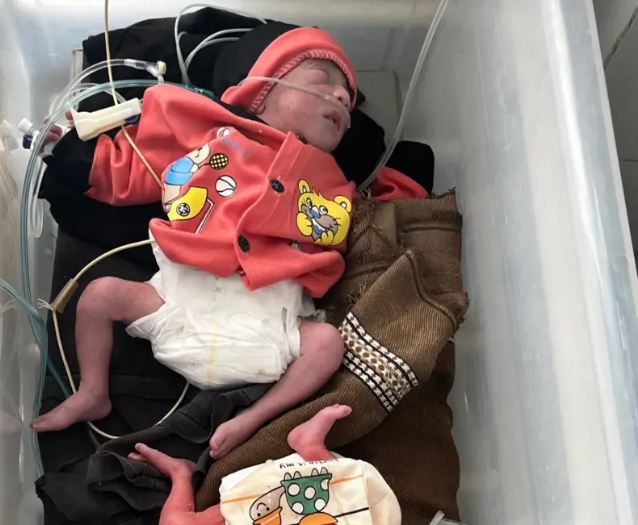
The neonatal department is the busiest. All the beds are occupied, some with two children each. Most of them have low body weight and breathing problems.
A nurse pushes a small crib with newborn twin girls on a trolley. They were born two months premature. One weighs 2 kg, the other just 1 kg.
The girls are in critical condition, immediately connected to an oxygen machine.
Their mother, 22-year-old Shakila, is recuperating in the maternity ward.
“She is weak because during her pregnancy she ate almost nothing, only bread, and drank tea,” explains the twins’ grandmother Gulbadan. “That’s why the babies are in such a state.”
Several hours after we left the hospital that day, one of the babies died, not having received a name.
“Doctors tried to help her, but she died,” says the grandmother the next day. “I wrapped her tiny body and took her home. When the mother found out, she fainted.”
Gulbadan points to the surviving child and adds: “I hope at least she will live.”
Nurse Fatima Husseini says there are days when up to three infants die.
The head of the neonatal department, Dr. Muhammad Musa Oldat, says the mortality rate reaches 10%, calling it “unacceptable.”
“But due to poverty, the number of patients is growing every day,” he says. “And we don’t have the resources here to treat the children properly.”
In the intensive care unit for children, six-week-old Zamir suffers from meningitis and pneumonia. Both diseases are treatable, but doctors need to perform an MRI, and they don’t have the necessary equipment.
But perhaps the most shocking thing the doctors tell us is that the state hospital has no medicines for most patients, and families have to buy them at pharmacies outside the hospital.
The lack of money forces many families to make difficult decisions.
Gulbadan’s surviving granddaughter has gained a little weight, and her breathing has stabilized. But a few days later, her family took her home. They simply couldn’t afford to keep her in the hospital.
Baby Zamir’s parents also took him home for the same reason.
Now these tiny beings will have to struggle to survive on their own.